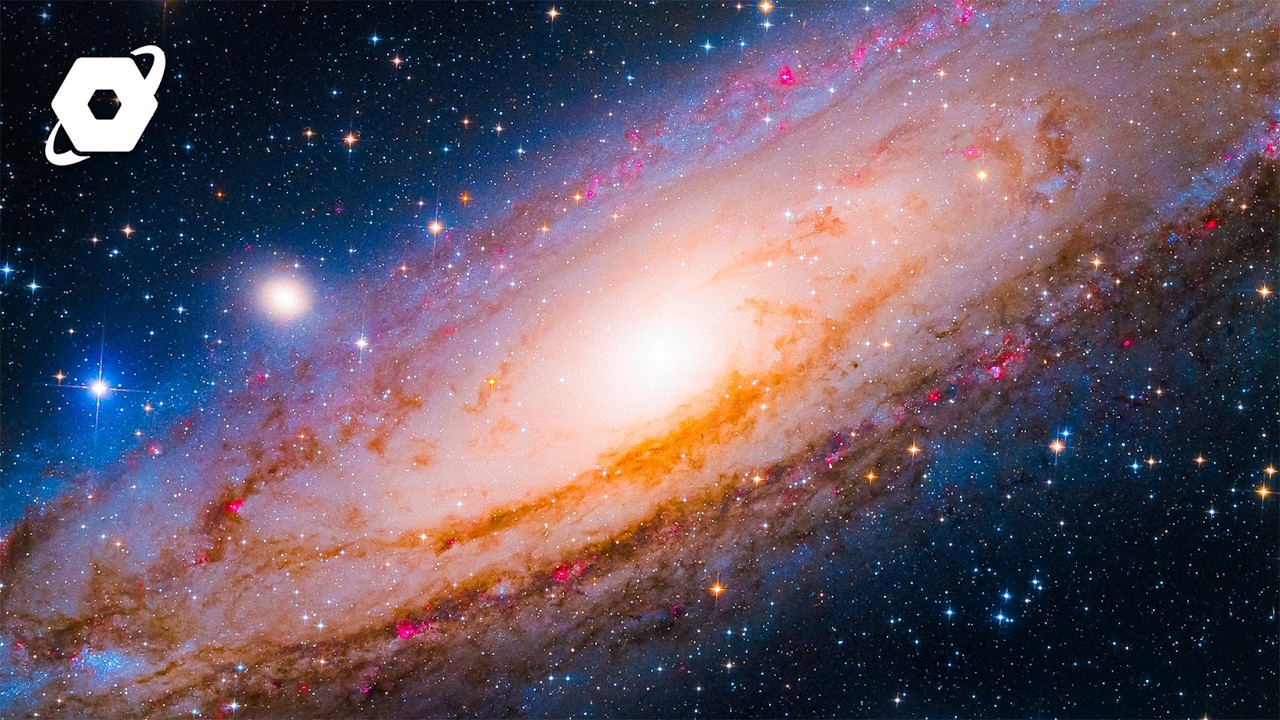
A Spectacular Journey Through The Stars Of The Milky Way
Keywords
Summary
192 words
Critical Evaluation
The documentary presents a compelling and scientifically accurate overview of the connection between stars and life, focusing on cosmic rays. It effectively communicates complex concepts such as stellar nucleosynthesis and cosmic ray detection to a general audience. The interviews with scientists from Calar Alto and Pierre Auger Observatory lend credibility, and the historical narrative of cosmic ray discovery is well-documented. However, the documentary lacks specific citations or references to scientific papers, which would strengthen its rigor. Some explanations are simplified, but this is appropriate for a documentary format. The title is slightly misleading, as it suggests a broader tour of the Milky Way, but the content is more focused on cosmic rays and their implications. Overall, the information is reliable and well-presented, making it a valuable resource for those interested in astrophysics and astrobiology. The inclusion of the Pierre Auger Observatory provides a tangible example of current research, and the discussion of cosmic rays’ potential effects on life is thought-provoking. The documentary could benefit from more detailed graphics or animations to illustrate the particle showers, but the existing visuals are adequate. The pacing is good, and the narrative is engaging. The lack of critical examination of alternative theories or controversies in the field is a minor weakness, but the documentary’s scope is broad rather than deep. In summary, it is a high-quality science documentary that successfully bridges astronomy and biology, though it could be enhanced with more explicit sourcing.
239 words
Title / Content Match
The title is somewhat misleading as it focuses on cosmic rays and their connection to life rather than a general journey through the stars of the Milky Way. However, it does cover stellar evolution and the role of stars in creating elements.
Quality & Reliability
8/10
The documentary features interviews with scientists from recognized institutions (Calar Alto Observatory, Pierre Auger Observatory) and covers established scientific concepts (nucleosynthesis, cosmic rays, Hess's balloon experiment). The information is accurate and well-presented, though it lacks detailed citations and some explanations are simplified for a general audience.
Key Moments
Markers derived by PSI from the transcript: the creator did not define chapters.
- Introduction to the concept that we are made of star stuff.
- Visit to Calar Alto Observatory in Spain; explanation of stellar nucleosynthesis.
- Discussion of stellar evolution and supernovae.
- Introduction to cosmic rays and the need for particle detection.
- Demonstration of a spark chamber and explanation of cosmic ray detection.
- Historical segment on the discovery of cosmic rays, including Hess's balloon flight.
- Tour of the Pierre Auger Observatory and explanation of its purpose.
- Classification of cosmic rays by energy and origin.
- Explanation of air showers and their detection.
- Discussion of cosmic rays' potential effects on life and evolution.
Cited Sources
- Naked Science on Spotify — The documentary is available on Spotify, providing an alternative audio format.
Concurring Sources
- NASA - Cosmic Rays — NASA's overview of cosmic rays and their study, consistent with the documentary's content.
Contribution & Novelties
The documentary provides a comprehensive and accessible synthesis of the connection between stellar nucleosynthesis, cosmic rays, and the origins of life. It brings together insights from astronomy and particle physics, highlighting the Pierre Auger Observatory as a key facility. The historical narrative of cosmic ray discovery adds depth, and the discussion of cosmic rays’ potential role in evolution offers a novel perspective.
Pour aller plus loin :
- Stellar nucleosynthesis — Overview of the process by which stars create elements.
- Cosmic ray — Detailed article on cosmic rays, their origins, and detection.
- Pierre Auger Observatory — Information about the observatory featured in the documentary.
- Victor Hess — Biography of the physicist who discovered cosmic rays.
- Panspermia — Hypothesis that life may be distributed by cosmic bodies, related to the documentary’s themes.
130 words
Radar Profile
The radar profile shows high scores in information quantity, quality, and reliability, with a moderate technical level. This indicates a well-balanced documentary that is both informative and accessible, though it does not delve into highly technical details.