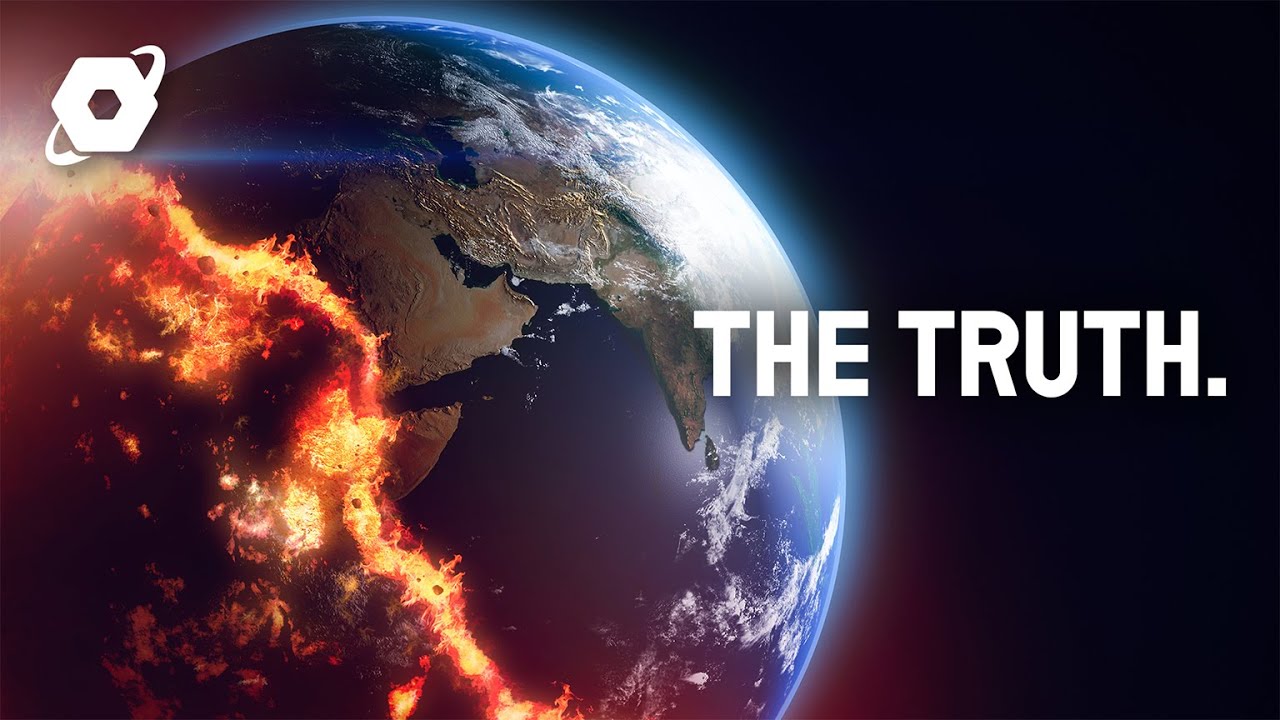
Earth on Fire? How BRUTAL Is Global Warming?
Keywords
Summary
155 words
Critical Evaluation
The documentary provides a compelling and visually engaging overview of climate change impacts and the emerging field of solar geoengineering. It successfully balances scientific explanations with human stories, such as the heat officer in Monterrey and firefighters in Canada, making the issue relatable. The inclusion of expert interviews adds credibility, particularly with David Keith, a prominent figure in solar geoengineering research, and Graciela Raga, who offers a critical perspective on regional impacts. The footage from NASA’s DC-8 flight provides a unique behind-the-scenes look at atmospheric research, enhancing the documentary’s scientific value. However, the documentary lacks depth in some areas: it does not thoroughly explore the potential risks and ethical dilemmas of solar geoengineering, and it presents the technology as a potential solution without fully addressing the uncertainties and opposition. The sources cited are not explicitly listed, and some claims, such as the number of heat-related deaths, are presented without specific references. The title is somewhat sensationalist, but the content is generally accurate and well-presented. The documentary would benefit from more detailed explanations of the science and a more critical examination of the governance issues. Overall, it is a valuable introduction to the topic for a general audience, but it falls short of a rigorous scientific analysis.
206 words
Title / Content Match
The title is somewhat sensationalist but accurately reflects the content's focus on the severity of global warming and its consequences.
Quality & Reliability
7/10
The documentary presents a balanced overview of climate change impacts and solar geoengineering, featuring interviews with experts (David Keith, Graciela Raga, Kim Campbell) and footage from NASA/NOAA research flights. However, it lacks detailed citations and some claims are presented without specific sources, limiting its scientific rigor.
Key Moments
Markers derived by PSI from the transcript: the creator did not define chapters.
- Introduction to wildfires in Canada and their impacts.
- NASA DC-8 flying laboratory mission overview.
- Interview with David Keith on solar geoengineering.
- Explanation of stratospheric aerosol injection and Mount Pinatubo.
- Heat waves in Mexico and interview with chief heat officer.
- Interview with Graciela Raga on geoengineering concerns.
- Discussion on governance and Kim Campbell's perspective.
- Make Sunsets experiment and Mexico's ban.
- Interview with Mexican environmental officials.
- International cooperation in firefighting and conclusion.
Cited Sources
- NASA DC-8 flying laboratory — Mentioned as the largest flying laboratory used for atmospheric research.
- NOAA Chemical Sciences Laboratory — Involved in the research flight and studying atmospheric particles.
- Mount Pinatubo eruption — Cited as an example of volcanic aerosols cooling the planet.
- Climate Overshoot Commission — Kim Campbell is a member, and the commission addresses governance of climate interventions.
- Make Sunsets — Company that conducted unauthorized geoengineering experiment in Mexico.
Concurring Sources
- IPCC Sixth Assessment Report — Provides comprehensive climate change impacts and projections, consistent with the documentary's claims.
- NASA Climate Change — Offers scientific data on global warming and its effects, supporting the documentary's narrative.
Dissenting Sources
Contribution & Novelties
The documentary provides a balanced overview of solar geoengineering, featuring expert interviews and real-world examples, which is valuable for public understanding. It highlights the governance gap and the potential for unilateral action, a critical issue often overlooked.
Pour aller plus loin :
- Stratospheric aerosol injection — Overview of the technology and its proposed implementation.
- Solar radiation management — Broader context of geoengineering approaches.
- Climate Overshoot Commission — International initiative addressing governance of climate interventions.
- National Research Council report on climate intervention — Key scientific assessment of solar geoengineering.
88 words
Radar Profile
The radar profile shows high scores in quantity of information and technical level, indicating a content-rich documentary with scientific depth. Quality of information and global reliability are slightly lower, reflecting the lack of explicit citations and some sensationalism.
💬 No comments were provided for analysis.