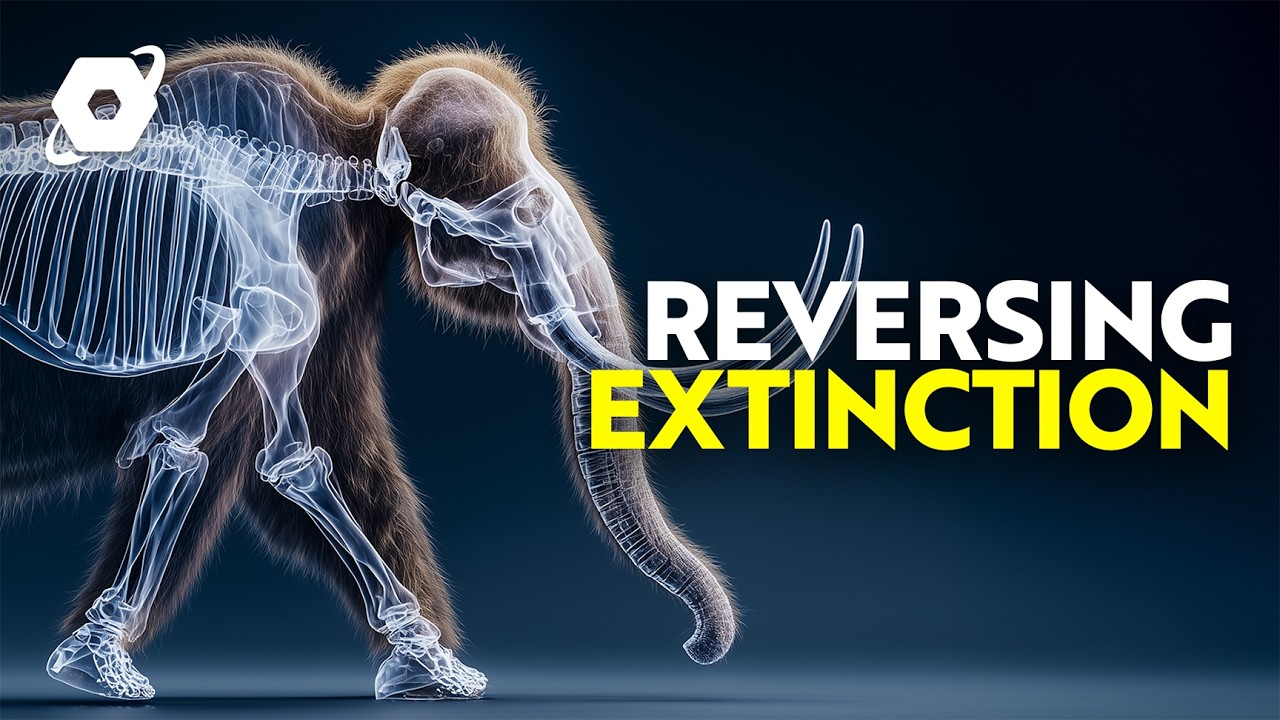
How Scientists Are Bringing Extinct Animals Back to Life | FULL DOCUMENTARY
Keywords
Summary
162 words
Critical Evaluation
The documentary provides a comprehensive overview of de-extinction and genetic rescue technologies, balancing scientific optimism with caution. It excels in presenting real-world examples, such as the cloning of the Przewalski’s horse and the work of the Frozen Zoo, which ground the discussion in tangible projects. The interviews with scientists and conservationists offer credible perspectives, and the inclusion of local rangers in Mongolia adds a valuable on-the-ground dimension. However, the documentary lacks depth in explaining the technical details of cloning and genome editing, which may leave viewers with a superficial understanding. It also does not critically examine the potential ecological risks of reintroducing extinct species, such as the impact on existing ecosystems. The ethical discussion is present but somewhat superficial, touching on concerns without delving into the complexities of ‘playing God’ or the prioritization of resources. The production quality is high, with engaging visuals and a clear narrative structure. The title accurately reflects the content, and the documentary does not oversell the science, acknowledging that de-extinction is not yet a reality for most species. Overall, it is a valuable introduction for a general audience, but it could benefit from more rigorous scientific scrutiny and a deeper exploration of the ethical and ecological implications.
202 words
Title / Content Match
The title accurately reflects the content, which covers efforts to bring back extinct animals and save endangered species using genetic technologies.
Quality & Reliability
8/10
The documentary presents a balanced view of de-extinction and genetic rescue, featuring interviews with scientists and conservationists, and showcasing real examples like the Przewalski's horse cloning. It acknowledges uncertainties and ethical concerns, and includes on-the-ground conservation efforts. However, it does not provide detailed citations or peer-reviewed sources, and some claims (e.g., extinction rates) are presented without specific references.
Key Moments
Markers derived by PSI from the transcript: the creator did not define chapters.
- Introduction to the Przewalski's horse and the concept of de-extinction
- Visit to Hustai National Park to observe the wild horses
- Explanation of the extinction vortex and the need for genetic diversity
- Tour of the cloning facility and the birth of Kurt, the cloned horse
- Visit to the San Diego Zoo's Frozen Zoo and its genetic repository
- Discussion of the ethical concerns and monitoring of cloned animals
- Field conservation in Mongolia, including anti-poaching efforts
- Introduction to de-extinction projects for the Tasmanian tiger and woolly mammoth
- Interview with a scientist about the future of genome editing in conservation
- Conclusion on the role of genetic technology as an insurance policy for biodiversity
Cited Sources
- Naked Science YouTube Channel — The documentary is produced by Naked Science, a channel known for science documentaries.
Concurring Sources
- San Diego Zoo Wildlife Alliance — The organization is featured in the documentary and is a leader in genetic conservation.
- Revive & Restore — A nonprofit that promotes genetic rescue and de-extinction, aligning with the documentary's themes.
Dissenting Sources
- Critique of de-extinction by some conservationists — Some conservationists argue that de-extinction diverts resources from protecting existing species and may have unintended ecological consequences. The documentary acknowledges these concerns but does not present detailed counterarguments.
Contribution & Novelties
The documentary provides an accessible overview of de-extinction and genetic rescue, highlighting the Przewalski’s horse as a successful case study. It showcases the work of the Frozen Zoo and cloning facilities, offering a behind-the-scenes look at the technology. The film also raises important ethical questions, contributing to the public discourse on the use of genetic engineering in conservation.
Pour aller plus loin :
- De-extinction - Wikipedia — Provides a comprehensive overview of the concept and ongoing projects.
- CRISPR gene editing - Wikipedia — Explains the technology mentioned in the documentary.
- San Diego Zoo Wildlife Alliance’s Frozen Zoo — Official page about the Frozen Zoo and its conservation efforts.
- Przewalski’s horse - Wikipedia — Background on the species and its conservation history.
121 words
Radar Profile
The radar profile shows high scores in information quantity and quality, reflecting the documentary's comprehensive coverage and credible sources. The technical level is moderate, making it accessible to a general audience. The overall reliability is high, though the lack of detailed citations slightly reduces the score.
💬 Sur les 0 commentaires analysés, aucune tendance n'est disponible.