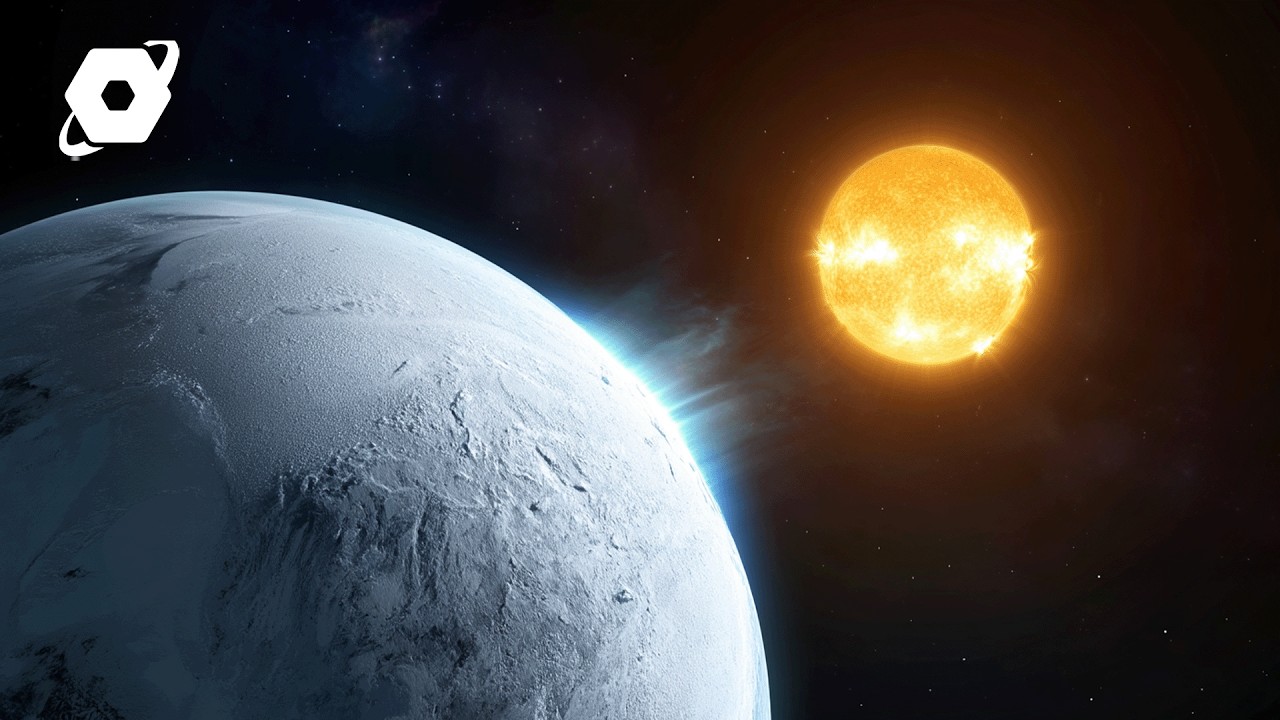
Journey To The Edge of Our Solar System | FULL DOCUMENTARY
Keywords
Summary
167 words
Critical Evaluation
The documentary provides a comprehensive overview of the exploration of the outer solar system, focusing on the major missions and their discoveries. The information is presented in an engaging and accessible manner, with expert commentary from scientists and archival footage. The scientific content is generally accurate, though some simplifications are made for a general audience. The documentary does not explicitly cite sources, but it relies on well-known NASA missions and findings, which are widely accepted in the scientific community. The argumentation is solid, as it follows a chronological narrative that builds from early exploration to current missions. The quality of the sources is high, as it features interviews with experts and uses official NASA footage. The title accurately reflects the content, and the documentary successfully conveys the wonder and importance of space exploration. However, it could benefit from more detailed explanations of the scientific principles involved, and it does not address any controversies or alternative theories. Overall, it is a valuable resource for those interested in planetary science, but it may not satisfy viewers seeking in-depth technical analysis.
178 words
Title / Content Match
The title accurately reflects the content, which explores the outer solar system and its planets.
Quality & Reliability
8/10
The documentary relies on established scientific missions (Pioneer, Voyager, Galileo, Juno) and includes expert commentary, but lacks explicit citations or references to primary sources. The information is accurate and up-to-date, though some details are simplified for a general audience.
Key Moments
Markers derived by PSI from the transcript: the creator did not define chapters.
- Introduction to the solar system's formation and the gas giants.
- Pioneer 10's journey through the asteroid belt.
- The concept of the Grand Tour and the Voyager missions.
- Launch of Voyager 2 and Voyager 1.
- Arrival at Jupiter and discovery of its rings and volcanic moon Io.
- Europa's subsurface ocean and potential for life.
- Galileo mission and the Shoemaker-Levy 9 comet impact.
- Juno mission and insights into Jupiter's interior.
- Arrival at Saturn and its rings.
Cited Sources
- NASA - Voyager — Official NASA page for the Voyager mission, providing details on the spacecraft and their discoveries.
- NASA - Galileo — NASA's page on the Galileo mission, including its objectives and findings.
- NASA - Juno — Official NASA page for the Juno mission, with updates and scientific results.
Concurring Sources
- NASA - Voyager — Confirms the details of the Voyager missions and their discoveries.
- NASA - Galileo — Supports the information about the Galileo mission and its findings.
- NASA - Juno — Corroborates the details about the Juno mission and its results.
Contribution & Novelties
The documentary synthesizes decades of space exploration into a coherent narrative, highlighting the progression from early flybys to detailed orbital studies. It emphasizes the potential for life on icy moons like Europa, which is a key focus of current and future missions. The film also underscores the role of Jupiter as a ‘gravitational shield’ for Earth, a concept that is both scientifically significant and accessible to the public.
Pour aller plus loin :
- NASA Europa Clipper — The upcoming mission to study Europa’s habitability.
- Enceladus and Titan — Saturn’s moons with potential for life.
- Planet Nine hypothesis — The proposed ninth planet and its search.
105 words
Radar Profile
The radar profile shows high scores in information quantity, quality, and reliability, with a slightly lower score in technical level, indicating that the documentary is informative and trustworthy but not highly technical.