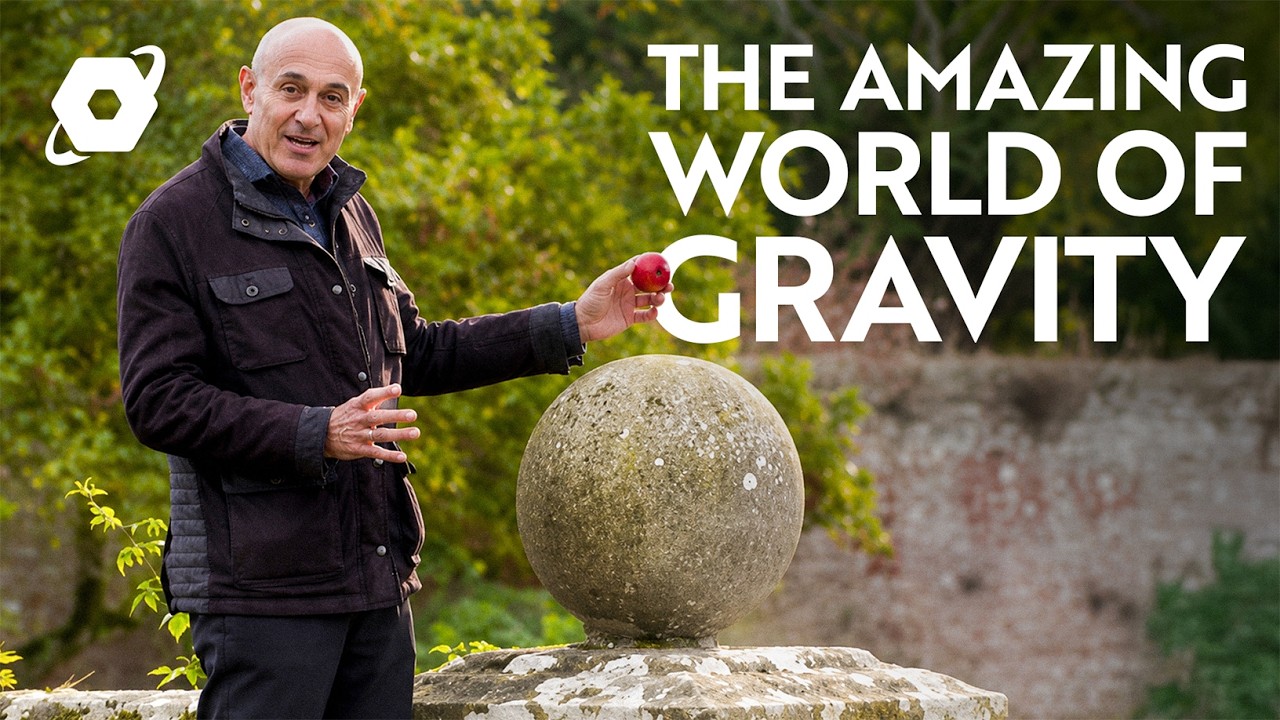
How Gravity Bends Space, Time and Reality | FULL DOCUMENTARY
Keywords
Summary
208 words
Critical Evaluation
Value of the Information & Strength of the Argument
The documentary provides substantial value by presenting complex physics concepts in an accessible and engaging manner. It effectively uses demonstrations (accelerometer drop, clock experiment), analogies (beetles on a branch), and expert interviews to build a coherent argument for Einstein’s view of gravity. The narrative is well-structured, moving from historical foundations to modern discoveries, and it includes a candid account of a scientific error and correction, which reinforces the scientific method. The argumentation is solid, relying on established scientific consensus and experimental evidence, such as the LIGO detection.
Scientific Rigor, Source Quality, Title Accuracy
The documentary maintains a high level of scientific rigor, featuring credible experts and accurate explanations of established physics. It references key experiments and observations, such as the 1919 eclipse and LIGO, but does not provide direct citations to primary literature. The title accurately reflects the content, which thoroughly explores how gravity warps spacetime and its implications. The inclusion of a self-correcting narrative (the app error) demonstrates intellectual honesty. Overall, the sources are reliable, and the title-content alignment is strong.
181 words
Title / Content Match
The title accurately reflects the content, which explores how gravity warps spacetime and its implications for reality, including black holes and gravitational waves.
Quality & Reliability
8/10
The documentary features credible experts (Jim Al-Khalili, Chris Hadfield, Sheila Rowan) and presents well-established physics (general relativity, gravitational waves) with accurate explanations. The narrative includes a self-correcting scientific process (the app error), enhancing credibility. However, it lacks detailed citations or references to primary sources, and some simplifications are inherent to the format.
Key Moments
Markers derived by PSI from the transcript: the creator did not define chapters.
- Introduction to gravity's dominance and Chris Hadfield's experience of weightlessness.
- Newton's laws and the question of how gravity acts at a distance.
- Einstein's 'happiest thought' and the principle of equivalence.
- Demonstration with accelerometer showing zero acceleration during free fall.
- Introduction to spacetime curvature and gravitational time dilation.
- Analogy of beetles on a curved branch to explain spacetime curvature.
- The 1919 solar eclipse expedition confirming Einstein's theory.
- Citizen science app to measure relativistic aging using GPS.
- Introduction to black holes and the first detection of gravitational waves by LIGO.
- Discovery of a mistake in the app's equations and its correction.
Cited Sources
- Spotify link (not a scientific source) — Mentioned in the video description as a platform to listen to the documentary.
Concurring Sources
- General relativity — The documentary's core topic aligns with this established theory.
- Gravitational wave — The LIGO detection is a direct confirmation of this phenomenon.
- LIGO — The observatory is featured prominently in the documentary.
Contribution & Novelties
The documentary’s original contribution lies in its engaging presentation of established physics, combining historical context with modern applications. It offers a unique perspective by including a citizen science project and candidly discussing a scientific error, which illustrates the iterative nature of science. The use of expert interviews and demonstrations makes complex concepts accessible.
Pour aller plus loin :
- General relativity — Provides a comprehensive overview of the theory central to the documentary.
- Gravitational wave — Explains the phenomenon detected by LIGO, a key topic in the film.
- LIGO — Details the observatory featured in the documentary.
- Equivalence principle — The foundational concept introduced by Einstein, explained in the film.
- Gravitational time dilation — The effect demonstrated by the smartphone app.
120 words
Radar Profile
The radar profile shows high scores across all dimensions, indicating a well-rounded documentary with strong information content, quality, technical depth, and reliability. The balance suggests it is suitable for both general audiences and those with some physics background.