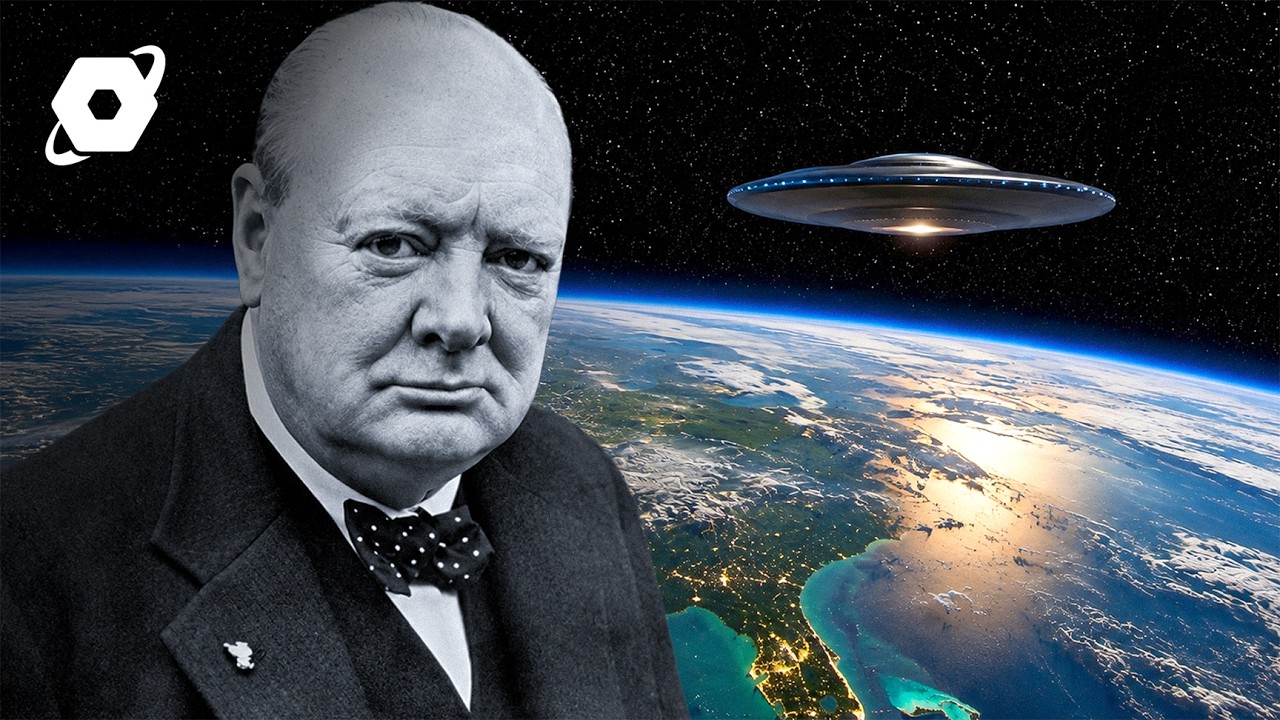
The UFO Encounters Britain Tried to Keep Secret | The British UFO Files
Keywords
Summary
164 words
Critical Evaluation
Value of the Information & Strength of the Argument
The documentary provides valuable insights into historical government responses to UFO sightings, drawing on declassified documents and firsthand accounts. It effectively argues that the British government took the phenomenon seriously, despite public dismissals. The inclusion of specific cases, such as the Swinney incident and the Horsley encounter, adds depth and credibility. However, the argumentation sometimes relies on anecdotal evidence and speculative connections, such as the Nazi flying saucer theories, which are presented without sufficient critical scrutiny. The narrative is engaging but occasionally prioritizes sensationalism over rigorous analysis.
Scientific Rigor, Source Quality, Title Accuracy
The documentary makes good use of declassified government files and interviews with credible witnesses, such as former RAF pilots. However, it also includes unverified claims and relies on secondary sources for some historical assertions. The title accurately reflects the content, focusing on British secrecy and investigations. The lack of citations for specific documents and the inclusion of dubious anecdotes, like the Janus encounter, weaken the overall scientific rigor. The documentary would benefit from clearer sourcing and more critical evaluation of controversial claims.
184 words
Title / Content Match
The title accurately reflects the content, which focuses on British government investigations into UFO sightings and the secrecy surrounding them.
Quality & Reliability
6/10
The documentary relies on declassified government files and credible eyewitness accounts, but also includes unverified anecdotes and speculative interpretations. The balance between factual reporting and sensationalism affects overall reliability.
Key Moments
Markers derived by PSI from the transcript: the creator did not define chapters.
- Introduction to declassified UFO files and government investigations.
- Discussion of Nazi flying saucer theories and post-war intelligence.
- Formation of the Flying Saucer Working Party and its conclusions.
- Winston Churchill's interest and the 1952 Washington sightings.
- Michael Swinney's radar-confirmed encounter with UFOs.
- The secret UFO unit in Room 801 and witness interviews.
- The Duke of Edinburgh's interest and Sir Peter Horsley's encounter.
- Earl Mountbatten's involvement and the bricklayer's story.
Cited Sources
- The British UFO Files on Spotify — Link to the documentary on Spotify, mentioned in the description.
Concurring Sources
- Flying Saucer Working Party — Corroborates the existence and conclusions of the British working party.
- Project Blue Book — Provides context on the American counterpart and its similar findings.
Dissenting Sources
- Nazi flying saucers — The documentary presents claims of Nazi saucer development without strong evidence, which is disputed by mainstream historians.
Contribution & Novelties
The documentary offers a comprehensive overview of the British government’s UFO investigations, bringing together declassified files and personal accounts. It highlights the role of high-ranking officials and the secretive nature of the inquiries. The inclusion of the Horsley encounter provides a unique perspective on royal involvement.
Pour aller plus loin :
- Flying Saucer Working Party — Wikipedia article on the British government’s working party.
- Project Blue Book — Wikipedia article on the US Air Force’s UFO investigation.
- Rendlesham Forest Incident — Wikipedia article on a notable UFO sighting in Britain.
90 words
Radar Profile
The radar profile shows high scores in information quantity and quality, reflecting the documentary's rich content and use of primary sources. The technical level is moderate, as it balances historical detail with accessibility. Overall reliability is decent but tempered by unverified anecdotes.