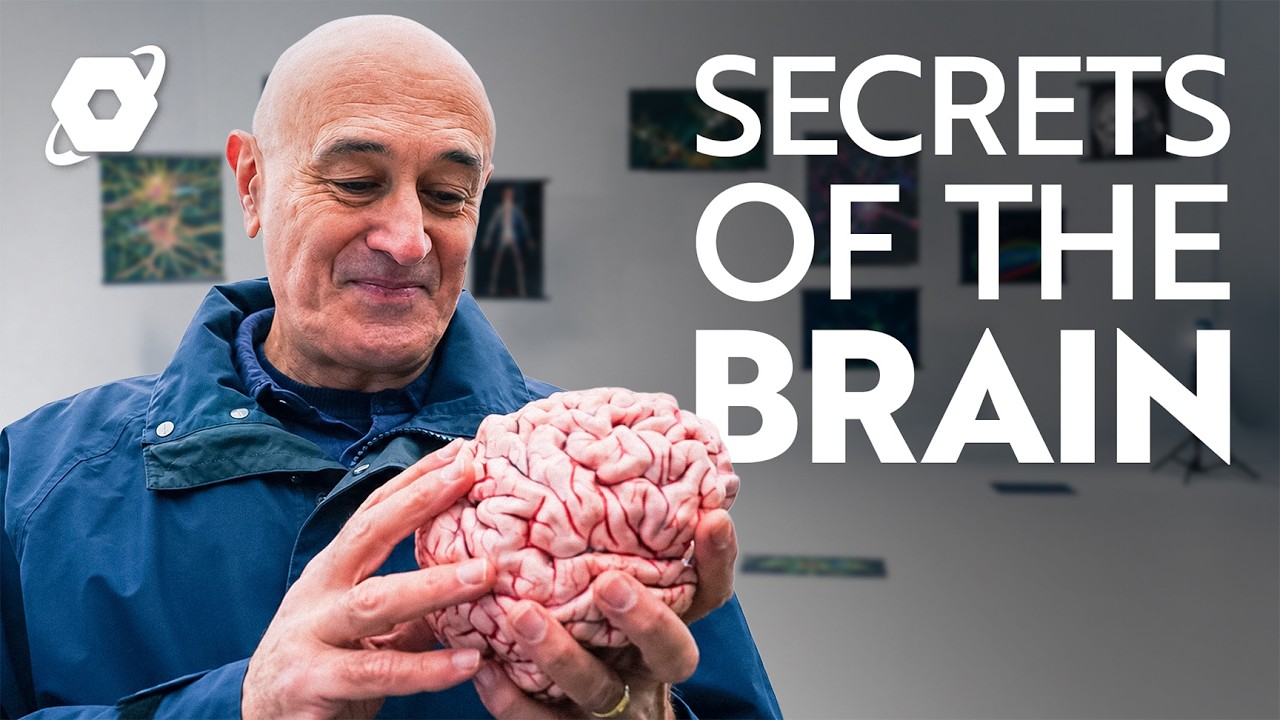
The 600 Million Year Story of the Human Brain | FULL DOCUMENTARY
Keywords
Summary
151 words
Critical Evaluation
The documentary offers a comprehensive and engaging overview of brain evolution, grounded in solid scientific research. It features interviews with leading neuroscientists, such as Eve Marder and Cori Bargmann, who provide credible insights into their respective fields. The historical segment on J.Z. Young’s squid axon experiments is particularly well-presented, illustrating a pivotal moment in neuroscience. The scientific content is accurate, though simplified for a general audience; for instance, the explanation of action potentials as a ‘domino effect’ is an accessible analogy but omits the finer details of ion channel dynamics. The documentary excels in visual storytelling, using animations and real footage to clarify complex concepts. However, it occasionally glosses over the evidence for certain evolutionary claims, such as the direct lineage from ancient worms to modern brains, which remains an area of active research. The inclusion of climate change’s impact on neuronal function adds a contemporary relevance, though it feels somewhat tangential to the main narrative. The title accurately reflects the content, and the pacing is well-balanced. Overall, the documentary is a valuable educational resource, though viewers seeking in-depth mechanistic detail may need to consult primary literature.
187 words
Title / Content Match
The title accurately reflects the content: a comprehensive documentary tracing brain evolution over 600 million years.
Quality & Reliability
8/10
The documentary features expert scientists (e.g., Eve Marder, Cori Bargmann) and presents established neuroscience concepts accurately. It includes historical context (J.Z. Young's squid axon experiments) and current research. Some simplifications are inherent to the format, but the core science is reliable.
Key Moments
Markers derived by PSI from the transcript: the creator did not define chapters.
- Jim Al-Khalili introduces the brain's complexity and the documentary's scope.
- Exploration of bilaterian ancestors and the first neurons in Ediacaran-era creatures.
- Discussion of opsins and the evolution of light-sensitive cells.
- Historical segment on the Naples Zoological Station and J.Z. Young's squid axon experiments.
- Explanation of how neurons transmit signals via action potentials and synapses.
- Eve Marder's research on crab nervous systems and the effects of temperature on neurons.
- Introduction to neuropeptides and their role in modulating behavior.
- Cori Bargmann's work on C. elegans and the evolution of neuropeptide systems.
- Evolution of complex brains in mammals and the expansion of the cerebral cortex.
- Reflections on human uniqueness, imagination, and the future of AI.
Cited Sources
- Naked Science on Spotify — The documentary is available as a podcast on Spotify.
Concurring Sources
- Neuroscience (journal) — Peer-reviewed research on neuronal function and evolution.
Contribution & Novelties
This documentary provides a comprehensive and accessible synthesis of brain evolution, integrating recent research on ancient nervous systems, neuropeptides, and the impact of environmental factors. It offers a unique narrative that connects deep evolutionary history to contemporary neuroscience.
Pour aller plus loin :
- Evolution of the brain — Overview of key evolutionary steps.
- Action potential — Detailed mechanism of neuronal signaling.
- C. elegans — Model organism for neurobiology research.
69 words
Radar Profile
The radar profile shows high scores in information quantity, quality, and reliability, with a slightly lower technical level, indicating a well-balanced documentary that is both informative and accessible.