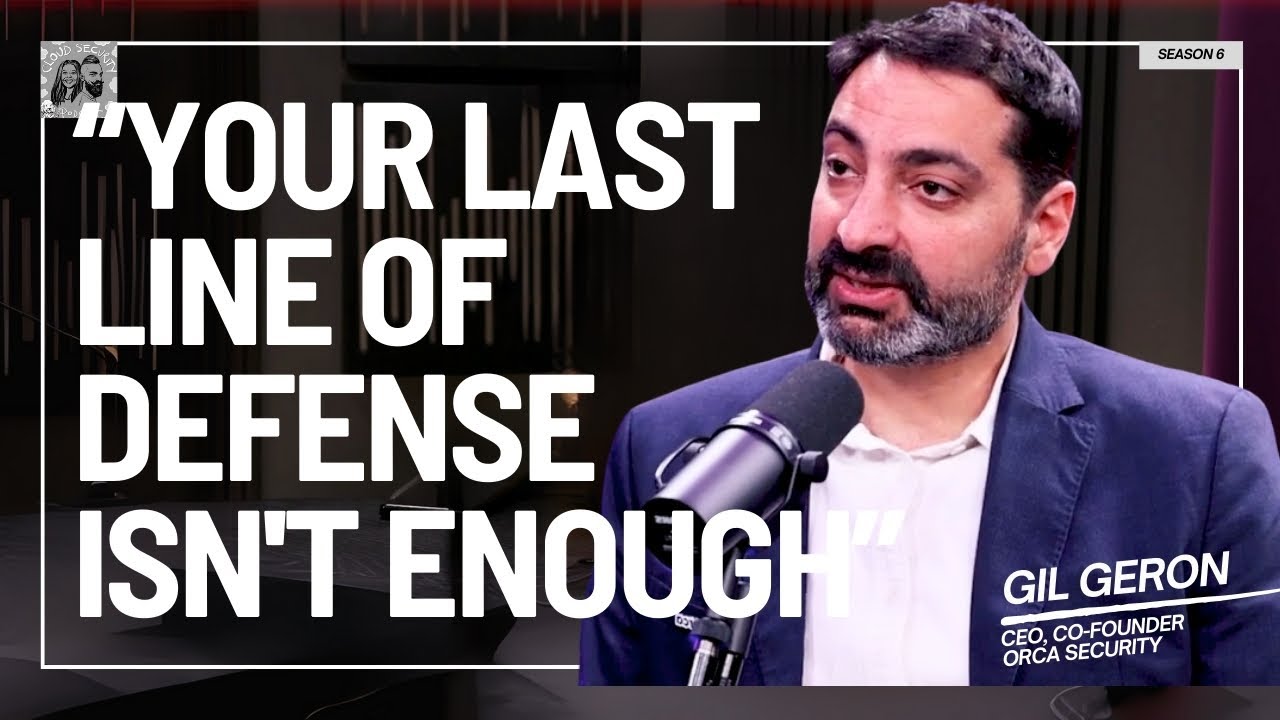
Your SecOps Team Can't Save Your Cloud: A New Blueprint for Security
Keywords
Summary
165 words
Critical Evaluation
Value of the Information & Strength of the Argument
The value of the information is high for practitioners, offering concrete insights into modern cloud security challenges and strategies. Geron’s argumentation is solid, grounded in real-world examples and industry observations, such as the claim that 95% of cloud malware is introduced rather than hacked. He effectively challenges the reactive SecOps model and advocates for a proactive, workflow-based approach. The discussion on AI as a salvation rather than a risk is well-argued, emphasizing its potential to democratize security knowledge. The case study of reducing 230 million vulnerabilities to six images powerfully illustrates the value of context. However, the argumentation is occasionally promotional, as Geron frequently highlights Orca’s capabilities, which may introduce bias.
Scientific Rigor, Source Quality, Title Accuracy
The scientific rigor is moderate; the content is based on expert opinion and industry experience rather than peer-reviewed research. Geron references Gartner reports and specific incidents (e.g., Capital One) but does not provide detailed citations. The sources cited in the description are primarily promotional (podcast website, bootcamp, newsletter, LinkedIn). The title accurately reflects the core message, and the content aligns well with it. The discussion is coherent and well-structured, but the lack of external references limits its academic rigor.
205 words
Title / Content Match
The title accurately reflects the core argument that SecOps alone is insufficient, and the discussion proposes a new workflow-based blueprint.
Quality & Reliability
8/10
The podcast features an experienced CEO (Gil Geron) discussing industry trends and practical insights, with specific examples and references to Gartner reports. However, it is primarily opinion-based and promotional for Orca Security, lacking peer-reviewed sources.
Chapters
- Introduction
- Who is Gil Geron? From Check Point to CEO of Orca Security
- What is Cloud Security in 2025? The Evolution to a Modern Workflow
- How AI is Impacting the Cloud Security Landscape: A Salvation, Not a Risk
- The Limits of a Reactive Approach: Why SecOps Can't Be Your Only Defense
- The Surprising Truth: 95% of Cloud Malware is Introduced, Not Hacked
- The Role of Identity in Cloud Security: The New Networking
- The Current Cloud Security Landscape: From "Thumb Mistakes" to Neglected Assets
- How CISOs are Modernizing Security by Modernizing Engineering Workflows
- Reducing SOC Fatigue: How Context Turns Millions of Alerts into a Handful of Fixes
- Is Auto-Remediation Safe? Why It's an Orchestration Challenge, Not a Technical One
- Shifting Left with Production Context: The Future of AppSec & Cloud Security
- How to Choose a Security Vendor: Finding Hope, Not Fear
- Final Questions: Hiking, Team Pride, and French Fries
Cited Sources
- Cloud Security Podcast Website — Official website for the podcast, providing additional resources and episodes.
- Cloud Security Bootcamp — Educational resource for cloud security training.
- Cloud Security Newsletter — Newsletter for cloud security updates and insights.
- Cloud Security Podcast LinkedIn — LinkedIn page for the podcast, sharing content and engaging with the community.
Concurring Sources
- Gartner Report on Cloud Security — Referenced in the episode as echoing the workflow-based approach to cloud security.
Contribution & Novelties
The podcast provides a fresh perspective on cloud security, emphasizing the need to move beyond reactive SecOps and adopt a holistic workflow approach. It highlights the importance of context in reducing alert fatigue and the role of AI in empowering security teams. The discussion on identity as the new networking and the challenges of auto-remediation offers practical insights for CISOs.
Pour aller plus loin :
- Gartner Cloud Security — Gartner’s insights on cloud security trends and best practices.
- Zero Trust Architecture — Overview of the zero trust security model, relevant to the identity discussion.
- Capital One Data Breach — Details on the Capital One incident, referenced in the episode.
- Just-in-Time Access — Concept of granting temporary access, discussed as a solution to over-privileged identities.
124 words
Radar Profile
The radar profile shows high scores in quantity and quality of information, with a moderate technical level and reliability. This indicates a well-informed discussion with practical insights, though it relies on expert opinion rather than empirical research.