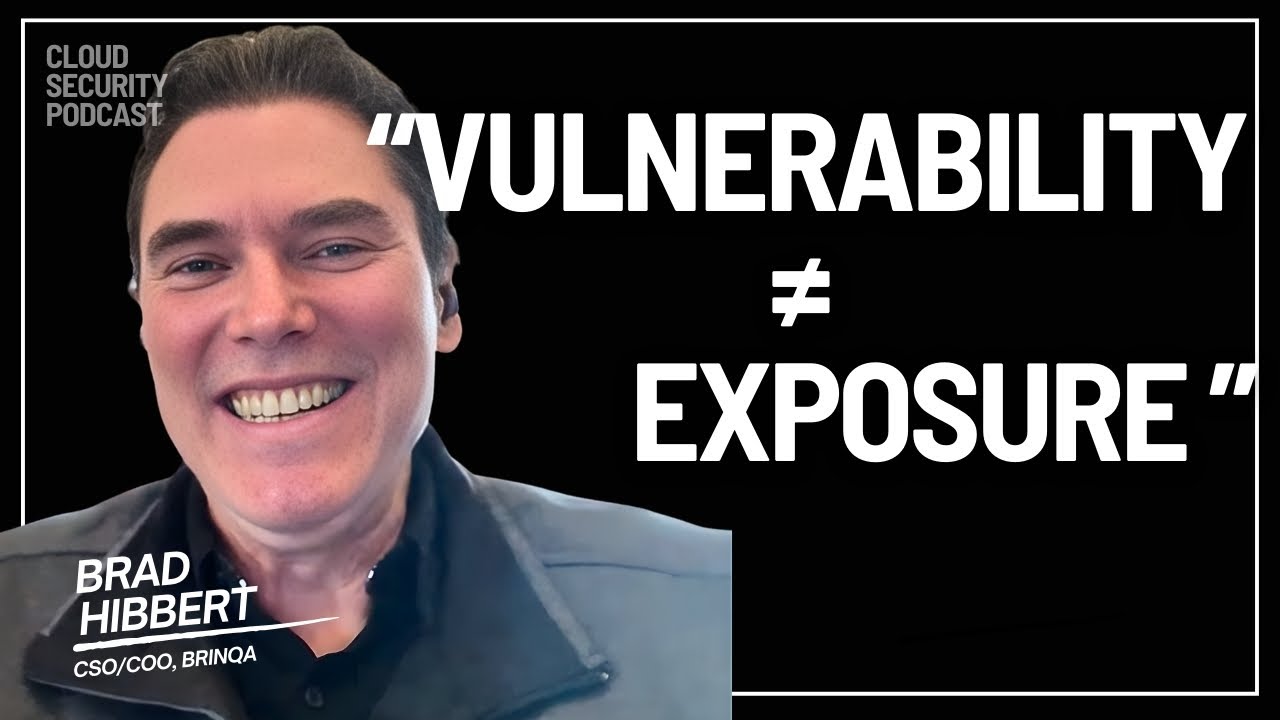
Stop Chasing CVEs: The Exposure Management Shift
Keywords
Summary
150 words
Critical Evaluation
Value of the Information & Strength of the Argument
The value of the information lies in its practical insights from an industry veteran. Hibbert provides a clear framework for understanding the progression from vulnerability management to risk-based vulnerability management to exposure management, emphasizing the importance of business context and shared risk ownership. The argumentation is coherent and grounded in real-world experience, though it lacks empirical evidence or case studies. The distinction between risk owners and remediation owners is particularly valuable, as it addresses a common organizational challenge. The discussion on AI’s role in prioritization is balanced, acknowledging both its potential and the need for trust and explainability. Overall, the content offers actionable guidance for security practitioners looking to modernize their vulnerability management programs.
Scientific Rigor, Source Quality, Title Accuracy
The scientific rigor is moderate. The discussion is based on the speaker’s extensive professional experience rather than formal research or citations. No specific sources are referenced within the episode, and the description provides only links to the podcast’s website and social media, which are not academic or technical references. The title accurately reflects the content, focusing on the shift to exposure management. The episode is a professional opinion piece rather than a peer-reviewed analysis, which is appropriate for a podcast format. The lack of external citations limits its scientific rigor, but the internal consistency and practical relevance enhance its credibility.
229 words
Title / Content Match
The title accurately reflects the core theme of shifting from traditional CVE chasing to a broader exposure management approach.
Quality & Reliability
7/10
The discussion is based on the extensive experience of a senior industry executive (Brad Hibbert, COO/CSO at Brinqa). The content is coherent and aligns with industry trends, but it is largely anecdotal and lacks empirical data or formal citations. The podcast format and promotional context (Brinqa) introduce potential bias, though the discussion remains balanced and informative.
Chapters
- Introduction
- Who is Brad Hibbert? (Brinqa)
- The Evolution: From Scanning Servers to Cloud Complexity
- What is Risk-Based Vulnerability Management?
- Risk Owners vs. Remediation Owners: Who Fixes What?
- How AI is Changing Vulnerability Management
- Defining Exposure Management: Moving Beyond the Tools
- The Challenge of "Data Inconsistency" Between Tools
- Readiness Check: Are You Ready for Exposure Management?
- Automated Remediation: Is "Zero Tickets" Possible?
- Compliance vs. Risk: Why "Activity" isn't "Impact"
- Maturity Milestones for Exposure Management
- Fun Questions: Golf, Turkish Kebabs & Friendships
Cited Sources
- Cloud Security Podcast — Official website of the podcast, providing additional resources and episodes.
- Cloud Security Bootcamp — Training program mentioned in the description, likely for further learning.
- Cloud Security Newsletter — Newsletter for staying updated on cloud security topics.
- Cloud Security Podcast LinkedIn — LinkedIn page for the podcast, offering community engagement.
Concurring Sources
- Gartner: Exposure Management — Gartner research on exposure management, supporting the trend discussed.
Dissenting Sources
- Traditional Vulnerability Management — Some organizations may still rely on traditional vulnerability management frameworks, which may not fully align with the exposure management approach.
Contribution & Novelties
The episode provides a clear articulation of the shift from risk-based vulnerability management to exposure management, emphasizing the importance of business context and shared ownership. It offers practical advice on implementing exposure management programs, including defining risk ownership and leveraging AI for prioritization. The discussion on data inconsistency and the need for a unified risk strategy is particularly insightful.
Pour aller plus loin :
- Exposure Management - Wikipedia — Overview of the concept and its evolution.
- CIS Critical Security Controls — Framework for prioritizing security actions, relevant to exposure management.
- MITRE ATT&CK — Knowledge base of adversary tactics and techniques, useful for understanding threat context in prioritization.
107 words
Radar Profile
The radar profile shows a balanced approach with high scores in information quantity and quality, moderate technical depth, and good reliability. This indicates a well-rounded discussion that is both informative and credible, though not highly technical or research-heavy.
💬 No comments were provided for analysis.