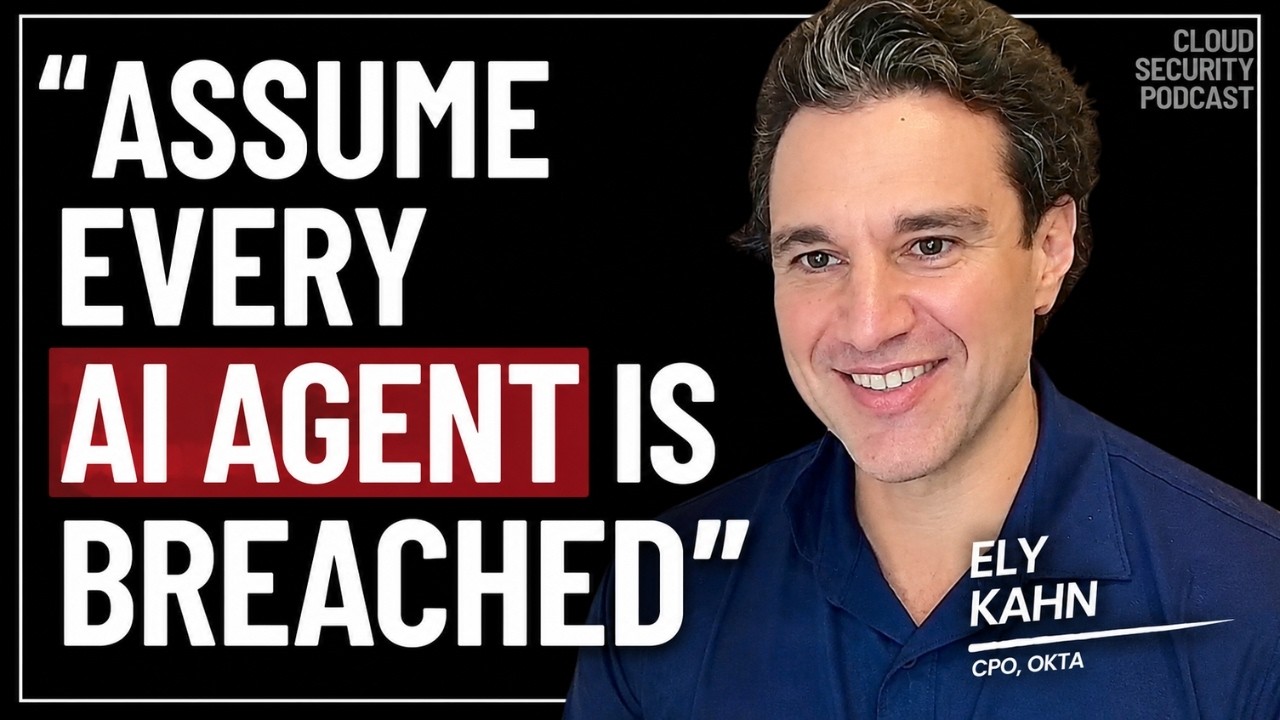
Who Governs Your AI Agents? Identity, Offboarding & Open Standards
Keywords
Summary
160 words
Critical Evaluation
Value of the Information & Strength of the Argument
The episode provides valuable insights into the emerging field of AI agent identity management, offering a clear framework for understanding the problem and potential solutions. The argumentation is solid, grounded in real-world examples and industry initiatives. The discussion of XAA and ID JAG is detailed and practical, explaining how these standards address the limitations of traditional OAuth. The maturity model for agent authorization is particularly useful, providing a roadmap for organizations. The emphasis on offboarding and kill switches addresses a often-overlooked aspect. However, the argumentation is largely from the perspective of Okta, which may introduce bias, and the lack of independent validation or case studies weakens the overall persuasiveness.
Scientific Rigor, Source Quality, Title Accuracy
The episode demonstrates scientific rigor by referencing specific standards (OAuth, XAA, SPIFFE) and initiatives (Linux Foundation’s Agent Domain System) without providing direct citations or links. The quality of sources is moderate; the discussion is based on expert opinion and industry knowledge rather than peer-reviewed research. The title accurately reflects the content, focusing on governance, identity, offboarding, and open standards. The presence of a sponsorship segment (Okta) is disclosed but does not detract from the technical content. No user comments were provided for analysis.
207 words
Title / Content Match
The title accurately reflects the core topics: governance of AI agents, identity management, offboarding, and open standards like XAA.
Quality & Reliability
8/10
The episode features an expert (Ely Kahn, CPO at Okta) discussing emerging standards and practices for AI agent identity management. The content is based on professional experience and ongoing industry initiatives, but lacks peer-reviewed sources or empirical data. The discussion is balanced and acknowledges limitations, but the promotional context (Okta sponsorship) slightly reduces perceived objectivity.
Chapters
- Introduction
- Ely Kahn's Background: From DHS to Okta CPO
- Why AI Agent Identity is Different from Human IAM
- The Danger of Overprivileged Tokens: A Source Code Breach Case Study
- Introducing Cross-App Access (XAA) and ID JAG
- Agent Identities: Acting on Behalf of a User vs. Autonomous Scopes
- SPIFFE vs. XAA: Workload Identity vs. Resource Authorization
- The Linux Foundation's Agent Domain System for Cross-Company Passports
- Assuming Breach: Why Prompt Injection Makes Identity the Highest ROI Security Action
- The 4 Maturity Levels of AI Agent Authorization
- Intent-Based Security and Zero Standing Privilege
- How to Offboard AI Agents and Manage Identity Governance (IGA)
- The 3 Governance Questions Every CISO Must Answer
- Implementing a Universal Kill Switch for Rogue Agents
Cited Sources
- Cloud Security Podcast Website — Official website for the podcast, providing additional resources and episodes.
- Cloud Security Bootcamp — Training resource mentioned in the description.
- Cloud Security Newsletter — Newsletter for cloud security updates.
- Cloud Security Podcast LinkedIn — LinkedIn page for the podcast.
Concurring Sources
Contribution & Novelties
This episode contributes to the discourse on AI agent identity by presenting Cross-App Access (XAA) as a practical open standard, contrasting it with existing solutions like SPIFFE. It introduces a maturity model for agent authorization, from static keys to intent-based security, and emphasizes the importance of offboarding and kill switches. The discussion of the Linux Foundation’s Agent Domain System highlights emerging cross-company identity solutions.
Pour aller plus loin :
105 words
Radar Profile
The radar profile shows high scores in information quantity and quality, with slightly lower technical depth and reliability. This indicates a well-informed discussion with practical insights, but the reliance on expert opinion and lack of independent verification may limit its scientific rigor.