Is AI Hallucinations a Myth and the Real Threat from AI
Keywords
Summary
167 words
Critical Evaluation
Value of the Information & Strength of the Argument
The value of the information is high for practitioners in cybersecurity, offering practical insights into how AI is being used in real-world SOC environments. Wu provides concrete examples, such as the automation of 160 years of alert investigations, and clarifies misconceptions about AI hallucinations. The argumentation is solid, grounded in his experience as a founder and former detection engineer. He acknowledges the limitations of current AI attacks and the challenges of DIY solutions, presenting a balanced view. However, the discussion is largely from a vendor perspective, which may introduce bias, and some claims lack external validation.
Scientific Rigor, Source Quality, Title Accuracy
The scientific rigor is moderate; while Wu references industry reports (e.g., CrowdStrike) and his own company’s metrics, he does not provide specific citations or data sources. The quality of sources is acceptable for a podcast, but not peer-reviewed. The title accurately reflects the content, focusing on AI hallucinations and real threats. The episode includes a brief sponsor segment (approximately 30 seconds) that does not affect the content quality. No comments were provided for analysis.
185 words
Title / Content Match
The title accurately reflects the core discussion on AI hallucinations and the real threats from AI, though the content focuses more on defense than attack.
Quality & Reliability
7/10
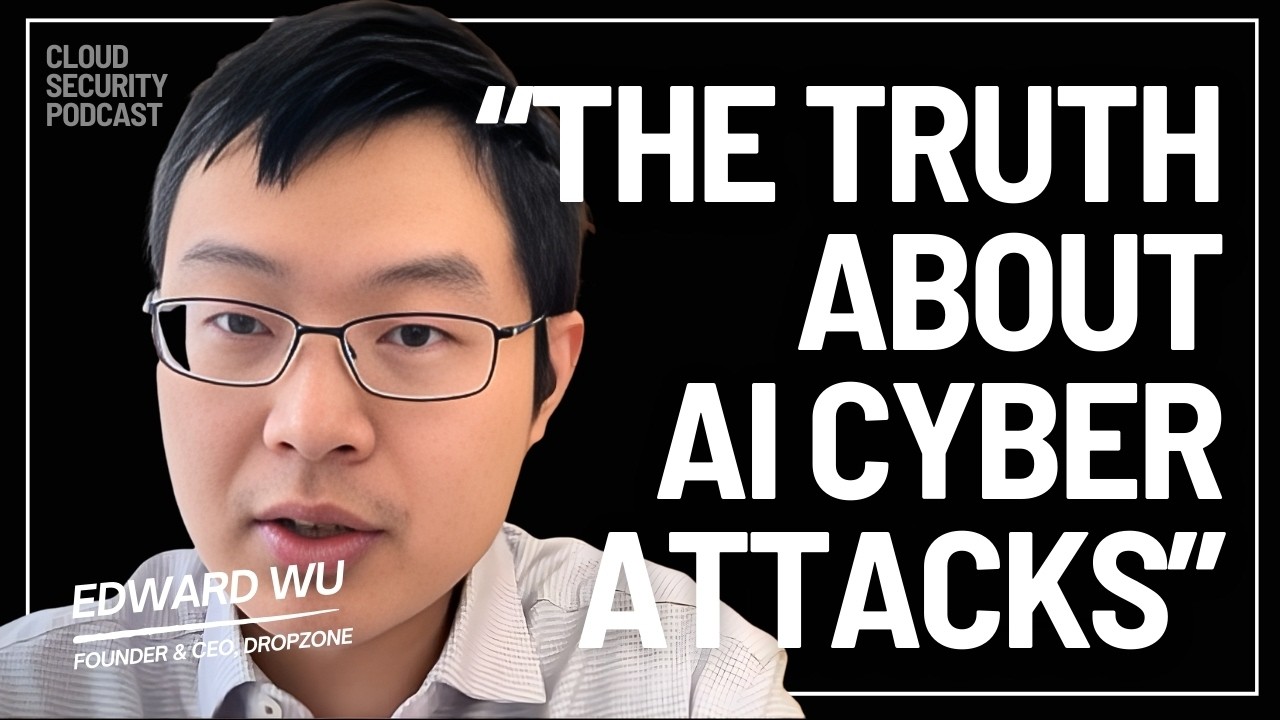
The episode features an expert in AI-driven cybersecurity, Edward Wu, founder of Dropzone AI, discussing real-world applications and limitations of AI in security operations. Claims are based on practical experience and industry reports, but are largely anecdotal and from a vendor perspective, lacking peer-reviewed evidence.
Chapters
- Introduction
- Who is Edward Wu? (Founder of Dropzone AI)
- The Reality of AI Cyber Attacks Today (Recon vs. End-to-End)
- Why Commercial LLMs Are Blocking Exploit Generation
- How MSSPs are Evolving with AI Triage
- The Asymmetric Capacity Gap: Why Humans Can't Keep Up
- Automating 160 Years of Alert Investigations
- Why AI Hallucinations are Actually Context Management Failures
- Build vs. Buy: The Data Network Effect for AI Agents
- The New Workflow for SOC Analysts & Threat Hunters
- Defining "Threategy": Scope, Authorization, and Context
- How to Detect Prompt Injection (Treat it like an Insider Threat)
- Dropzone AI Announcements at RSAC
Cited Sources
- Cloud Security Podcast — Official website of the podcast, providing additional resources and episodes.
- Cloud Security Bootcamp — Training program mentioned in the description for cloud security education.
- Cloud Security Newsletter — Newsletter for cloud security updates, referenced in the description.
- Cloud Security Podcast LinkedIn — LinkedIn page for the podcast, where episodes and updates are shared.
Concurring Sources
- CrowdStrike 2024 Global Threat Report — Referenced in the episode regarding the speed of attack campaigns.
Contribution & Novelties
The episode provides a nuanced perspective on AI in cybersecurity, challenging the hype around AI-driven attacks and hallucinations. It offers practical insights into how AI agents can augment SOC operations, with real-world metrics. The discussion on context management as the root cause of AI errors is a valuable contribution.
Pour aller plus loin :
- Large language model — Foundation of AI agents discussed.
- Prompt injection — Key security concern highlighted.
- Security operations center — Context for SOC automation.
78 words
Radar Profile
The radar profile shows high scores in information quantity and technical level, reflecting the depth of the discussion. Quality and reliability are slightly lower due to the vendor perspective and lack of external citations. Overall, the episode is informative for cybersecurity professionals.