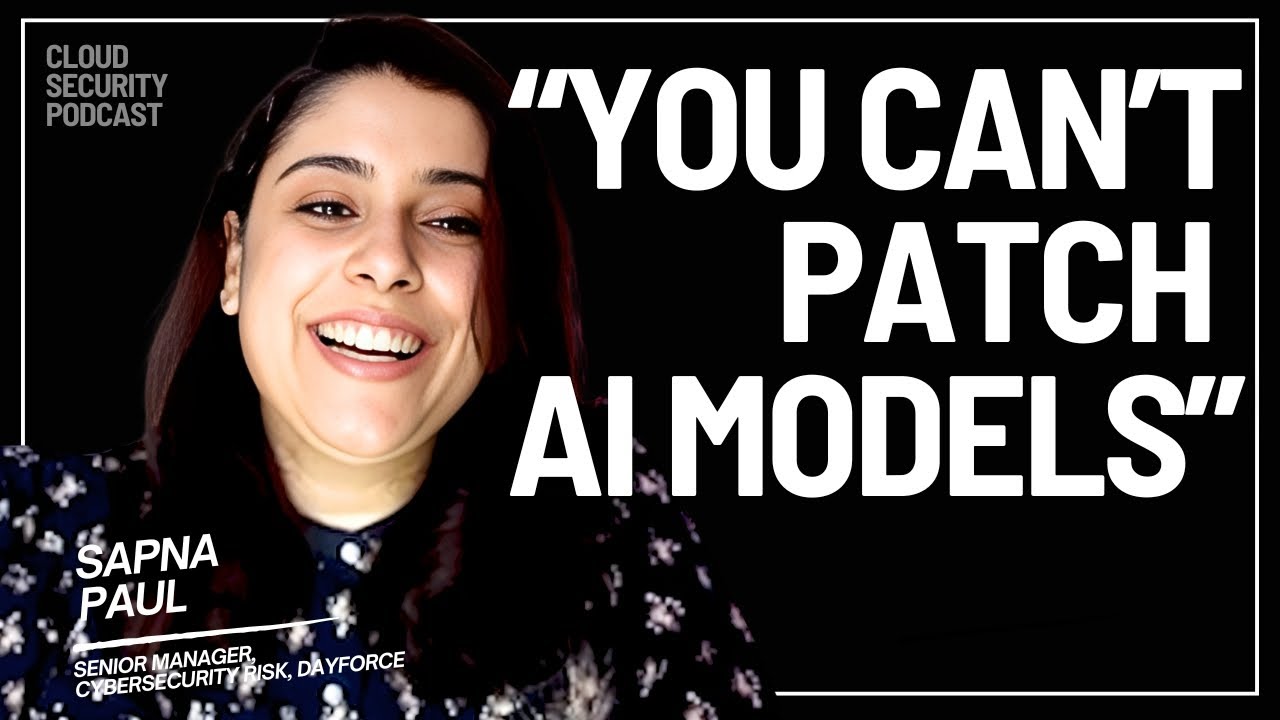
You Can't Patch AI Models (Do This Instead).
Keywords
Summary
160 words
Critical Evaluation
Value of the Information & Strength of the Argument
The value of the information is high for practitioners in vulnerability management and AI security, as it provides a clear framework for understanding AI-specific vulnerabilities and practical advice on integrating AI into security workflows. The argumentation is based on the speaker’s extensive professional experience, making it credible and actionable. However, the discussion lacks empirical data or case studies to support claims, and the reasoning is largely anecdotal. The speaker effectively argues that traditional vulnerability management approaches are insufficient for AI, and she offers a structured approach to address this gap.
Scientific Rigor, Source Quality, Title Accuracy
The scientific rigor is moderate; the speaker references well-known frameworks (NIST AI RMF, EU AI Act) and tools (SHAP, LIME, Counterfit) but does not provide detailed citations or evidence. The sources cited are primarily the podcast’s own website and social media links, which are not academic or authoritative. The title accurately reflects the content, as the episode focuses on alternative approaches to AI vulnerability management. No comments were provided for analysis.
176 words
Title / Content Match
The title accurately reflects the core message that traditional patching is not applicable to AI models, and the episode discusses alternative approaches.
Quality & Reliability
7/10
The content is based on the professional experience of a senior vulnerability management manager, providing practical insights. However, it lacks specific data, case studies, or citations to academic or industry sources, which limits its scientific rigor.
Chapters
- Introduction
- Who is Sapna Paul?
- What is Vulnerability Management in the Age of AI?
- Defining the New Asset: Neural Networks & Models
- The 3 Layers of AI Vulnerability (Production, Data, Behavior)
- Updating the Risk Register for AI Business Risks
- Compliance vs. Innovation: Preventing AI from Going Rogue
- Using AI to Solve Vulnerability Alert Fatigue
- Skills Required for Future VM Professionals
- Measuring AI Adoption in Security Teams
- Key Frameworks: NIST AI RMF & EU AI Act
- Tools for AI Security: Counterfit, SHAP, and LIME
- Where to Start: Learning & Persona-Based Prompts
- Fun Questions: Painting, Mentoring, and Vegan Ramen
Cited Sources
- Cloud Security Podcast — Official website of the podcast, providing additional resources and episodes.
- Cloud Security Bootcamp — Training program for cloud security professionals.
- Cloud Security Newsletter — Newsletter for cloud security updates.
- Cloud Security Podcast LinkedIn — LinkedIn page for the podcast.
Concurring Sources
- NIST AI Risk Management Framework — The framework is referenced in the episode as a key standard for AI risk management.
- EU AI Act — The EU AI Act is mentioned as a regulatory framework that security teams should align with.
Contribution & Novelties
The episode provides a practical perspective on AI vulnerability management from a senior practitioner, highlighting the need to shift from patching to continuous monitoring and retraining. It offers a three-layer framework (model, data, behavior) that is useful for security teams. The discussion on updating risk registers to speak business language is particularly valuable.
Pour aller plus loin :
- NIST AI Risk Management Framework — Official framework for managing AI risks.
- EU AI Act — Comprehensive overview of the EU AI Act.
- SHAP — Open-source library for explaining model predictions.
- LIME — Open-source library for explaining model predictions.
- Counterfit — Tool for adversarial testing of AI models.
106 words
Radar Profile
The radar profile shows a balanced performance across all dimensions, with slightly higher scores in information quality and reliability, reflecting the practical expertise of the speaker. The lower score in technical depth indicates that the content is accessible to a broader audience rather than deeply technical.