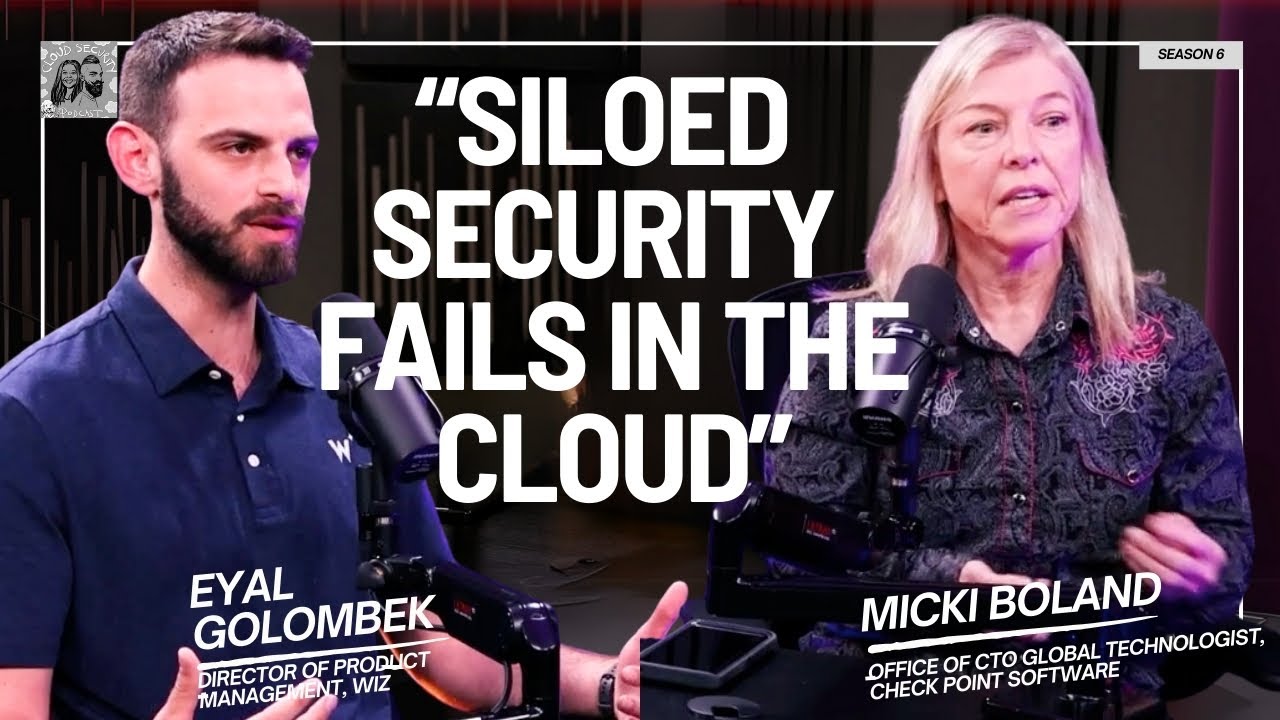
Why Siloed Security Fails in the Cloud: A New Horizontal Approach
Keywords
Summary
210 words
Critical Evaluation
Value of the Information & Strength of the Argument
The value of the information lies in its practical insights from industry veterans who have direct experience with cloud security challenges. The guests provide concrete examples of how siloed structures fail, such as the disconnect between vulnerability management and identity teams, and offer actionable advice like using gamification to involve developers. The argumentation is coherent and persuasive, building a case for a horizontal security approach by illustrating real-world attack paths and the need for integration. However, the discussion is largely anecdotal and lacks empirical evidence or case studies with specific metrics. The arguments are based on professional experience and industry trends, which adds credibility but also introduces potential bias due to the speakers’ affiliations with security vendors. The reasoning is logical and aligns with current best practices, but it could be strengthened by referencing specific research or data.
Scientific Rigor, Source Quality, Title Accuracy
The scientific rigor is moderate; the discussion is not based on formal research but on expert opinion and industry observations. The sources cited are limited to the podcast’s own website and social media, with no external references to academic papers or industry reports. The title accurately reflects the content, focusing on the failure of siloed security and the need for a horizontal approach. The episode does not present any original research or data, but it does reference concepts like exposure management and threat intelligence that are well-established in the industry. The lack of citations reduces the overall rigor, but the practical insights from experienced professionals provide some value. No user comments were provided for analysis.
268 words
Title / Content Match
The title accurately reflects the core theme of the episode: the failure of siloed security approaches in cloud environments and the need for a horizontal, integrated perspective.
Quality & Reliability
7/10
The discussion features two experienced security professionals from major vendors (Check Point and Wiz) sharing practical insights and industry observations. However, the content is largely anecdotal and promotional, lacking rigorous scientific evidence or citations. The arguments are coherent and align with current industry trends, but the reliability is moderate due to the absence of verifiable data and potential bias from vendor affiliations.
Chapters
- Introduction
- Who are Micki Boland & Eyal Golombek?
- What is Cloud Security in 2025?
- The #1 Blind Spot in Cloud Security: Thinking in Verticals
- Why Traditional, Siloed Security Methods Fail in the Cloud
- Shifting Left & Right: Connecting the Full Security Story
- Gamification: Making Developers Part of the Solution, Not the Problem
- How to Build Trust with Developers Without Slowing Them Down
- Connecting External Threat Intelligence with Internal Posture
- The Feedback Loop: Connecting Incident Response & Exposure Management
- Unlearning Old Habits: Moving from On-Prem to a Cloud Mindset
- Is Detection & Response Enough? The Need for Prevention
- The Future of Remediation: The Psychological Barrier to Automation
- Beyond Posture Management: The Shift to Exposure Management
- The Biggest Cultural Challenge: Democratizing Security
- The Wiz & Check Point Partnership: Expanding the Graph
- Final Questions
Cited Sources
- Cloud Security Podcast Website — Main website for the podcast, providing additional resources and episodes.
- Cloud Security Bootcamp — Educational resource mentioned in the description, likely for training.
- Cloud Security Newsletter — Newsletter for cloud security updates, mentioned in the description.
- Cloud Security Podcast LinkedIn — LinkedIn page for the podcast, used for community engagement.
Concurring Sources
- Cloud Security Podcast Website — The podcast's own platform, which may contain related episodes and resources.
Contribution & Novelties
The episode provides a clear articulation of the ‘horizontal attack path’ concept, emphasizing the interconnectedness of vulnerabilities, identities, and data in cloud environments. It offers practical advice on integrating security into development processes and using gamification to foster developer engagement. The discussion on the psychological barriers to automation and the shift from posture to exposure management adds depth to the conversation.
Pour aller plus loin :
- Exposure Management — Provides a general overview of the concept, relevant to the shift discussed.
- DevSecOps — Explains the integration of security into DevOps, aligning with the episode’s emphasis on collaboration.
- Cloud Security Posture Management (CSPM) — Related to the tools and practices mentioned for posture management.
113 words
Radar Profile
The radar profile shows balanced scores across quantity, quality, technical level, and reliability, with a slight emphasis on quantity and quality. This indicates a well-rounded discussion that provides substantial information with moderate technical depth and reliability, typical of an expert opinion podcast.