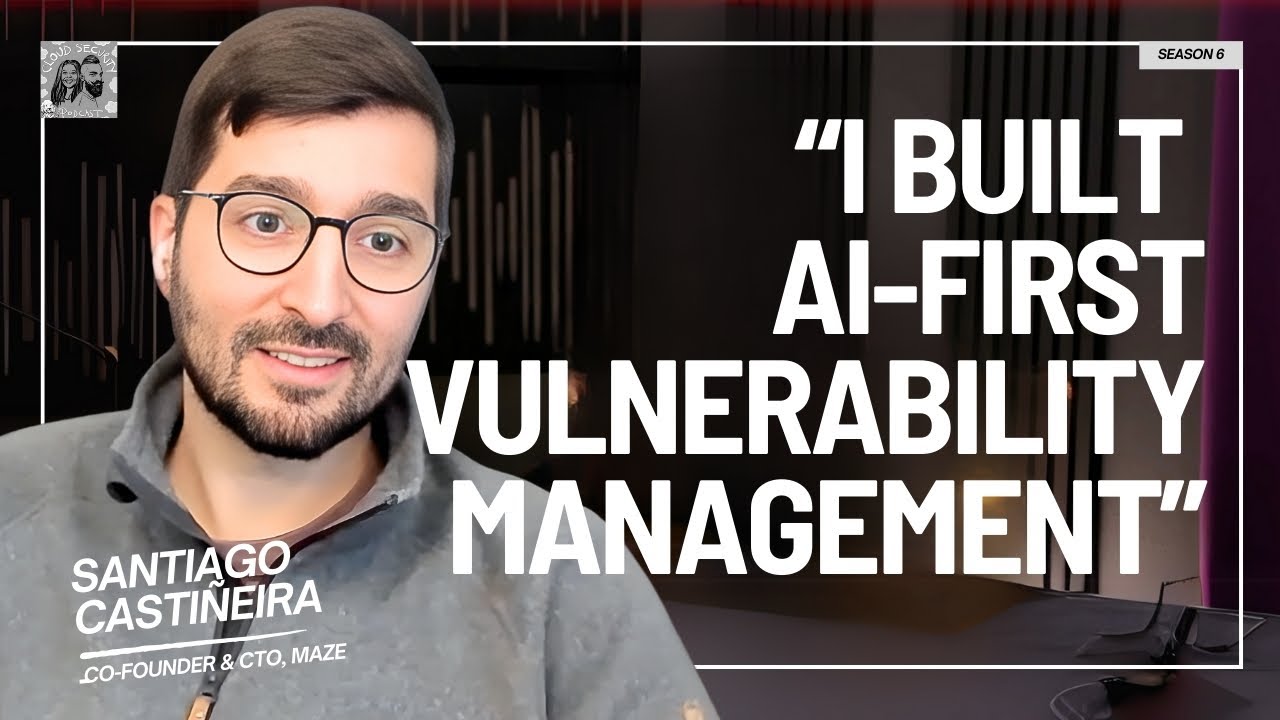
AI-First Vulnerability Management: Should CISOs Build or Buy?
Keywords
Summary
168 words
Critical Evaluation
Value of the Information & Strength of the Argument
The value of the information is high, offering practical, experience-based insights into the build vs. buy decision for AI-first vulnerability management. The argumentation is solid, grounded in real-world examples and technical reasoning. Castiñeira effectively contrasts the simplicity of prototyping with the complexity of production systems, addressing cost, scalability, and maintainability. He provides a balanced view, acknowledging both the potential of AI and the significant challenges. The discussion on evaluation methods and the ‘RAG drug’ is particularly valuable, highlighting common pitfalls. The argumentation is coherent and persuasive, though it could benefit from more concrete data or case studies to further substantiate claims.
Scientific Rigor, Source Quality, Title Accuracy
The scientific rigor is moderate; the content is based on expert opinion and practical experience rather than peer-reviewed research. The quality of sources is limited to the podcast’s own resources and general industry knowledge, with no specific citations to academic papers or official documentation. The title accurately reflects the content, focusing on the build vs. buy decision. The discussion is technically sound, but lacks formal references. The podcast’s credibility is enhanced by the guest’s background and the practical nature of the advice.
198 words
Title / Content Match
The title accurately reflects the core debate discussed, focusing on whether CISOs should build or buy AI-first vulnerability management solutions.
Quality & Reliability
8/10
The episode features a CTO with hands-on experience in AI-driven vulnerability management, providing practical insights and technical depth. Claims are grounded in real-world examples and industry practices, though not peer-reviewed. The discussion is balanced, acknowledging both benefits and challenges.
Chapters
- Introduction
- Who is Santiago Castiñeira?
- What is "AI-First" Vulnerability Management? (Rules vs. Reasoning) 04:55 The "Build vs. Buy" Debate: Can I Just Use ChatGPT?
- The "Bus Factor" Risk of Internal Tools
- Why MCP (Model Context Protocol) Struggles at Scale
- The Architecture of an AI-First Security System
- The Problem with "Vibe Checks": Why You Need Proper Evals
- Where to Start if You Must Build Internally
- The Hidden Need for Data & Software Engineers in Security Teams 21:50 Managing Prompt Drift and Consistency
- The Challenge of Changing LLM Models (Claude vs. Gemini)
- Rethinking Vulnerability Management Metrics in the AI Era
- Surprises in AI Agent Behavior: "Let's Get Back on Topic"
- The Hidden Cost of AI: Token Usage at Scale
- Multi-Agent Governance: Preventing Rogue Agents
- The Future: Semi-Autonomous Security Fleets
- Why RAG Fails for Precise Technical Data (The "RAG Drug")
- How to Evaluate AI Vendors: Is it AI-First or AI-Sprinkled?
- Common Architectural Mistakes: Vibe Evals & Cost Ignorance
- Unpopular Opinion: Well-Crafted Agents vs. Super Intelligence
- Final Questions: Kids, Argentine Steak, and Closing
Cited Sources
- Cloud Security Podcast — Official website of the podcast, providing additional resources and episodes.
- Cloud Security Bootcamp — Training program offered by the podcast hosts.
- Cloud Security Newsletter — Newsletter for cloud security updates.
- Cloud Security Podcast LinkedIn — LinkedIn page for the podcast.
Concurring Sources
- Cloud Security Podcast — The podcast's own platform, which may contain related episodes and resources.
Contribution & Novelties
The episode provides a nuanced perspective on the build vs. buy decision for AI-first vulnerability management, emphasizing the engineering challenges often overlooked. It offers practical advice on architecture, evaluation, and team skills. The discussion on the ‘RAG drug’ and the need for rigorous evals is particularly insightful.
Pour aller plus loin :
- Model Context Protocol (MCP) — Official documentation on MCP, relevant to the discussion on its scalability limitations.
- Retrieval-Augmented Generation (RAG) — Overview of RAG, relevant to the ‘RAG drug’ critique.
- LangGraph — Framework for building agentic workflows, mentioned in the episode.
- LLM Inference Cost Optimization — Academic paper on reducing inference costs, relevant to the cost discussion.
109 words
Radar Profile
The radar profile shows high scores in quantity and quality of information, with slightly lower technical depth and reliability. This indicates a well-informed discussion with practical insights, though not deeply technical or rigorously sourced.