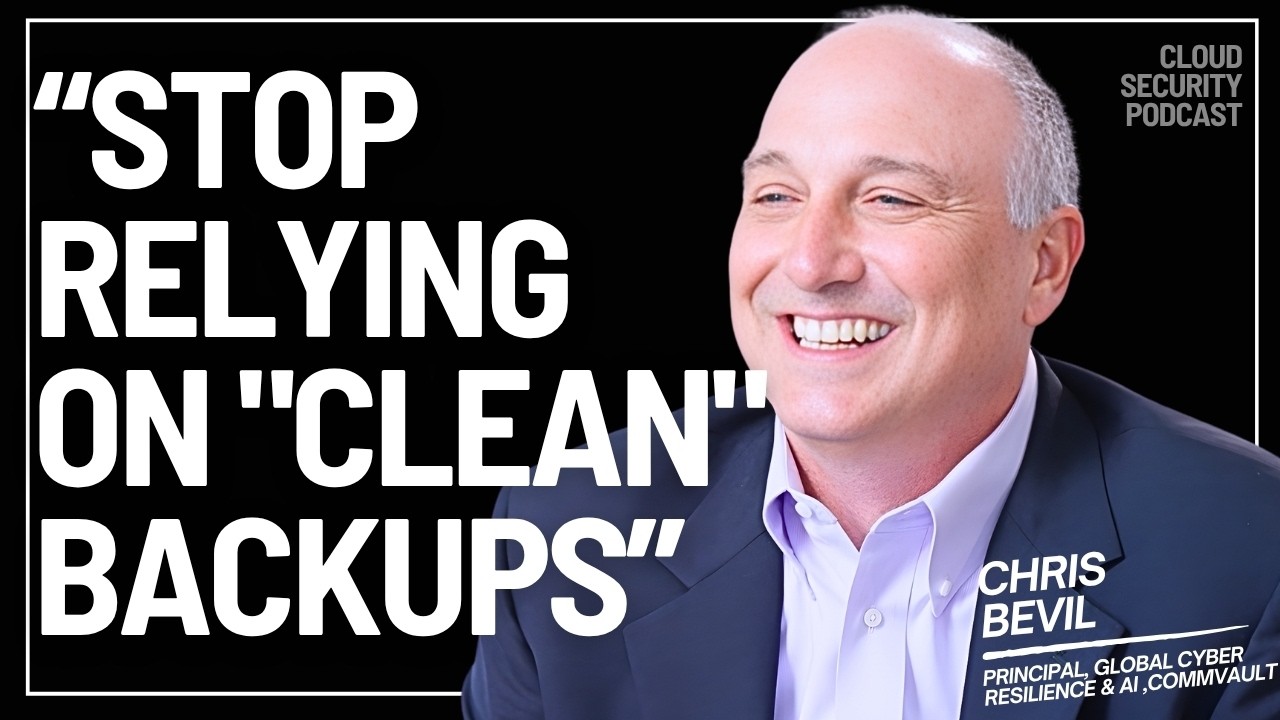
Surviving Ransomware: How to Guarantee a Clean Recovery After a Breach | ResOps
Keywords
Summary
183 words
Critical Evaluation
Value of the Information & Strength of the Argument
The value of the information lies in the practical, real-world perspective of a former CISO, offering actionable insights for cybersecurity professionals. The argumentation is coherent and well-structured, building from a concrete case study to broader principles. However, the discussion is largely anecdotal and lacks empirical data or references to independent research. The claims about the effectiveness of ResOps and clean rooms are plausible but not substantiated with quantitative evidence. The episode serves as a thought leadership piece rather than a rigorous scientific analysis.
Scientific Rigor, Source Quality, Title Accuracy
The scientific rigor is moderate; the episode is based on expert opinion and a single case study, without citing external sources or academic literature. The quality of sources is limited to the guest’s professional experience and Commvault’s perspective. The title accurately reflects the content, focusing on ransomware recovery and the ResOps concept. No comments were provided for analysis.
156 words
Title / Content Match
The title accurately reflects the content, focusing on ransomware recovery and the ResOps concept.
Quality & Reliability
7/10
The episode features a former CISO and current principal at Commvault, providing practical insights and a real-world case study. However, the discussion is largely anecdotal and product-agnostic, lacking peer-reviewed sources or empirical data. The claims are plausible but not independently verified.
Chapters
- Introduction
- Chris's Background: From "Recovering CISO" to Commvault
- Why Traditional Backup and Recovery Strategies Are Failing
- The 284-Day Incident: A Ransomware Horror Story (Conti Group)
- The Minimum Viable Recovery: Don't Bring the Bad Guys Back
- Shifting the Board Conversation from Tech Specs to Business Impact
- What is ResOps? (Resilience Operations)
- The Importance of Chaos Testing in Tabletop Exercises
- Why Identity is the First Pillar of Cyber Recovery
- Building a "Resilience First" Architecture (Clean Rooms & Air Gaps)
- How AI is Impacting the Speed of Attackers and Defenders
- Metrics for the Board: Mean Time to Clean Recovery
- Fun Questions: Crocodile and Kangaroo Jerky Tasting
- Hobbies & Family: Golf and 31 Years of Marriage
- Favorite Restaurant: The Cheesecake Factory
Cited Sources
- Cloud Security Podcast Website — Official website of the podcast, providing additional resources and episodes.
- Cloud Security Bootcamp — Training program mentioned in the description, likely relevant for further learning.
- Cloud Security Newsletter — Newsletter for staying updated on cloud security topics.
- Cloud Security Podcast LinkedIn — LinkedIn page for the podcast, offering community engagement.
Concurring Sources
- NIST Cybersecurity Framework — Provides a structured approach to managing cybersecurity risk, aligning with the resilience-first mindset.
- MITRE ATT&CK — Offers a comprehensive taxonomy of attacker behaviors, useful for understanding ransomware tactics.
Contribution & Novelties
The episode introduces the concept of ‘ResOps’ as a holistic discipline for cyber resilience, emphasizing the importance of clean recovery over mere backup. It provides a compelling case study illustrating the failure of traditional recovery methods. The discussion on ‘Clean Rooms’ and ‘Minimum Viable Recovery’ offers practical guidance for organizations.
Pour aller plus loin :
- NIST Cybersecurity Framework — Foundational framework for improving cybersecurity posture, relevant to resilience planning.
- MITRE ATT&CK — Knowledge base of adversary tactics and techniques, useful for understanding ransomware attack patterns.
- 3-2-1 Backup Rule — Classic backup strategy, discussed as insufficient for cyber recovery.
- Immutable Storage — Concept of tamper-proof backups, key to ensuring clean recovery.
- Tabletop Exercises — Guidance from CISA on conducting tabletop exercises, relevant to chaos testing.
124 words
Radar Profile
The radar profile shows balanced scores across information quantity, quality, technical depth, and reliability, indicating a well-rounded discussion. The slightly lower technical score suggests the content is accessible to a broad audience, while the reliability score reflects the expert-based nature of the episode.