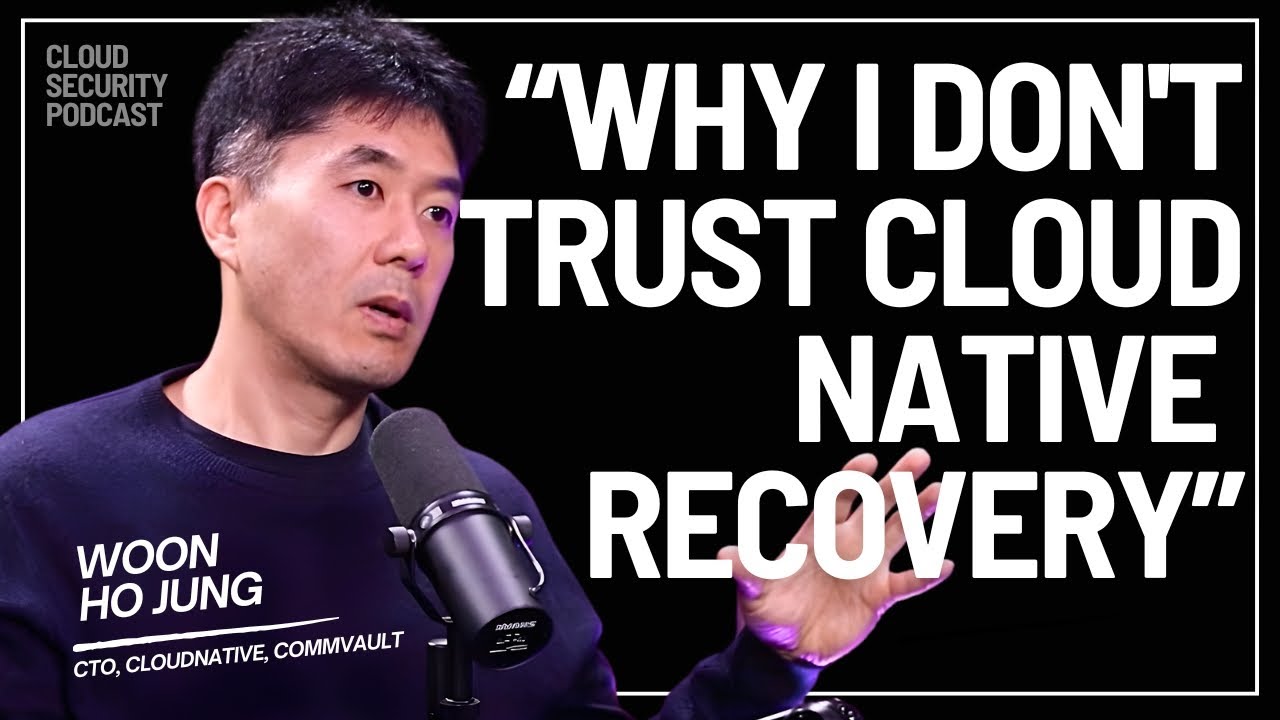
Is Cloud Native Backup Enough? Air Gapping & Ransomware Resilience
Keywords
Summary
190 words
Critical Evaluation
Value of the Information & Strength of the Argument
The value of the information is high for practitioners in cloud security and data protection. The guest provides concrete, real-world examples of backup failures, such as the difficulty of recovering billions of objects and the risks of account-level deletion. The argumentation is coherent and well-structured, moving from the limitations of native tools to the need for more robust, isolated backup solutions. The discussion on granular restore capabilities, like DynamoDB Backtrack, offers actionable insights for improving recovery processes. However, the argumentation is largely based on anecdotal evidence and the guest’s professional experience, which, while credible, is not backed by formal studies or data. The promotional aspect for Clumio’s products is present but not overly intrusive.
Scientific Rigor, Source Quality, Title Accuracy
The scientific rigor is moderate. The content is technically accurate and aligns with industry best practices, but it lacks formal citations or references to external sources. The guest’s expertise lends credibility, but the discussion is primarily opinion and experience-based. The sources cited are limited to the podcast’s own website and social media links, which do not provide direct evidence for the claims made. The title accurately reflects the content, focusing on cloud-native backup limitations and air-gapped resilience. No comments were provided for analysis.
212 words
Title / Content Match
The title accurately reflects the core discussion on cloud-native backup limitations and air-gapped resilience.
Quality & Reliability
8/10
The podcast features a recognized expert (CTO of Clumio, acquired by Commvault) discussing cloud backup and recovery. The content is based on practical experience and specific technical examples, but it is largely anecdotal and lacks formal citations. The claims align with industry best practices, but the lack of verifiable sources and the promotional context reduce the score.
Chapters
- Introduction
- Who is Woon Jung? (Commvault/Clumio)
- Defining "Cloud Native Resilience" in 2025
- The Myth: "AWS Replicates Everything, Why Backup?"
- Why S3 Versioning Fails Against Account Deletion
- The Nightmare Scenario: Recovering Billions of Objects
- Multi-Region vs. Multi-Cloud Backups
- Cloud Native Snapshots vs. Enterprise Backup (PITR limitations)
- The Evolution of Restore: Granular vs. Full Database Restore
- Deep Dive: DynamoDB Backtrack & Granular Recovery
- RTO Challenges: 60 Billion Objects in One Bucket
- Why RTO is the "Hidden" Metric
- Advice for CISOs: Moving Beyond "Check-the-Box" Compliance
- The Dangers of DIY Backup Solutions
- What is an "Air Gapped" Backup in the Cloud? (The Bunker Account) 37:30 Why Root Compromise Kills Native Backups
- Fun Questions: Running 100 Miles/Month & Korean/Argentine Food
Cited Sources
- Cloud Security Podcast — Official website of the podcast, providing additional resources and episodes.
- Cloud Security Bootcamp — Training program mentioned in the description, relevant for those seeking deeper knowledge.
- Cloud Security Newsletter — Newsletter for staying updated on cloud security topics.
- Cloud Security Podcast LinkedIn — LinkedIn page for the podcast, offering community engagement.
Concurring Sources
- AWS Shared Responsibility Model — Supports the argument that customers are responsible for data protection, aligning with the podcast's emphasis on not relying solely on AWS.
- S3 Versioning — Confirms the limitations of versioning in case of bucket deletion, as discussed in the episode.
Dissenting Sources
- AWS Backup — AWS Backup is a native service that offers centralized backup across AWS services, potentially mitigating some of the concerns raised about native tools, though it may still have limitations in granularity and isolation.
Contribution & Novelties
The episode provides a nuanced perspective on cloud-native backup limitations, particularly the false sense of security from features like S3 versioning and snapshots. It introduces the concept of a ‘bunker account’ for air-gapped backups, which is a practical approach for ransomware resilience. The discussion on granular restore capabilities, such as DynamoDB Backtrack, highlights a shift towards more flexible and efficient recovery methods. The emphasis on RTO as a critical metric and the warning against DIY backup solutions offer valuable guidance for organizations.
Pour aller plus loin :
- AWS Shared Responsibility Model — Official documentation explaining the division of security responsibilities between AWS and the customer.
- S3 Versioning — AWS documentation on S3 versioning, its benefits and limitations.
- DynamoDB Point-in-Time Recovery — AWS documentation on PITR for DynamoDB, including its constraints.
- Air Gap (networking) — Wikipedia article explaining the concept of air gapping in network security.
145 words
Radar Profile
The radar profile shows high scores in information quantity and quality, reflecting the depth of the discussion. The technical level is moderately high, suitable for a professional audience. The overall reliability is strong, though the lack of formal citations slightly reduces the score. The profile suggests a well-informed, practical episode with actionable insights.