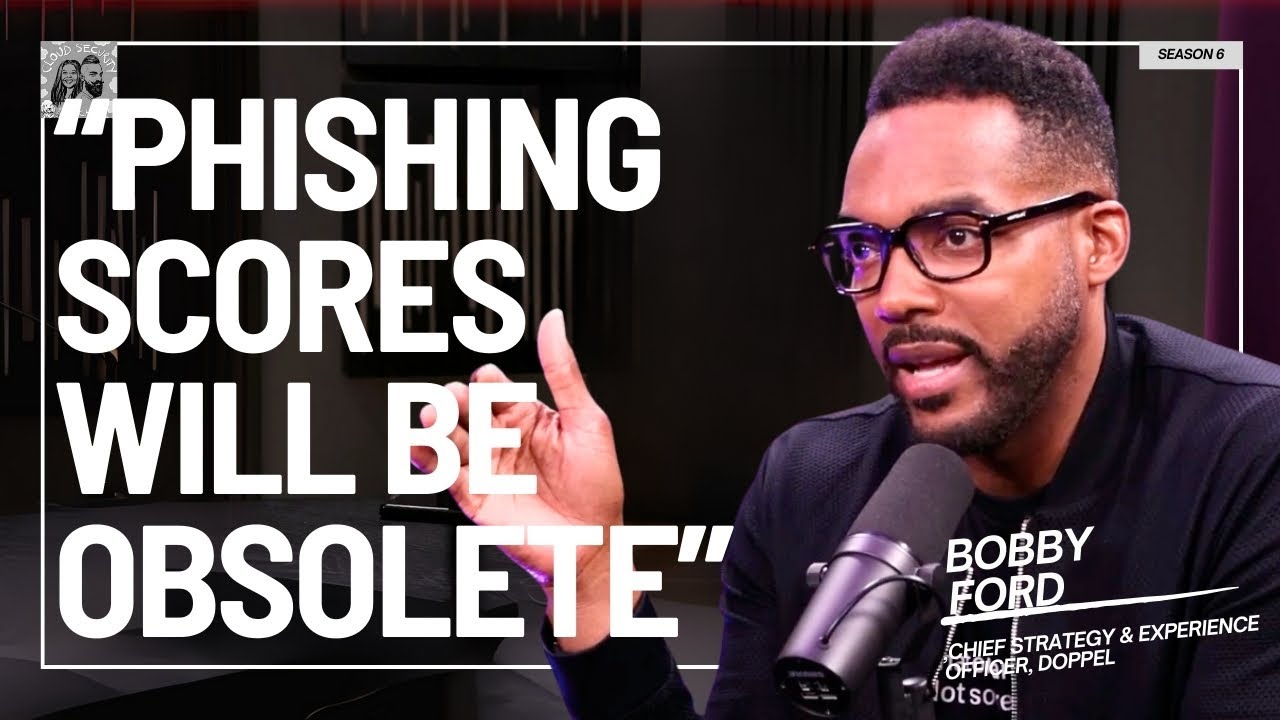
Phishing Scores Will Be Gone in 18 Months: The Future of Social Engineering
Keywords
Summary
166 words
Critical Evaluation
Value of the Information & Strength of the Argument
The episode provides valuable insights into the current state and future trajectory of social engineering attacks. Bobby Ford’s arguments are well-structured and grounded in his extensive experience as a CISO. He effectively explains how AI has transformed attacks, making them more personalized and harder to detect. The discussion on the inadequacy of traditional phishing metrics is compelling, and the proposal to shift towards measuring ‘social engineering susceptibility’ offers a fresh perspective. Ford’s emphasis on proactive infrastructure takedowns as a defense strategy is practical and forward-thinking. The argumentation is coherent, though some claims, such as the 18-month timeline for phishing scores to disappear, are speculative and lack empirical evidence.
Scientific Rigor, Source Quality, Title Accuracy
The episode maintains a high level of rigor in its discussion, with Bobby Ford drawing on real-world examples and his professional background. The mention of Scattered Spider adds credibility, as it is a known threat actor. However, the conversation is primarily opinion-based, with no formal citations or references to academic studies or industry reports. The title accurately reflects the content, focusing on the predicted decline of phishing scores. The podcast’s description provides links to its website and social media, but these are not direct sources for the claims made. Overall, the content is informative but relies on expert opinion rather than verifiable data.
226 words
Title / Content Match
The title accurately reflects the core thesis of the episode, which is the predicted decline of phishing click-through metrics in favor of broader social engineering susceptibility measures.
Quality & Reliability
7/10
The discussion is grounded in the extensive CISO experience of the guest, Bobby Ford, and references real-world threat actors like Scattered Spider. However, claims about the obsolescence of phishing scores are forward-looking and not backed by empirical data or formal studies.
Chapters
- Introduction
- Who is Bobby Ford? Soldier, Philosopher, CISO
- Social Engineering in 2025: When You Can't Trust Your Senses
- The New AI Attack: Hyper-Personalized & Multi-Channel
- Why Phishing Scores Will Be Obsolete in 18 Months
- Are Executives Still the Target? The Pivot Point Strategy
- Why Traditional Social Engineering Defenses Are Failing
- Scattered Spider: The "Not One Size Fits All" Attack
- The New CISO Metric: Social Engineering Susceptibility
- A New Defense: Preventative Infrastructure Takedowns
- Beyond "Check the Box": Holistic Security Awareness
- Gaining Visibility Across All Channels (Including SMS)
- Final Questions: From Scraping Stickers to Michelin Stars
Cited Sources
- Cloud Security Podcast Website — Official website of the podcast, providing additional resources and episodes.
- Cloud Security Bootcamp — Training program offered by the podcast hosts.
- Cloud Security Newsletter — Newsletter for cloud security updates.
- Cloud Security Podcast LinkedIn — LinkedIn page for the podcast.
Concurring Sources
- Social engineering (security) - Wikipedia — Provides foundational knowledge on social engineering, supporting the discussion.
- Scattered Spider - Wikipedia — Details on the threat actor group, corroborating the examples mentioned.
Contribution & Novelties
The episode offers a novel perspective on the future of social engineering defense, arguing that traditional phishing metrics are becoming obsolete and that organizations should adopt a broader ‘social engineering susceptibility’ metric. It emphasizes the need for AI-driven defenses and proactive infrastructure takedowns, which is a shift from reactive user training. The discussion provides practical insights for CISOs and security professionals.
Pour aller plus loin :
- Social engineering (security) — Overview of social engineering in cybersecurity.
- Scattered Spider — Information on the threat actor group mentioned.
- Generative AI — Background on the technology driving new attack vectors.
97 words
Radar Profile
The radar profile shows high scores in quality of information and fiabilité, reflecting the expert insights and credible examples. The lower score in technical level indicates that the content is accessible to a broad audience, while the quantity of information is moderate, as the episode focuses on a specific topic.
💬 No comments were provided for analysis.