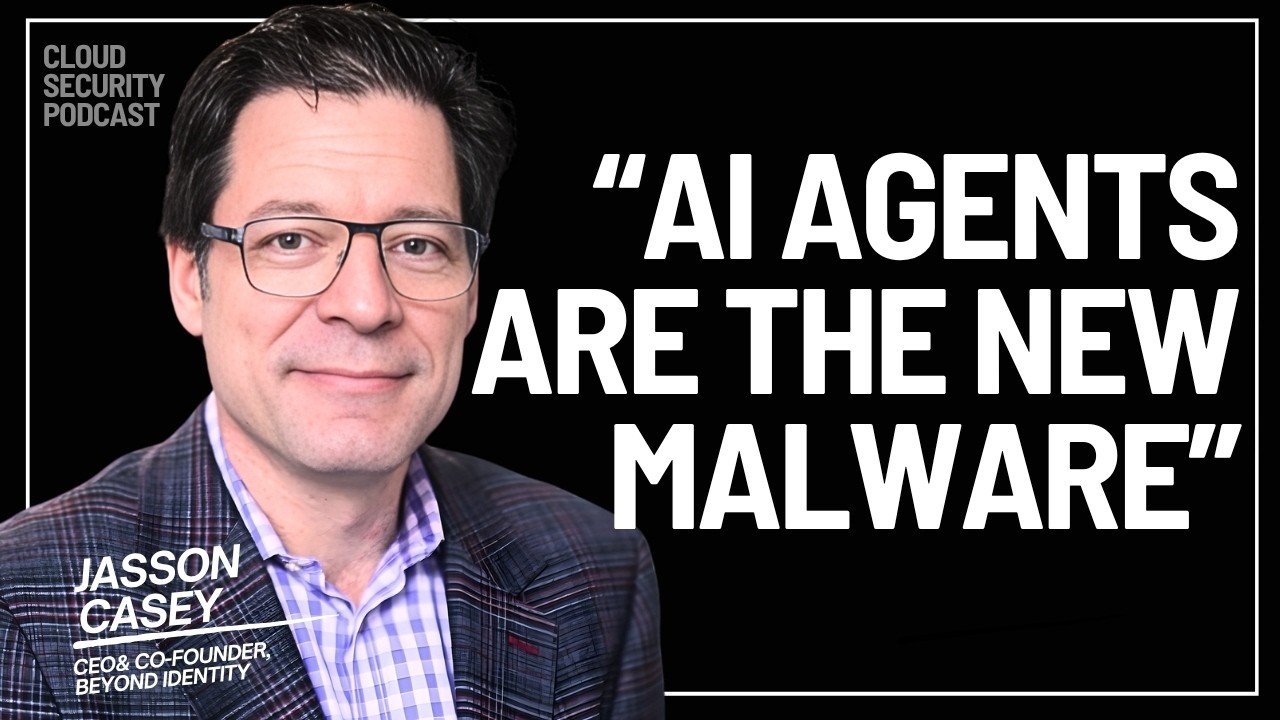
Solving Prompt Injection & Shadow AI for AI Malware
Keywords
Summary
161 words
Critical Evaluation
Value of the Information & Strength of the Argument
The episode provides valuable insights into the emerging threats of AI agents, particularly the risks of prompt injection and data exfiltration. Casey’s argument for device-bound identity as a systematic solution is compelling and well-articulated, drawing on real-world examples like the Reddit incident. The discussion is practical and addresses the tension between enabling AI adoption and maintaining security. However, the argumentation is largely anecdotal and lacks empirical evidence or detailed technical depth, making it more of an expert opinion than a rigorous analysis.
Scientific Rigor, Source Quality, Title Accuracy
The podcast is a professional production with a clear structure and relevant questions. The sources cited are primarily the podcast’s own website and social media, with no external references to academic papers or official documentation. The title accurately reflects the content, focusing on prompt injection and shadow AI. The discussion is coherent and stays on topic, though it occasionally veers into promotional territory for Beyond Identity’s solutions. Overall, the scientific rigor is moderate, relying on expert opinion rather than verifiable sources.
178 words
Title / Content Match
The title accurately reflects the core topics of prompt injection, shadow AI, and AI as malware, though the term 'AI Malware' is used metaphorically.
Quality & Reliability
7/10
The discussion is led by an industry expert (CEO of Beyond Identity) with practical insights and references to real incidents, but it is largely opinion-based without peer-reviewed sources or empirical data.
Chapters
- Introduction
- Who is Jasson Casey? (CEO of Beyond Identity)
- The Reality of Shadow AI: Marketers & Devs Moving Fast
- Why AI Agents Execute Like Adversarial Malware
- Prompt Injection Over Time & Agent "Memory" as Persistence
- The CISO "Barbell": Blocking Everything vs. Accepting All Risk
- Applying the NIST Framework to AI Agents
- The Reddit Horror Story: An $80,000 Stolen Claude Key
- Why Device-Bound Identity is the Ultimate AI Control Plane
- The Death of SaaS IT Products (Replaced by Git + Claude Code)
- Fixing Prompt Injection & Exfil via Attributable Identity
- Moving from UI Dashboards to API Data + AI Skills
- Building "Agentic Playbooks" for Security Teams
- Red Teaming: Cloning Voices in 4 Hours via Hugging Face
- Fun Questions: Kangaroo vs. Crocodile Tasting
- Hobbies: Radar Projects & Northern Mexican Cuisine (Dark Mole)
Cited Sources
- Cloud Security Podcast Website — Official website for the podcast, mentioned in the description.
- Cloud Security Bootcamp — Mentioned in the description as a resource for cloud security training.
- Cloud Security Newsletter — Mentioned in the description as a newsletter for cloud security updates.
- Cloud Security Podcast LinkedIn — LinkedIn page for the podcast, mentioned in the description.
Concurring Sources
- OWASP Top 10 for LLM Applications — Aligns with the discussion on prompt injection and other LLM security risks.
Contribution & Novelties
The episode offers a fresh perspective on AI security by framing AI agents as a form of adversarial malware and advocating for device-bound identity as a foundational control. It highlights the inadequacy of traditional security measures and suggests a shift towards API-driven data access and agentic playbooks. The discussion on prompt injection persistence and the need for systematic solutions adds value to the ongoing conversation.
Pour aller plus loin :
- OWASP Top 10 for LLM Applications — Relevant for understanding prompt injection and other LLM vulnerabilities.
- NIST AI Risk Management Framework — Provides a structured approach to managing AI risks, as referenced in the episode.
- Beyond Identity — The company’s website, offering more details on device-bound identity solutions.
118 words
Radar Profile
The radar profile shows a balanced but moderate performance across all dimensions, with slightly higher scores in information quantity and quality, reflecting the podcast's informative but not deeply technical nature. The lower technical level and reliability scores indicate a focus on practical insights rather than rigorous scientific detail.