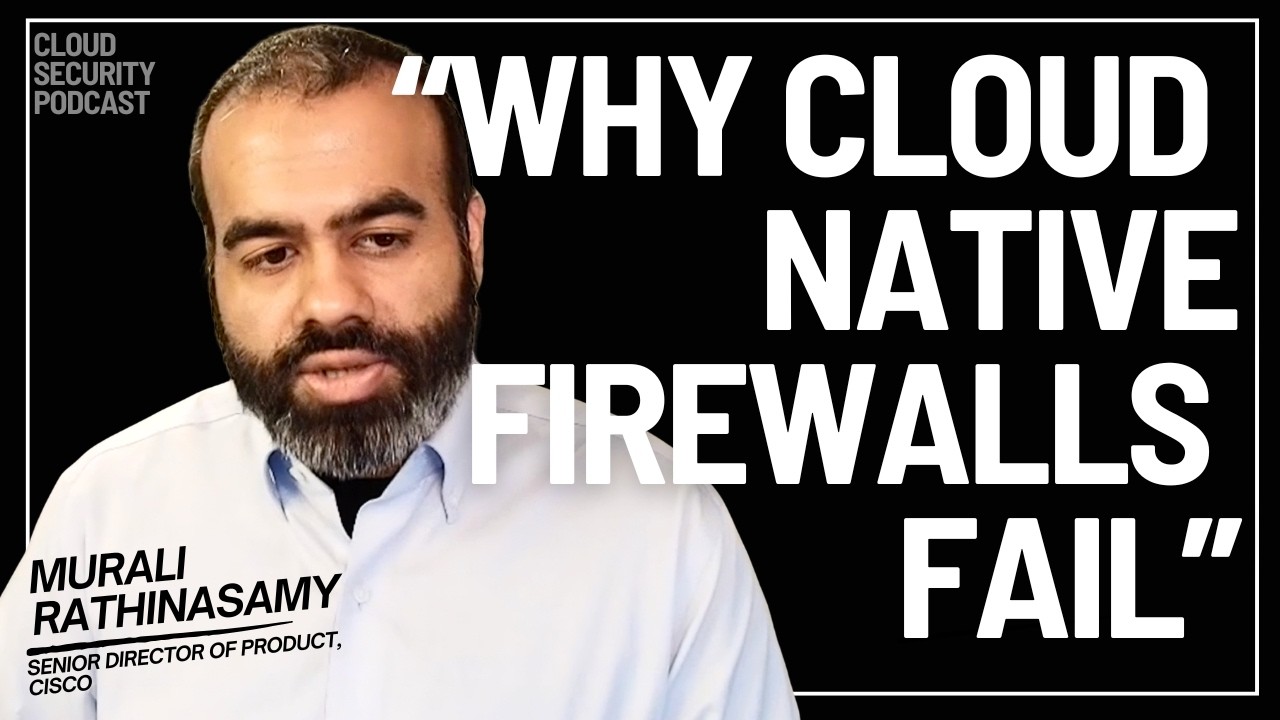
Native Cloud Firewalls Falling Short in a Multicloud World
Keywords
Summary
186 words
Critical Evaluation
Value of the Information & Strength of the Argument
The podcast provides valuable insights into the challenges of securing multicloud and hybrid environments, highlighting the limitations of cloud-native firewalls and the need for unified policy management. The argumentation is coherent, drawing on real-world examples and industry experience. However, it is primarily a promotional discussion for Cisco’s solutions, which may bias the presentation. The value lies in the practical considerations for enterprises, such as the operational burden of managing multiple security tools and the benefits of a centralized approach. The argumentation is solid but lacks independent validation or critical examination of alternative solutions.
102 words
Title / Content Match
The title accurately reflects the core discussion on the limitations of cloud-native firewalls in multicloud environments, though the content also covers broader hybrid mesh firewall benefits.
Quality & Reliability
7/10
The podcast features a senior product director from Cisco discussing hybrid mesh firewall concepts, with practical examples and industry insights. However, it is largely promotional, lacking independent verification and detailed technical depth.
Chapters
- Introduction
- Murali Rathinasamy's Background and Role at Cisco
- What is a Hybrid Mesh Firewall?
- Bridging the Skills Gap: NetSec vs. CNAPP/CSPM
- Case Study: Royal College of Surgeons in Ireland (RCSI)
- The Limits of Cloud-Native Firewalls in a Multicloud World
- Securing AI Workloads and Managing the Agent Blast Radius
- Why You Need Unified Policy Orchestration Across Firewall Vendors
- Why Micro-segmentation Fails: Overcoming Analysis Paralysis
- How to Implement Micro-segmentation "One Bite at a Time"
- Detecting and Blocking Prompt Injections with Cisco AI Defense
- Where Does the Hybrid Mesh Firewall Fit in the Tech Stack?
Cited Sources
- Cloud Security Podcast — Official website of the podcast, providing additional resources and episodes.
- Cloud Security Bootcamp — Training program mentioned in the description for cloud security education.
- Cloud Security Newsletter — Newsletter for cloud security updates and insights.
- Cloud Security Podcast LinkedIn — LinkedIn page for the podcast, offering community engagement.
Concurring Sources
- Cisco Hybrid Mesh Firewall — Cisco's official page on hybrid mesh firewall, aligning with the podcast's discussion.
Contribution & Novelties
The episode offers a clear explanation of the hybrid mesh firewall concept, which is relatively new in the industry. It provides a practical case study and discusses the challenges of micro-segmentation with a proposed incremental approach. The discussion on securing AI workloads and prompt injection detection adds contemporary relevance. However, the content is largely promotional, and the novelty is limited to the specific product perspective.
Pour aller plus loin :
- Hybrid Mesh Firewall - Cisco — Official product page with detailed features and benefits.
- Micro-segmentation - Wikipedia — Overview of micro-segmentation concepts and benefits.
- Zero Trust Architecture - NIST — NIST Special Publication on Zero Trust Architecture, relevant to the security model discussed.
113 words
Radar Profile
The radar profile shows moderate scores across all dimensions, indicating a balanced but not exceptional presentation. The podcast provides useful information but lacks deep technical detail and independent verification, resulting in a moderate overall quality.
💬 No comments were provided for analysis.