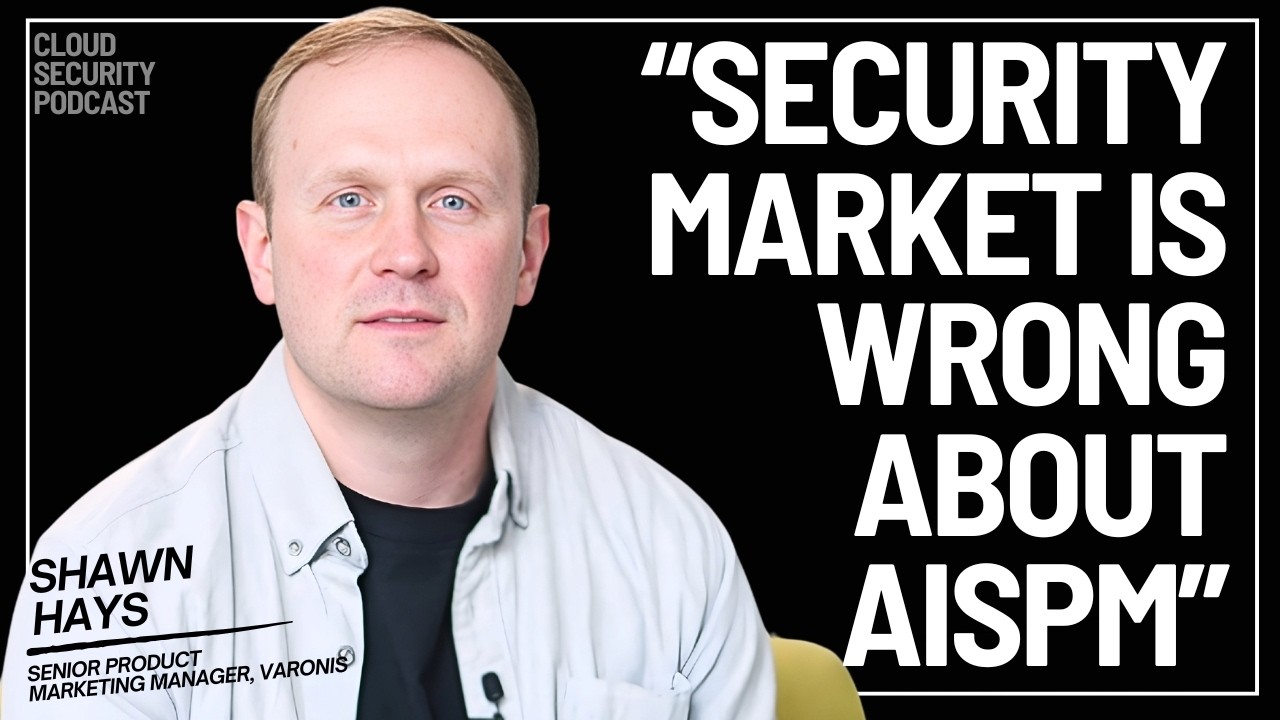
AISPM Isn't Enough: How to Apply Zero Trust to AI Agents
Keywords
Summary
140 words
Critical Evaluation
Value of the Information & Strength of the Argument
The value of the information lies in its practical insights from an industry expert on the current state of AI security. Hays provides a clear framework for understanding the components of an AI security platform and argues convincingly that data security is central to AI security. The argumentation is coherent, using analogies like the ‘Multi-AI Era’ and the ‘Ron Burgundy’ teleprompter to illustrate points. However, the discussion is largely anecdotal and promotional, lacking empirical evidence or case studies to support claims. The reasoning is logical but relies heavily on the speaker’s experience and the capabilities of Varonis products.
Scientific Rigor, Source Quality, Title Accuracy
The scientific rigor is moderate; the episode is an expert opinion rather than a peer-reviewed study. Sources are not explicitly cited, but the discussion references industry tools and frameworks like MCP servers and NIST’s CVE database. The title accurately reflects the content, focusing on the inadequacy of AISPM and the need for Zero Trust. No comments were provided for analysis.
173 words
Title / Content Match
The title accurately reflects the core argument that AISPM alone is insufficient and that Zero Trust principles should be applied to AI agents.
Quality & Reliability
7/10
The discussion is based on the guest's professional experience and knowledge of the AI security market, but it is largely anecdotal and promotional, lacking empirical data or peer-reviewed sources. The claims are plausible and align with industry trends, but the evidence is primarily testimonial.
Chapters
- Introduction
- Shawn's Background: Microsoft, CMMC, and Varonis
- The Biggest AI Security Challenges (Copilot to Agentic AI)
- Third-Party AI Risk (Jira and Salesforce Agents)
- The Connector Ecosystem Danger (Copilot + Salesforce)
- 8 Distinct Areas of an AI Security Platform (Varonis Atlas)
- Entering the "Multi-AI Era" (Analogies to Multi-Cloud)
- The AI Bill of Materials (Athena AI & Grammarly)
- Why Data Security and AI Security are Intertwined
- Applying Zero Trust to the Entire AI Chain
- The Role of Identity and ITDR in AI Systems
- HIPAA, OCR, and Regulating AI Data Access
- Creating a Governance Plan for Microsoft Copilot
- Securing Pro-Code AI Systems (AWS Bedrock & MCP Servers)
- Why the Security Market is Over-Pivoting on AISPM
- The "Ron Burgundy" Analogy for AI Agents
- Fun Questions: Crocodile & Caramel Tasting
- The Ed Sheeran & Yelawolf Mixtape Connection
- Hobbies & Pride: DJing Weddings and Playing Ice Hockey in Alabama
- Favorite Food: Alabama White Sauce BBQ & Milo's Burgers
Cited Sources
- Cloud Security Podcast — Official website of the podcast
- Cloud Security Bootcamp — Educational resource mentioned in the description
- Cloud Security Newsletter — Newsletter for cloud security updates
- Cloud Security Podcast LinkedIn — LinkedIn page for the podcast
Concurring Sources
- Varonis Atlas — Product mentioned in the episode as an example of an AI security platform
Contribution & Novelties
The episode provides a practitioner’s perspective on the limitations of AISPM and the necessity of integrating data security and Zero Trust into AI security strategies. It offers a structured view of the eight areas of an AI security platform and introduces the concept of the ‘Multi-AI Era.’ The discussion is timely and relevant for security professionals.
Pour aller plus loin :
- Zero Trust Architecture — Foundational concept for the security model discussed.
- AI Security Posture Management (AISPM) — Gartner’s definition and market overview.
- Model Context Protocol (MCP) — Official documentation for MCP, a key component in agentic AI.
98 words
Radar Profile
The radar profile shows a balanced but moderate performance across all dimensions, with slightly higher scores in quantity of information and technical level, reflecting the expert discussion. The lower scores in quality and reliability indicate the lack of empirical evidence and reliance on anecdotal experience.