Protein–Macromolecule Interactions | Week 10 | NPTEL 2025 | Fundamental of Protein Chemistry
Keywords
Summary
125 words
Critical Evaluation
Value of the Information & Strength of the Argument
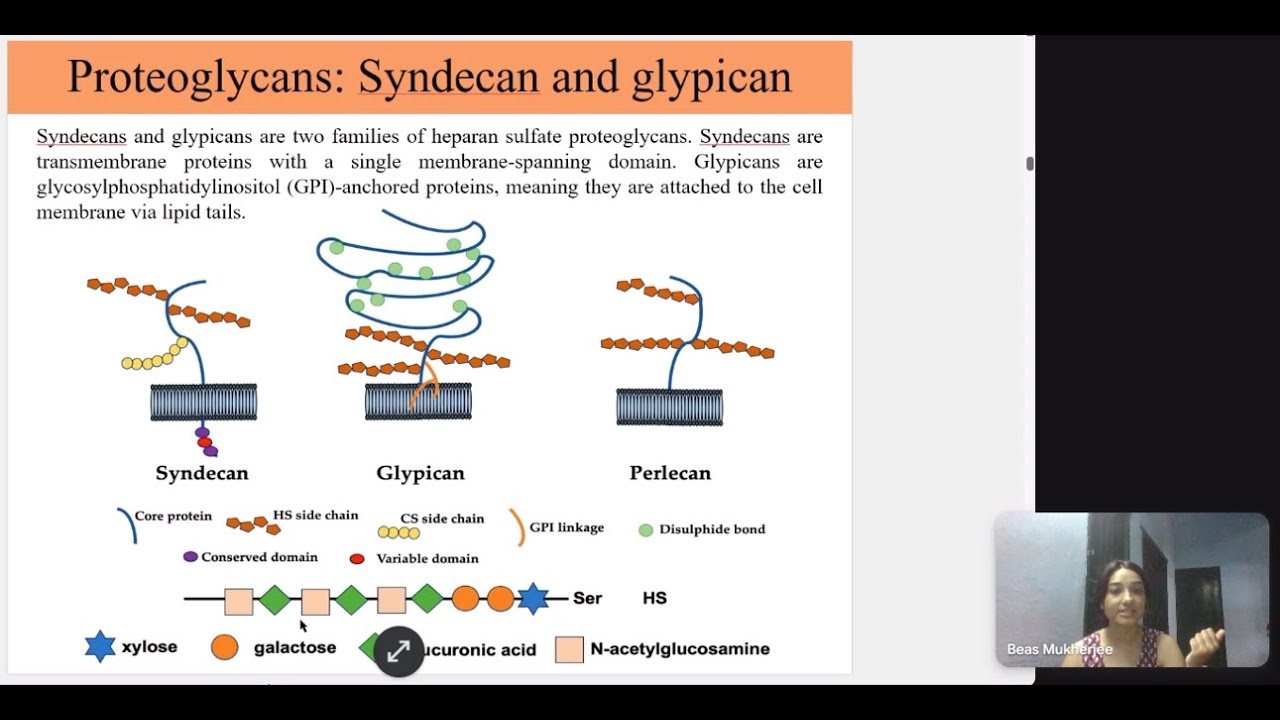
The lecture provides a comprehensive overview of protein-macromolecule interactions, systematically covering protein-carbohydrate and protein-nucleic acid interactions. The instructor effectively uses diagrams and examples to illustrate complex concepts, such as the structure of proteoglycans and the specificity of lectins. The inclusion of multiple-choice questions throughout the lecture enhances engagement and reinforces understanding. However, the argumentation is largely descriptive rather than critical, and the lecture does not delve deeply into experimental evidence or conflicting viewpoints. The value lies in its breadth and clarity, making it a useful educational resource for students.
Scientific Rigor, Source Quality, Title Accuracy
The lecture is scientifically rigorous, with accurate information presented in a structured manner. The instructor, a PMRF scholar from IIT Kharagpur, demonstrates expertise in the subject. However, no specific sources are cited within the lecture, and the description does not provide references. The title accurately reflects the content, which is appropriately focused on protein interactions with macromolecules. The lecture is part of a formal NPTEL course, lending credibility to the material. The absence of citations is a minor weakness, but the content aligns with established biochemical knowledge.
191 words
Title / Content Match
The title accurately reflects the content, which covers protein interactions with carbohydrates and nucleic acids.
Quality & Reliability
7/10
Lecture by a PMRF scholar from IIT Kharagpur, part of an NPTEL course. Content is accurate and well-structured, but lacks citations and depth in some areas.
Key Moments
Markers derived by PSI from the transcript: the creator did not define chapters.
- Introduction to omics studies and their importance.
- Overview of techniques used in omics studies (NGS, mass spectrometry, etc.).
- Discussion on the necessity of protein-carbohydrate interactions in the body.
- Explanation of blood group antigens and their carbohydrate composition.
- Detailed structure and function of proteoglycans.
- Introduction to lectins and their types (R, L, P, C, I, S).
- Specificities and functions of different lectin types.
- Techniques for studying protein-carbohydrate interactions: oligosaccharide microarray.
- HbA1c immunoassay and its clinical relevance.
- Introduction to protein-nucleic acid interactions, including DEAD-box helicases and footprinting.
Contribution & Novelties
The lecture provides a structured overview of protein-macromolecule interactions, integrating omics perspectives and clinical applications. It is particularly useful for students preparing for competitive exams, as it highlights key concepts and includes practice questions. The lecture’s novelty lies in its comprehensive coverage of both protein-carbohydrate and protein-nucleic acid interactions within a single session, emphasizing their relevance in health and disease.
Pour aller plus loin :
- Lectins — Overview of lectin types and functions.
- Proteoglycans — Detailed structure and roles in extracellular matrix.
- DNA footprinting — Technique for studying protein-DNA interactions.
- DEAD-box helicases — Family of RNA helicases involved in RNA metabolism.
- HbA1c — Clinical marker for diabetes management.
108 words
Radar Profile
The radar profile shows balanced scores across all dimensions, with slightly higher scores in quantity of information and technical level, reflecting the lecture's comprehensive and detailed nature. The lower score in reliability is due to the absence of explicit citations, though the content is scientifically sound.