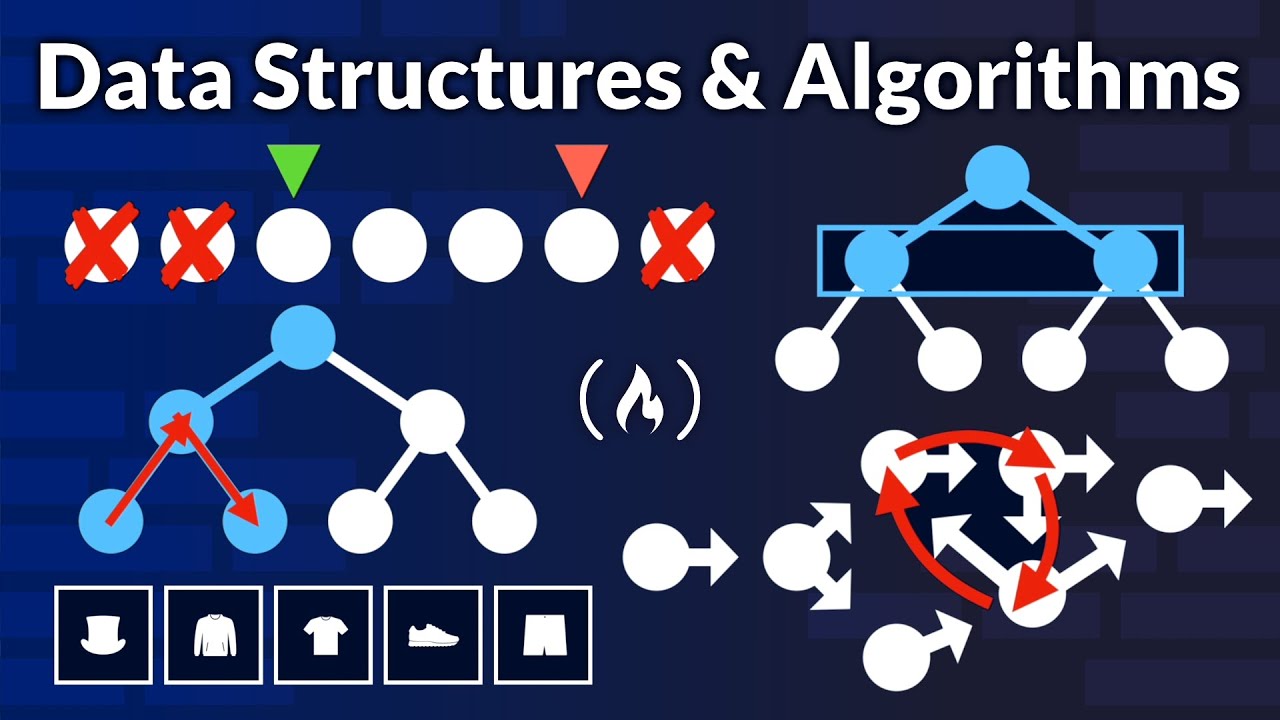
Data Structure and Algorithm Patterns for LeetCode Interviews – Tutorial
Keywords
Summary
161 words
Critical Evaluation
The video provides a solid, well-structured overview of fundamental data structures and algorithmic patterns essential for coding interviews. The instructor, Sheldon Chai, demonstrates a clear pedagogical approach, breaking down complex topics into digestible segments with practical examples. The content is accurate and aligns with standard computer science curriculum, covering arrays, strings, sets, hash maps, and heaps, along with patterns like two pointers, sliding window, binary search, BFS, DFS, and backtracking. The explanations are concise and focus on intuition, which is valuable for interview preparation. The use of real interview problems (e.g., from LeetCode) enhances relevance and applicability. The code walkthroughs are clear, though they are primarily in Python, which may limit accessibility for viewers unfamiliar with the language. However, the concepts are language-agnostic and can be adapted. The video’s strength lies in its ability to distill complex topics into a manageable format, making it accessible to a broad audience. The pacing is appropriate, with each section building on previous knowledge. One minor issue is that some simplifications, such as the explanation of hash collisions, are brief but acceptable for an introductory tutorial. The video does not delve into advanced topics like dynamic programming or graph algorithms in depth, but it explicitly states its scope. The production quality is high, with clear audio and visual aids. The description includes links to freeCodeCamp resources and a sponsor (Scrimba), but these are not directly cited as sources. Overall, the video is a valuable resource for anyone preparing for technical interviews, offering a comprehensive yet concise overview of key concepts. The adéquation between title and content is excellent, as it delivers exactly what it promises. The video has received overwhelmingly positive feedback from viewers, with many praising its clarity and effectiveness. Some comments note minor errors, such as a potential typo in a code snippet, but these do not detract significantly from the overall quality. The video is a recommended resource for both beginners and those looking to refresh their knowledge.
327 words
Title / Content Match
The title accurately reflects the content: a tutorial on data structures and algorithmic patterns for coding interviews, specifically LeetCode-style problems.
Quality & Reliability
8/10
The video is a well-structured tutorial by an experienced instructor (Sheldon Chai) with clear explanations and practical examples. It covers fundamental data structures and algorithmic patterns accurately, with code walkthroughs. The content is consistent with standard computer science knowledge. However, it is a tutorial and not peer-reviewed, and some simplifications are made for clarity. The channel freeCodeCamp is reputable for educational content.
Key Moments
Markers derived by PSI from the transcript: the creator did not define chapters.
- Introduction to arrays: properties, access, insertion/deletion trade-offs.
- Strings: immutability and efficient concatenation.
- Sets: uniqueness and fast membership checks.
- Control flow and looping basics.
- Big O notation: common complexities and rules of thumb.
- Hash maps: key-value storage, hashing, and frequency maps.
- Hash map practice problems.
- Two pointers pattern: technique and examples.
- Two pointers practice problems.
- Sliding window pattern: technique and examples.
- Sliding window practice problems.
- Binary search: technique and examples.
- Binary search practice problems.
- BFS on trees: level-order traversal.
- BFS on graphs: applications.
- BFS practice problems.
- DFS: recursive and iterative approaches.
- DFS on graphs: applications.
- DFS practice problems.
- Backtracking: technique and examples.
Cited Sources
- freeCodeCamp News — Referenced in the video description as a resource for programming articles.
- freeCodeCamp — Referenced in the video description as the platform for learning to code.
- Scrimba — Referenced in the video description as a sponsor and learning platform.
Concurring Sources
- LeetCode — The video references LeetCode-style problems, and LeetCode is a widely used platform for interview preparation.
- GeeksforGeeks — A common resource for data structures and algorithms tutorials, consistent with the video's content.
Contribution & Novelties
The video provides a concise and well-structured overview of essential data structures and algorithmic patterns for coding interviews. Its main contribution is the clear explanation of pattern recognition and the emphasis on building intuition for efficiency, which is often lacking in more theoretical resources. The use of real interview problems and code walkthroughs makes it highly practical.
Pour aller plus loin :
- Big O notation — Essential for understanding algorithmic complexity.
- Hash table — Deep dive into the underlying mechanics of hash maps.
- Sliding window algorithm — Related concept in networking, but the pattern is widely used in string/array problems.
- Breadth-first search — Graph traversal algorithm.
- Depth-first search — Graph traversal algorithm.
- Backtracking — Algorithmic technique for constraint satisfaction problems.
120 words
Radar Profile
The radar profile shows a balanced performance across all dimensions, with slightly higher scores in information quantity and quality, reflecting the comprehensive yet concise nature of the tutorial. The technical level is appropriate for the target audience, and the reliability is high due to the accurate presentation of standard concepts.
💬 Très positif. Sur les 30 commentaires analysés, la grande majorité exprime une forte satisfaction, louant la clarté des explications et l'utilité pratique pour la préparation aux entretiens. Quelques commentaires signalent des erreurs mineures ou des suggestions d'amélioration, mais l'ensemble est extrêmement favorable.