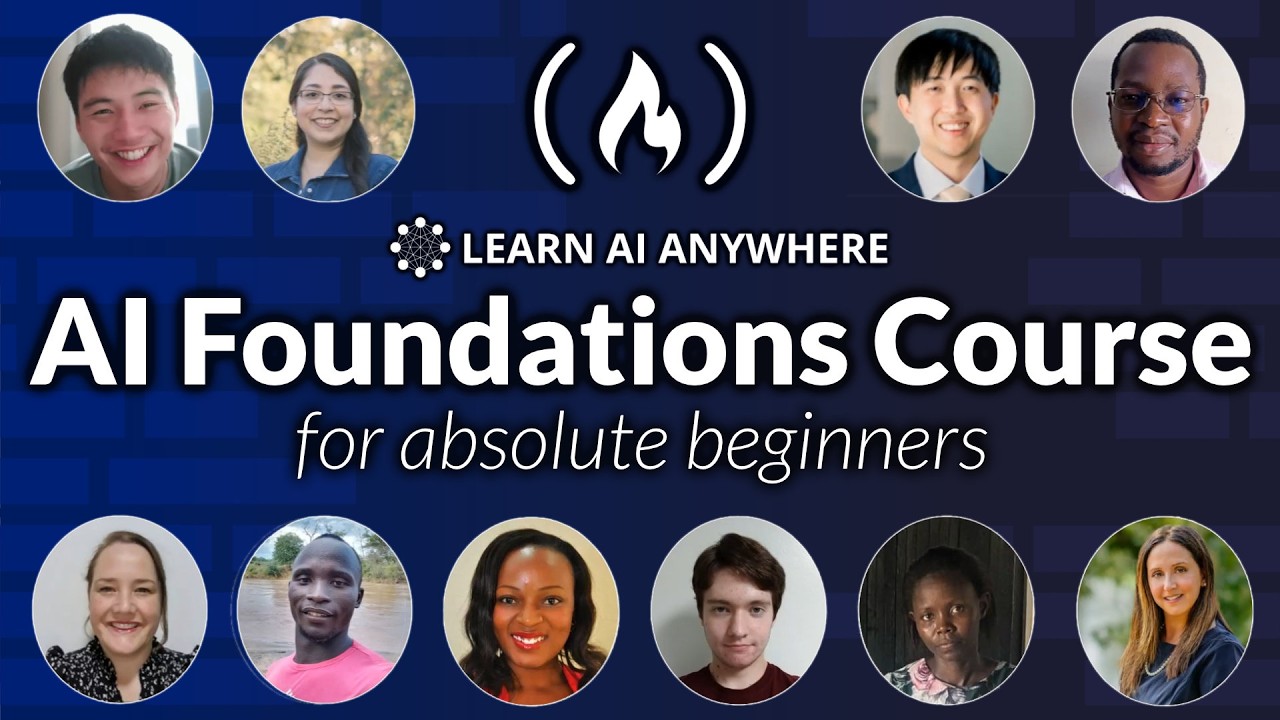
AI Foundations for Absolute Beginners
Keywords
Summary
156 words
Critical Evaluation
The course provides a solid, accessible introduction to AI concepts for absolute beginners. Its strength lies in its clear pedagogical approach, using analogies (e.g., preparing for an exam) to explain machine learning components, and interactive elements like the ‘AI or Not’ game and the Nearpod classifier project. The emphasis on responsible AI and the societal implications of AI is commendable and aligns with current educational priorities. However, the content is intentionally shallow, avoiding technical details such as neural networks, training algorithms, or data preprocessing. This is appropriate for the target audience but limits its value for those seeking deeper understanding. The sources cited are primarily from the course’s own website (learnaianywhere.org), which may raise questions about independence, but the material is consistent with established AI literacy frameworks. The course does not present controversial claims, and its explanations are generally accurate, though simplified. The production quality is good, with clear visuals and narration. Overall, it is a valuable resource for introducing AI to novices, but it should be complemented with more technical resources for those wishing to pursue the subject further.
180 words
Title / Content Match
The title accurately reflects the content: a beginner-friendly introduction to AI foundations.
Quality & Reliability
7/10
The course is well-structured, uses clear analogies, and provides practical activities. It is produced by a reputable educational organization (freeCodeCamp) and based on material from learnaianywhere.org. However, it is introductory and does not delve into technical depth, and the sources are primarily the organization's own website.
Chapters
- Welcome To The Course
- Prerequisite
- Symbol Key
- Lesson 1: What is AI - Objectives
- Lesson 1: What is AI - What Is AI
- Lesson 1: What is AI - How AI Can Help Us
- Lesson 1: What is AI - Project Time
- Lesson 2: The Key Parts of Machine Learning - Objectives
- Lesson 2: The Key Parts of Machine Learning - What is Machine Learning
- Lesson 2: The Key Parts of Machine Learning - Neuropocket Tutorial
- Lesson 2: The Key Parts of Machine Learning - AI Tools Can Make Mistake
- Lesson 2: The Key Parts of Machine Learning - Project Time
- Lesson 3: How Do Machines Train - Objectives
- Lesson 3: How Do Machines Train - The Describer Drawer Game
- Lesson 3: How Do Machines Train - The Describer Drawer Game Demonstration
- Lesson 3: How Do Machines Train - What Is An Algorithm
- Lesson 3: How Do Machines Train - The Human Learning Algorithm
- Lesson 3: How Do Machines Train - The Machine Learning Algorithm
- Lesson 3: How Do Machines Train - Project Time
- Lesson 4: Can Machines Be Responsible - Objectives
- Lesson 4: Can Machines Be Responsible - Bearly A Dog Challenge
- Lesson 4: Can Machines Be Responsible - What is Bias
- Lesson 4: Can Machines Be Responsible - Who is Responsible
- Lesson 4: Can Machines Be Responsible - Data Privacy
- Lesson 4: Can Machines Be Responsible - Responsible AI
- Lesson 4: Can Machines Be Responsible - Project Time
Cited Sources
- Learn AI Anywhere — Main website of the organization that created the course.
- AI or Not activity — Interactive activity used in Lesson 1 to distinguish AI from non-AI.
- Recap Quiz 1 — Quiz for Lesson 1.
- Recap Quiz 2 — Quiz for Lesson 2.
- Recap Quiz 3 — Quiz for Lesson 3.
- Recap Quiz 4 — Quiz for Lesson 4.
- Scrimba interactive AI courses — Partner resource for interactive AI learning.
- AI Literacy Day YouTube playlist — Playlist related to National AI Literacy Day.
Concurring Sources
- AI Literacy Day — The course supports the goals of National AI Literacy Day.
Contribution & Novelties
The course offers a unique, offline-first approach to AI literacy, making it accessible in low-resource settings. It emphasizes human responsibility in AI development and use, and provides a hands-on project (designing an AI classifier) that reinforces learning. The analogies used (e.g., exam preparation) are effective for beginners.
Pour aller plus loin :
- Machine Learning - Wikipedia — Provides a broader overview of machine learning concepts.
- Artificial Intelligence - Wikipedia — Background on AI history and applications.
- Bias in AI - IBM — Discusses types of bias in AI systems.
- Data Privacy - Wikipedia — Overview of data privacy principles.
99 words
Radar Profile
The radar profile shows moderate scores across all dimensions, with a low technical level and moderate information quantity and quality. This reflects the course's beginner-friendly nature, prioritizing accessibility over depth.