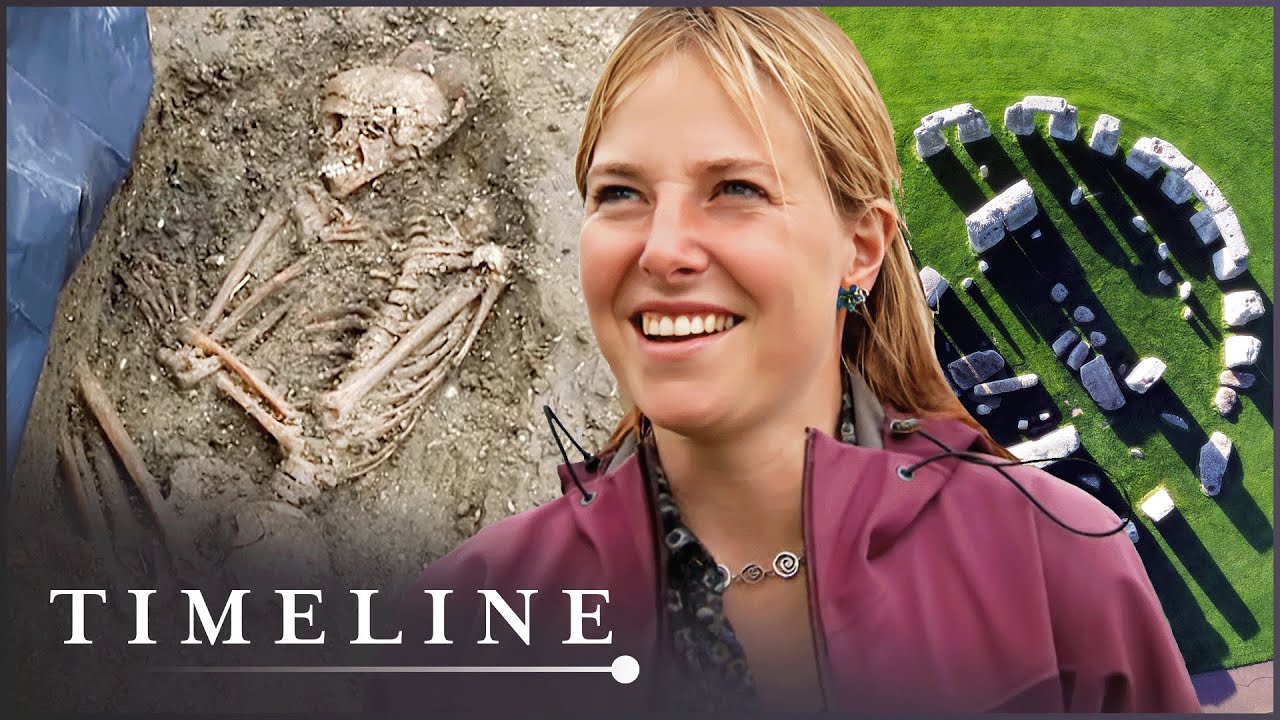
Archeologists Uncover A Mysterious Human Burial Site Near Stonehenge
Keywords
Summary
158 words
Critical Evaluation
Value of the Information & Strength of the Argument
The documentary provides valuable insights into recent archaeological findings, showcasing a range of discoveries from different periods. The argumentation is generally solid, with archaeologists presenting evidence and hypotheses, such as the sweat lodge interpretation and the sacrificial nature of animal deposits. However, some interpretations are speculative and acknowledged as such, and the documentary does not delve deeply into alternative explanations. The use of expert interviews and lab analyses strengthens the credibility, but the lack of detailed scientific context may leave some claims under-supported.
Scientific Rigor, Source Quality, Title Accuracy
The documentary maintains a reasonable level of scientific rigor, featuring professional archaeologists and referencing scientific techniques like isotope analysis. However, it does not provide explicit citations or references to academic publications, and the sources are primarily the archaeologists themselves. The title accurately reflects the content, focusing on a burial site near Stonehenge, though the documentary covers a broader scope. The production is part of a reputable series, but the lack of detailed sourcing limits its scientific depth.
175 words
Title / Content Match
The title accurately reflects the content, focusing on a mysterious burial site near Stonehenge, though the documentary covers a broader range of archaeological discoveries.
Quality & Reliability
7/10
The documentary presents archaeological findings from multiple excavations, featuring interviews with archaeologists and showcasing artifacts. While it is produced for a general audience, it includes expert commentary and references to scientific analyses (e.g., oxygen isotope analysis). However, it lacks detailed citations or peer-reviewed sources, and some interpretations are speculative.
Key Moments
Markers derived by PSI from the transcript: the creator did not define chapters.
- Introduction to the series and the focus on western Britain discoveries.
- Excavation at Marden Henge reveals a Neolithic building with a central hearth.
- Discovery of burnt stones and the hypothesis of a sweat lodge.
- Unearthing of a Beaker burial at Wilsford Henge, including amber beads.
- Analysis of the Amesbury Archer and evidence of migration from Central Europe.
- Iron Age excavations at Winterborne Kingston reveal animal burials and hybrid deposits.
- Discussion of the significance of animal sacrifices and possible rituals.
- Discovery of the medieval town of Trellech and evidence of ironworking.
- Evidence of a destructive fire and defensive structures at Trellech.
- Conclusion summarizing the impact of these discoveries on understanding British history.
Cited Sources
- History Hit — Promotional link for streaming service mentioned in the description.
Concurring Sources
- English Heritage - Stonehenge — Official site providing information on Stonehenge and its history.
Dissenting Sources
- Alternative interpretations of Marden Henge — Some archaeologists may question the sweat lodge interpretation, suggesting other uses for the building.
Contribution & Novelties
The documentary provides a compelling overview of recent archaeological discoveries, offering new perspectives on ritual practices and cultural interactions in ancient Britain. It highlights the importance of scientific analyses in interpreting archaeological finds, such as isotope analysis for tracing migration. The ‘Pour aller plus loin’ section suggests further exploration of related topics.
Pour aller plus loin :
- Beaker culture — Overview of the Beaker people and their impact on Britain.
- Stonehenge — Detailed information on the monument and its landscape.
- Iron Age Britain — Context for the Iron Age discoveries mentioned.
91 words
Radar Profile
The radar profile shows a balanced performance across all dimensions, with slightly higher scores in information quantity and quality, reflecting the documentary's comprehensive coverage. The technical level is moderate, suitable for a general audience, while reliability is solid due to expert input.