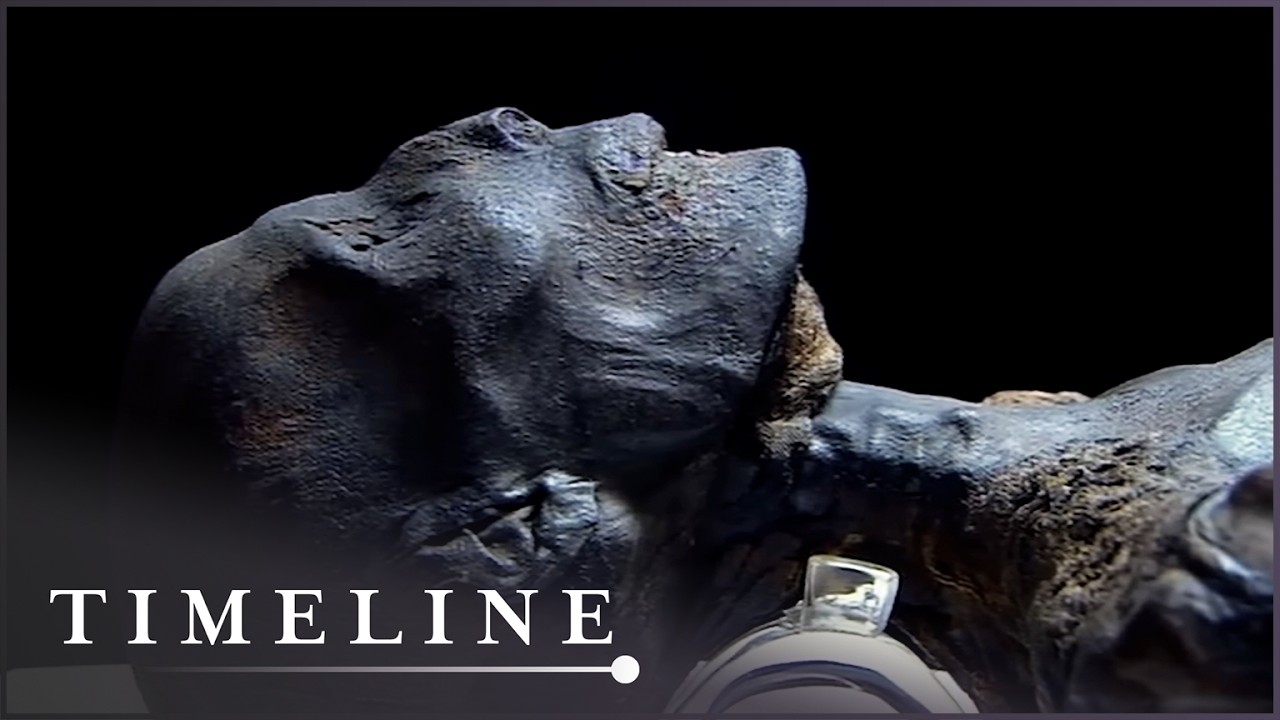
Can Modern Science Solve Ancient Egyptian Mysteries?
Keywords
Summary
138 words
Critical Evaluation
Value of the Information & Strength of the Argument
The documentary provides valuable insights into the application of modern forensic science to ancient remains. It demonstrates the use of advanced techniques such as GCMS, X-ray, and facial reconstruction, and explains how these methods can reveal information about an individual’s life, health, and social status. The argumentation is solid, as the team’s conclusions are based on evidence and expert analysis. The experimental archaeology segment, where they replicate brain removal, adds a practical dimension to the investigation, strengthening the validity of their interpretations. The documentary effectively balances scientific rigor with accessibility, making complex techniques understandable to a general audience.
Scientific Rigor, Source Quality, Title Accuracy
The documentary maintains a high level of scientific rigor, with experts in their fields providing analysis and interpretation. The sources are primarily the experts themselves, and the techniques used are well-established in the field. The title accurately reflects the content, as the documentary indeed explores how modern science can solve ancient Egyptian mysteries. The documentary does not cite external sources, but the expertise of the team and the use of scientific methods lend credibility. The title is appropriate and not misleading.
194 words
Title / Content Match
The title accurately reflects the content, as the documentary explores how modern forensic science and chemistry are applied to solve ancient Egyptian mysteries, specifically the identity and death of a mummy.
Quality & Reliability
8/10
The documentary features a team of experts including Egyptologists, chemists, forensic archaeologists, and paleopathologists, using modern scientific techniques such as GCMS, X-ray, and facial reconstruction. The methods are presented in a rigorous manner, with clear explanations and experimental validation. However, the conclusions are based on interpretations and the documentary is produced for a general audience, which may simplify some scientific details.
Key Moments
Markers derived by PSI from the transcript: the creator did not define chapters.
- Introduction to the mummy and its coffin at Bolton Museum.
- Initial physical inspection reveals unusual dental features.
- Chemical analysis begins with GCMS to identify embalming substances.
- X-ray analysis reveals the mummy is male, not female.
- Dental expert discusses the mummy's overjet and mandibular retrusion.
- Facial reconstruction begins to visualize the mummy's appearance.
- Experimental archaeology attempts to replicate brain removal.
- Chemical results reveal thymol and conifer resin, indicating high status.
- Experiment produces bone chips, suggesting mummification process caused skull damage.
- Conclusion: the mummy is a young male of high status, possibly royal, with no clear cause of death.
Cited Sources
- History Hit — Promotional link for additional historical content.
Concurring Sources
- History Hit — Promotional link for additional historical content.
Contribution & Novelties
The documentary provides a comprehensive case study of how modern forensic science can be applied to ancient remains, offering a model for interdisciplinary investigation. It highlights the importance of chemical analysis, dental examination, and experimental archaeology in reconstructing the life and death of an individual. The finding that the mummy was male and possibly of royal lineage adds to the understanding of ancient Egyptian society and mummification practices.
Pour aller plus loin :
- Mummy — Overview of mummification practices.
- Forensic facial reconstruction — Technique used to recreate the face from skeletal remains.
- Gas chromatography–mass spectrometry — Analytical method used to identify chemical compounds.
103 words
Radar Profile
The radar profile shows high scores in quantity and quality of information, indicating a rich and well-presented documentary. The technical level is also high, reflecting the use of advanced scientific methods. The overall reliability is strong, supported by expert testimony and experimental validation.