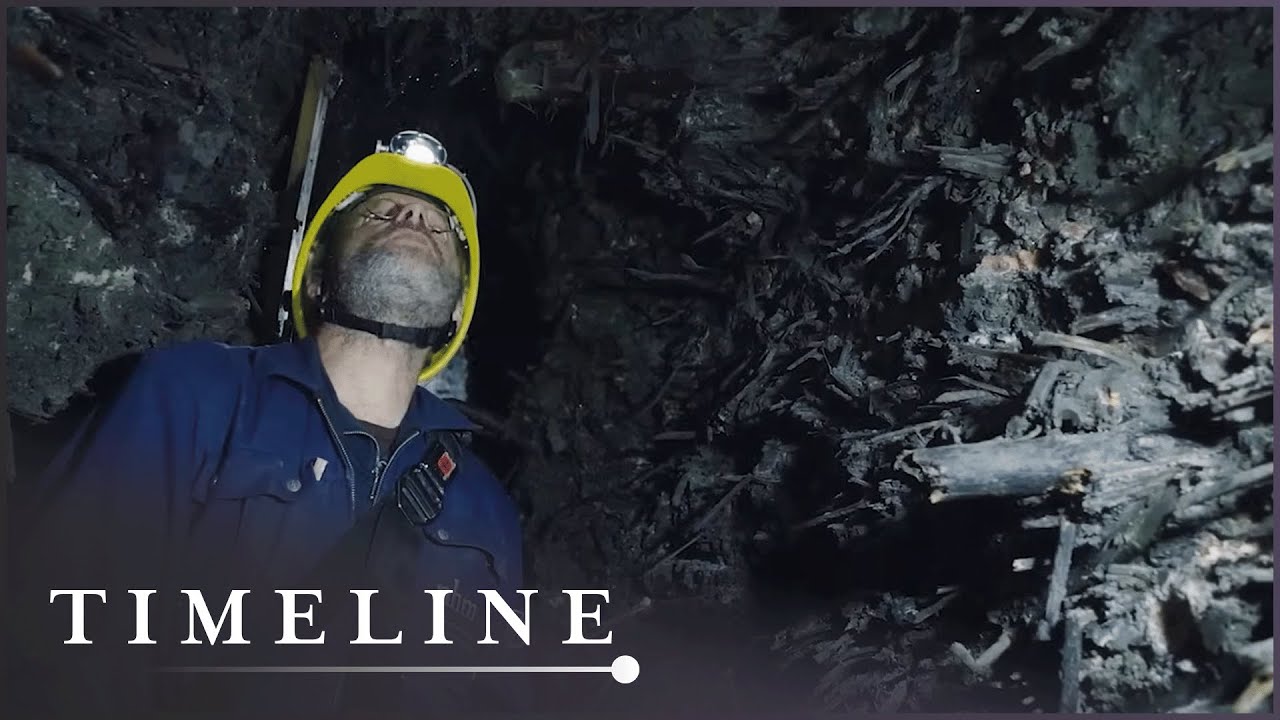
What Can This 2,400-Year-Old Tomb Tell Us About The Origins Of The Celts?
Keywords
Summary
117 words
Critical Evaluation
Value of the Information & Strength of the Argument
The documentary provides valuable insights into the Halstatt culture, presenting a wealth of information on mining techniques, trade, diet, and social structure. The argumentation is solid, relying on scientific methods and expert opinions. It avoids sensationalism, instead offering a reasoned interpretation of the evidence. The experimental archaeology segment on recreating a pick and cremation adds practical depth. However, some conclusions, such as the identification of a shaman, are speculative and could be more clearly flagged as hypotheses.
Scientific Rigor, Source Quality, Title Accuracy
The documentary maintains a high level of scientific rigor, featuring interviews with researchers from the Natural History Museum Vienna and other institutions. It clearly explains the methods used, such as pollen analysis and wood dating, and presents findings with appropriate caution. The sources are credible and directly involved in the research. The title is somewhat misleading as it emphasizes the tomb and Celtic origins, but the content covers a broader scope of Halstatt culture. Nevertheless, the tomb is a central element, and the documentary does address the question of Celtic origins, so the title is acceptable.
188 words
Title / Content Match
The title focuses on a 2,400-year-old tomb and Celtic origins, but the documentary covers a broader range of Halstatt culture, including mining, textiles, and settlement. The tomb is a central element but not the sole focus.
Quality & Reliability
8/10
The documentary features interviews with experts from the Natural History Museum Vienna and other institutions, presents scientific methods (dendrochronology, pollen analysis, experimental archaeology) and avoids speculative claims, grounding conclusions in evidence. However, some interpretations (e.g., shaman burial) are presented with limited caveats.
Key Moments
Markers derived by PSI from the transcript: the creator did not define chapters.
- Introduction to the Halstatt salt mines and the discovery of the wooden structure.
- Excavation of the wooden structure and discussion of its possible purpose.
- Analysis of human bones revealing the physical activities of the Halstatt people.
- Experimental archaeology: recreating a prehistoric pick and testing its effectiveness.
- Examination of textiles, including the discovery of houndstooth patterns and dyeing techniques.
- Discussion of the cow and calf grave and the possible shaman burial.
Cited Sources
- Natural History Museum Vienna — The museum is the base for the archaeologists and anthropologists featured in the documentary.
- History Hit — The channel's membership service, mentioned in the description.
Concurring Sources
- Halstatt culture - Wikipedia — Provides general information on the Halstatt culture, consistent with the documentary's content.
Contribution & Novelties
The documentary offers a comprehensive and up-to-date look at the Halstatt culture, integrating recent archaeological findings with scientific analysis. It highlights the exceptional preservation conditions in the salt mines, providing rare insights into organic materials. The film also showcases the use of modern techniques like pollen analysis and experimental archaeology, which are not commonly featured in popular documentaries.
Pour aller plus loin :
- Halstatt culture — Overview of the archaeological culture and its significance.
- Salt mining — Historical and technical background on salt extraction.
- Experimental archaeology — Methodology used to recreate ancient techniques.
93 words
Radar Profile
The radar profile shows high scores in information quantity, quality, and reliability, with a slightly lower technical level. This indicates a well-researched and informative documentary that is accessible to a general audience while still providing scientific depth.
💬 Très positif. Sur les 30 commentaires analysés, les spectateurs expriment une forte appréciation pour la qualité de production, le contenu informatif et la narration, avec quelques remarques sur les publicités et des questions sur les méthodes.