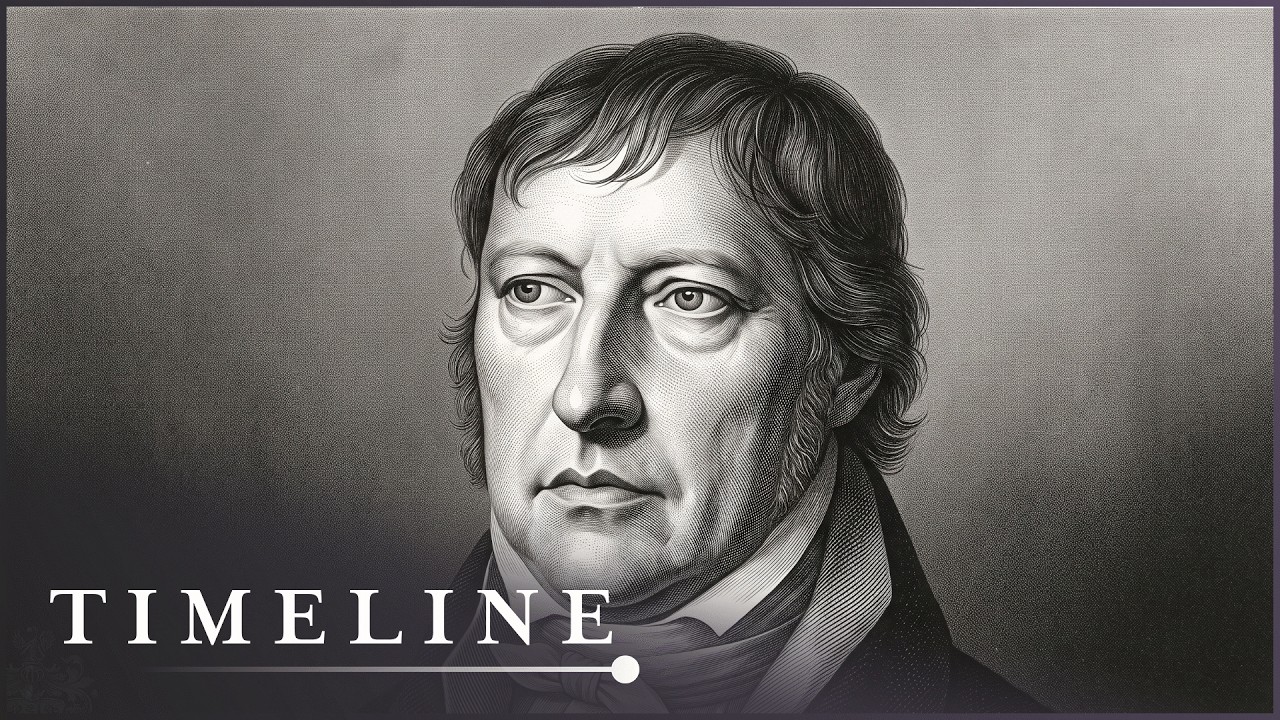
The Complete History Of Modern Philosophy: From Idealism To Existentialism
Keywords
Summary
188 words
Critical Evaluation
Value of the Information & Strength of the Argument
The documentary offers a valuable overview of a complex period in the history of philosophy, making it accessible to a general audience. The use of academic experts adds credibility, and the explanations of key concepts like Hegel’s dialectic, Nietzsche’s will to power, and Kierkegaard’s leap of faith are generally clear and accurate. However, the argumentation is not deeply critical; it presents the ideas as historical facts rather than engaging in philosophical debate. The documentary also tends to simplify some ideas, such as Nietzsche’s relationship to Nazism, which is addressed but could be nuanced further. The strength lies in its breadth and the quality of the expert commentary, but it lacks the depth to fully satisfy a viewer seeking a rigorous philosophical analysis.
Scientific Rigor, Source Quality, Title Accuracy
The documentary does not cite specific sources in the video or description, relying instead on the authority of the academic commentators. The information is presented in a straightforward manner, and the experts are credible, but the lack of explicit citations makes it difficult to verify specific claims. The title accurately reflects the content, which is a broad historical survey. The documentary does not engage with primary texts directly, but rather offers a secondary interpretation. The production quality is high, and the narrative is well-structured, but the scientific rigor is limited by the absence of direct references and the simplified treatment of complex philosophical issues.
241 words
Title / Content Match
The title accurately reflects the content, which covers the major philosophical movements from German Idealism to Existentialism.
Quality & Reliability
7/10
The documentary provides a broad overview of 19th and 20th-century philosophy, featuring expert commentary from academics. It is generally accurate but lacks depth and critical engagement with the material, and some interpretations are simplified.
Key Moments
Markers derived by PSI from the transcript: the creator did not define chapters.
- Introduction to the post-Kantian idealists and Hegel's project.
- Discussion of Hegel's Encyclopedia and his concept of 'spirit'.
- Hegel's philosophy of right and the state, and the criticism of it as an apology for Prussian authoritarianism.
- Schopenhauer's philosophy of the will and his view of art.
- Nietzsche's critique of morality, the will to power, and the controversy over his reception by the Nazis.
- Marx's materialist inversion of Hegel and his theory of justice.
- Kierkegaard's existentialism, the leap of faith, and the aesthetic/ethical/religious stages.
- American pragmatism: Peirce and James, and the stream of thought.
- Bergson's vitalism and creative evolution.
- Wittgenstein's philosophy of language, from the Tractatus to ordinary language.
Contribution & Novelties
The documentary provides a concise and accessible overview of a wide range of philosophical movements, which can serve as a useful introduction for those new to the subject. Its main contribution is in synthesizing the ideas of several major philosophers into a coherent narrative, highlighting the connections and contrasts between them. However, it does not offer any new interpretations or original research.
Pour aller plus loin :
- German Idealism — A comprehensive overview of the movement, providing context for Hegel and his contemporaries.
- Existentialism — A detailed entry on the existentialist movement, covering Kierkegaard, Nietzsche, and Sartre.
- Pragmatism — An academic resource on the pragmatist tradition, including Peirce and James.
- Will to Power — A Wikipedia article explaining Nietzsche’s concept, with references to primary and secondary sources.
127 words
Radar Profile
The radar profile shows a balanced but moderate performance across all dimensions. The scores for information quantity, quality, and reliability are all around 7, indicating a solid but not exceptional documentary. The technical level is lower (5), reflecting its introductory nature. This suggests a well-produced overview that is reliable but not deeply analytical.
💬 Sur les 0 commentaires analysés, aucune tendance n'a pu être dégagée.