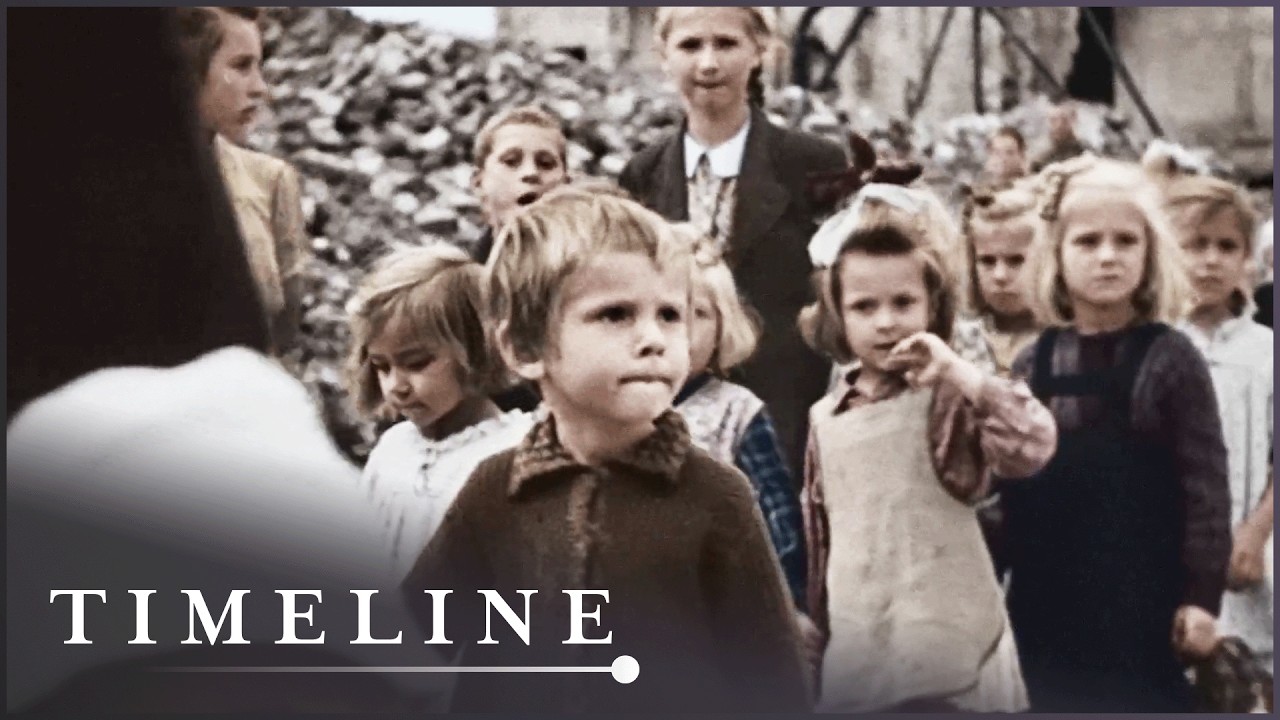
Stolen By The Reich: The Lost Children Of Post-War Europe
Keywords
Summary
209 words
Critical Evaluation
Value of the Information & Strength of the Argument
The documentary provides valuable historical insight into a rarely discussed topic: the fate of children during and after WWII. It effectively uses personal testimonies to humanize the statistics and convey the emotional and psychological trauma experienced by these children. The argumentation is solid, built on survivor accounts and historical context, though it could benefit from more explicit references to academic sources. The narrative is compelling and well-structured, moving from the general chaos to specific cases, and then to the broader political implications. The film successfully argues that the post-war period was not a simple return to peace but a continuation of suffering for many children, as they were used as pawns in nationalistic and ideological agendas.
Scientific Rigor, Source Quality, Title Accuracy
The documentary demonstrates a high level of historical rigor by using survivor testimonies, archival footage, and official records. However, it does not provide a clear list of sources or citations, which limits its academic credibility. The title accurately reflects the content, focusing on the theft of children by the Nazi regime and the subsequent struggles. The content aligns well with the title, though it also covers broader post-war displacement. The comments section shows a positive reception, with viewers expressing emotional responses and appreciation for shedding light on this history. There is no significant criticism of the documentary’s accuracy, though some viewers noted the blurring of images as a minor issue.
241 words
Title / Content Match
The title accurately reflects the content, focusing on children stolen by the Nazi regime and their post-war experiences.
Quality & Reliability
8/10
The documentary is based on testimonies of survivors, archival footage, and historical records, providing a credible account of a lesser-known aspect of WWII. However, it lacks explicit citations for some claims and relies on emotional narratives, which slightly reduces its scientific rigor.
Key Moments
Markers derived by PSI from the transcript: the creator did not define chapters.
- Introduction to the end of WWII and the discovery of lost children.
- Survivor testimonies: Ron Hoffman and George Reinitz share their experiences.
- The UNRRA's humanitarian mission and the challenges of identifying children.
- Discovery of Lebensborn nurseries and the Germanization program.
- Anna Berajvska's story: taken from her Austrian family and sent to Poland.
- The Indistorf camp for traumatized Jewish children and Greta Fischer's work.
- Soviet exploitation of children in their zone and the impact on survivors.
- George Reinitz's return to Hungary and the communist regime's influence.
Cited Sources
- History Hit membership — Promoted in the description for additional documentaries.
Concurring Sources
- United States Holocaust Memorial Museum — Provides factual information on the Lebensborn program, corroborating the documentary's claims.
Contribution & Novelties
This documentary brings to light a relatively obscure aspect of WWII history: the systematic kidnapping and Germanization of children by the Nazis, and the subsequent struggles of these children in post-war Europe. It provides a human face to the statistics through survivor testimonies, offering a unique perspective on the long-term effects of war on children. The film also highlights the role of the UNRRA and the political complexities of repatriation, which are often overlooked in mainstream WWII narratives.
Pour aller plus loin :
- Lebensborn — Overview of the Nazi program for ‘racially pure’ children.
- UNRRA — Details on the humanitarian organization’s efforts.
- Germanization — Historical context on the policy of cultural assimilation.
112 words
Radar Profile
The radar chart shows high scores in information quantity, quality, and reliability, with a lower score in technical level, reflecting the documentary's focus on historical narrative rather than technical analysis. The overall profile indicates a well-researched and emotionally impactful documentary suitable for a general audience.
💬 The overall sentiment is very positive, with viewers expressing deep emotional responses and gratitude for the documentary's coverage of this tragic history. Many comments highlight the heartbreaking stories and the importance of remembering these events.