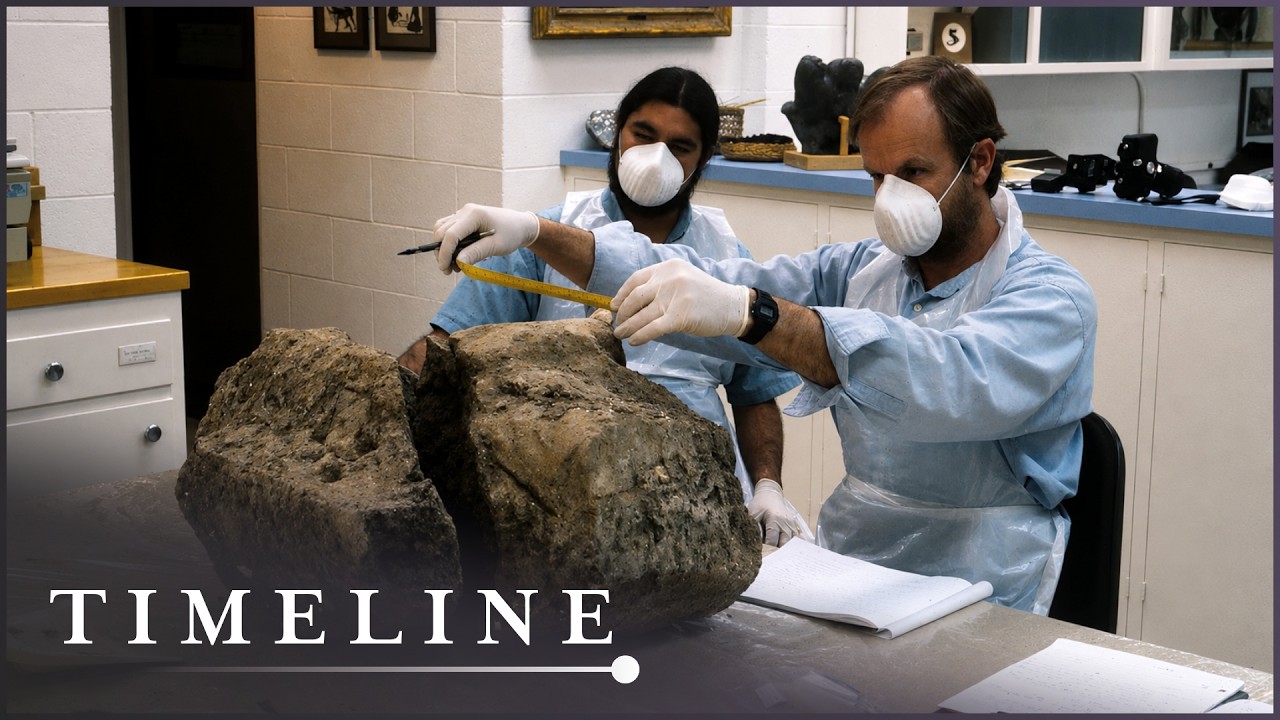
Scientists Unearth 13,000-Year-Old Mystery Beneath California Coast
Keywords
Summary
97 words
Critical Evaluation
Value of the Information & Strength of the Argument
The documentary provides valuable insights into the peopling of the Americas, presenting evidence that supports a coastal migration route. It effectively argues against the Clovis First theory by showcasing the Arlington Springs discovery and the kelp highway hypothesis. The argumentation is solid, relying on expert interviews and scientific data, though it could benefit from more discussion of alternative viewpoints.
Scientific Rigor, Source Quality, Title Accuracy
The documentary demonstrates scientific rigor by featuring interviews with archaeologists and scientists directly involved in the research. Sources cited include the Santa Barbara Museum of Natural History and Channel Islands National Park. The title accurately reflects the content, focusing on the 13,000-year-old mystery. The documentary is well-researched, though it may simplify some debates for a general audience.
131 words
Title / Content Match
The title accurately reflects the content, focusing on the discovery of 13,000-year-old human remains and the archaeological significance.
Quality & Reliability
8/10
The documentary features interviews with credible archaeologists and scientists, presents evidence-based findings, and references specific research and artifacts. However, it is a popular documentary and may simplify complex debates.
Key Moments
Markers derived by PSI from the transcript: the creator did not define chapters.
- Introduction to the Channel Islands and their geological history.
- Discussion of plate tectonics and the formation of the islands.
- Phil Orr's discovery of Arlington Springs Man.
- Radiocarbon dating reveals the bones are 13,000 years old.
- Explanation of the kelp highway hypothesis.
- Cabrillo's voyage and first contact with the Chumash.
- Reconstruction of the San Salvador ship.
- Chumash cultural heritage and petroglyphs.
Cited Sources
- Channel Islands National Park — Mentioned as the location of the discovery and ongoing research.
- Santa Barbara Museum of Natural History — Where the Arlington Springs remains are stored and studied.
Concurring Sources
- Arlington Springs Man — Provides background on the discovery and its significance.
Dissenting Sources
- Clovis First Theory — The documentary challenges this theory, but some researchers still support it.
Contribution & Novelties
The documentary provides a comprehensive overview of the archaeological significance of the Channel Islands, particularly the Arlington Springs discovery, which challenges long-held theories about the peopling of the Americas. It offers a balanced perspective by including indigenous voices and highlighting the maritime capabilities of early inhabitants.
Pour aller plus loin :
- Kelp Highway Hypothesis — Relevant to the coastal migration theory discussed.
- Clovis First Theory — The theory challenged by the Arlington Springs discovery.
- Chumash People — The indigenous group connected to the Channel Islands.
85 words
Radar Profile
The radar profile shows high scores in quantity and quality of information, with a moderate technical level. This indicates a well-researched documentary that is accessible to a general audience while still providing substantial scientific content.
💬 Positif. Sur les 30 commentaires analysés, la majorité exprime une appréciation pour le contenu éducatif et la beauté des îles, avec des anecdotes personnelles et des liens culturels.