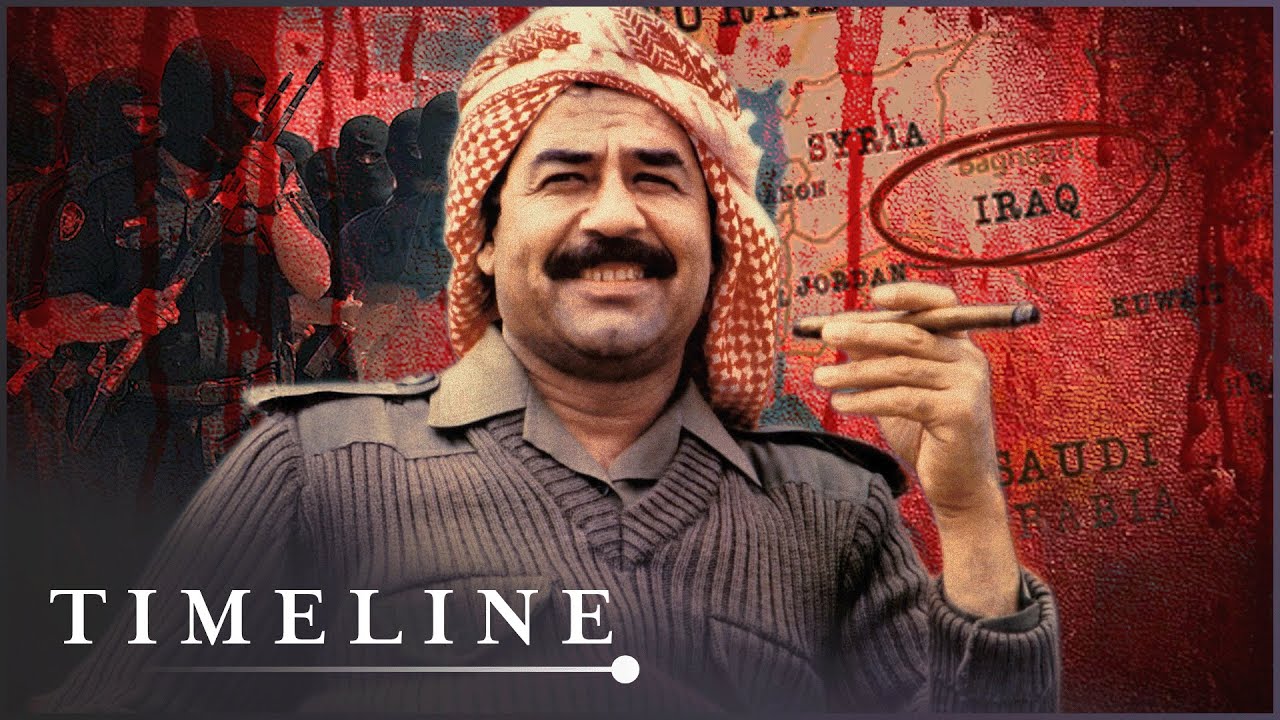
The Life Of Saddam Hussein: The History Of Iraq’s Most Notorious Dictator
Keywords
Summary
163 words
Critical Evaluation
Value of the Information & Strength of the Argument
The documentary provides a substantial amount of historical information, covering key events and figures with reasonable accuracy. It offers a chronological narrative that helps viewers understand the context of Saddam’s rise and fall. The argumentation is generally coherent, presenting Saddam as a complex figure who was both a modernizer and a brutal dictator. However, it lacks critical analysis of certain controversial aspects, such as the extent of Western support for Saddam during the Iran-Iraq War, and it does not delve deeply into the motivations of various actors. The narrative is largely descriptive rather than analytical, which may limit its value for viewers seeking a deeper understanding of the geopolitical dynamics.
Scientific Rigor, Source Quality, Title Accuracy
The documentary does not explicitly cite sources, but it is based on widely known historical events and is produced by a reputable channel. The title accurately reflects the content, which is a biographical documentary. However, the lack of on-screen citations or references to academic works reduces its scientific rigor. The production quality is high, with archival footage and narration, but it does not include interviews with experts or eyewitnesses, which could have enhanced its credibility. The comments section includes some critical remarks about the documentary’s format, noting that it relies entirely on archive footage and lacks interviews, which some viewers consider a limitation.
228 words
Title / Content Match
The title accurately reflects the content, which is a detailed biographical account of Saddam Hussein's life and rule.
Quality & Reliability
7/10
The documentary provides a comprehensive overview of Saddam Hussein's life and Iraq's modern history, based on generally accepted historical facts. However, it lacks citations to primary sources and relies on a narrative style without expert interviews or on-screen references, which limits its scholarly rigor.
Key Moments
Markers derived by PSI from the transcript: the creator did not define chapters.
- Introduction to Saddam's birth and early life in Tikrit.
- Saddam's involvement with the Ba'ath Party and the 1958 revolution.
- The 1968 coup and Saddam's rise to vice president.
- Saddam's consolidation of power in 1979 and the purge of rivals.
- The Iran-Iraq War and its impact on Iraq.
- The invasion of Kuwait and the Gulf War.
- The 2003 invasion and Saddam's capture and execution.
Cited Sources
- People Profiles YouTube Channel — The documentary is a production of People Profiles, and the channel is referenced in the description.
Concurring Sources
- Saddam Hussein - Encyclopedia Britannica — Provides a factual overview of Saddam's life and rule, consistent with the documentary.
Dissenting Sources
- Comment by user on documentary format — A commenter argues that the documentary is more of a monologue than a true documentary due to lack of interviews and original footage.
Contribution & Novelties
This documentary offers a comprehensive and accessible overview of Saddam Hussein’s life, synthesizing well-known historical events into a single narrative. It is valuable for viewers seeking a general introduction to the topic. However, it does not present new research or unique insights, as it relies on established historical accounts.
Pour aller plus loin :
- Saddam Hussein - Wikipedia — Provides a detailed and referenced biography.
- Ba’ath Party - Wikipedia — Explains the ideology and history of the party.
- Iran-Iraq War - Wikipedia — Offers in-depth analysis of the conflict.
89 words
Radar Profile
The radar profile shows high scores in quantity of information and global reliability, reflecting the documentary's comprehensive coverage and generally accurate historical content. However, the technical level is moderate, indicating that it is accessible to a general audience rather than specialists. The quality of information is good but not exceptional, as it lacks deep analysis and source citations.
💬 The comments are predominantly negative, with many viewers criticizing the documentary's format and political bias. Some express nostalgia for Saddam's era, while others highlight his atrocities. Overall, the sentiment is mixed but leans towards criticism of the documentary's approach.