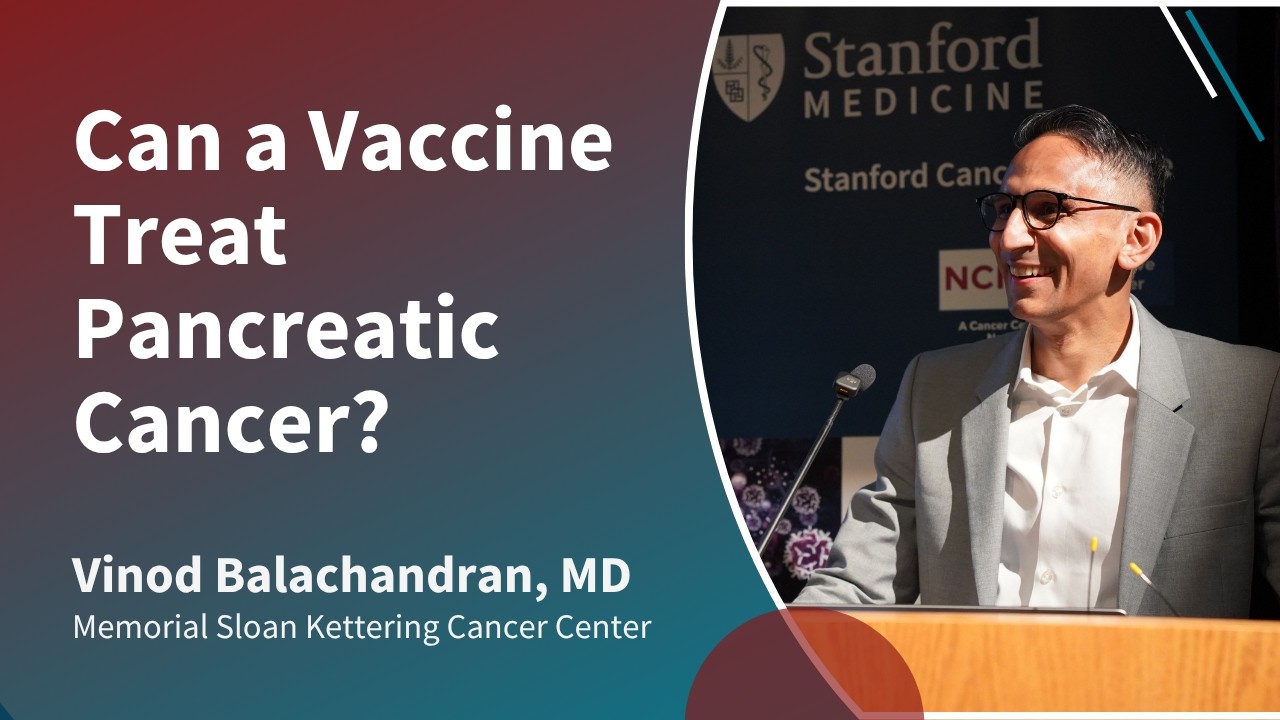
Can a Vaccine Treat Pancreatic Cancer? | Stanford Cancer Institute Breakthroughs in Cancer seminar
Keywords
Summary
161 words
Critical Evaluation
Value of the Information & Strength of the Argument
The value of the information is exceptionally high, presenting groundbreaking original research that challenges the paradigm that low-mutation cancers are unsuitable for immunotherapy. The argumentation is rigorous and methodical, building from observational studies to mechanistic insights and finally to clinical trial results. The speaker carefully addresses potential confounders, such as host immunological fitness, by showing that non-responders could mount responses to an unrelated RNA vaccine. The use of multiple complementary assays (ELISpot, TCR sequencing, single-cell analysis) strengthens the validity of the findings. The presentation is well-structured, with clear logical progression and data-driven conclusions.
Scientific Rigor, Source Quality, Title Accuracy
The scientific rigor is exemplary, with detailed methodology and transparent reporting of results. The speaker cites his own published work and ongoing clinical trials, and the seminar is hosted by a reputable institution. The title accurately reflects the content, focusing on the potential of vaccines for pancreatic cancer. The description provides links to the Stanford Cancer Institute and the seminar series, which are relevant for further information. No public comments were provided, so no analysis of audience reception is included.
188 words
Title / Content Match
The title accurately reflects the content, which focuses on the potential of RNA vaccines for pancreatic cancer.
Quality & Reliability
9/10
The seminar presents original research from a peer-reviewed clinical trial, with detailed methodology and data. The speaker is a leading expert at Memorial Sloan Kettering, and the talk is hosted by Stanford Cancer Institute. The content is rigorous and well-supported by evidence.
Chapters
- Introduction
- Lecture: RNA Vaccines for Pancreatic Cancer
- Why immunotherapy often fails in pancreatic cancer
- Learning from the "10%": Natural immunity in survivors
- Predicting vaccine success: The Neoantigen Model
- Designing clinical trials for personalized RNA vaccines
- Results: Robust T-cell responses in patients
- How long does the vaccine protection last?
- Clinical outcomes and delayed recurrence
- Visualizing T-cells eliminating tumor cells
- Summary of vaccine mechanisms
- Future outlook: Scaling access to cancer vaccines
- Audience Q&A
Cited Sources
- Stanford Cancer Institute — Main page of the Stanford Cancer Institute, hosting the seminar series.
- Breakthroughs in Cancer Series — Page for the seminar series where this talk was presented.
- Stanford Cancer Institute on LinkedIn — LinkedIn page for the Stanford Cancer Institute, providing updates and resources.
Concurring Sources
- Balachandran et al. (2017) Nature — Original study identifying neoantigen quality and T-cell responses in pancreatic cancer survivors.
- Rojas et al. (2023) Nature — Clinical trial results of personalized RNA vaccines in pancreatic cancer, presented in this seminar.
Contribution & Novelties
This seminar provides a comprehensive overview of a pioneering clinical trial demonstrating that personalized RNA vaccines can induce robust, durable T-cell responses in pancreatic cancer, a cancer previously considered immunologically ‘cold’. The novelty lies in the neoantigen quality model, which predicts immunogenic neoantigens based on biophysical features, and the demonstration that vaccine responders have significantly delayed recurrence. This work opens new avenues for treating not only pancreatic cancer but potentially other low-mutation cancers.
Pour aller plus loin :
- Neoantigen — Background on neoantigens and their role in cancer immunotherapy.
- mRNA vaccine — Overview of mRNA vaccine technology, including its application in cancer.
- Pancreatic cancer — General information on pancreatic cancer, its epidemiology, and treatment challenges.
115 words
Radar Profile
The radar profile shows high scores across all dimensions, with particularly strong performance in information quality and reliability, reflecting the rigorous scientific content and expert presentation. The slightly lower score in technical level indicates that while the content is advanced, it is accessible to a broad scientific audience.