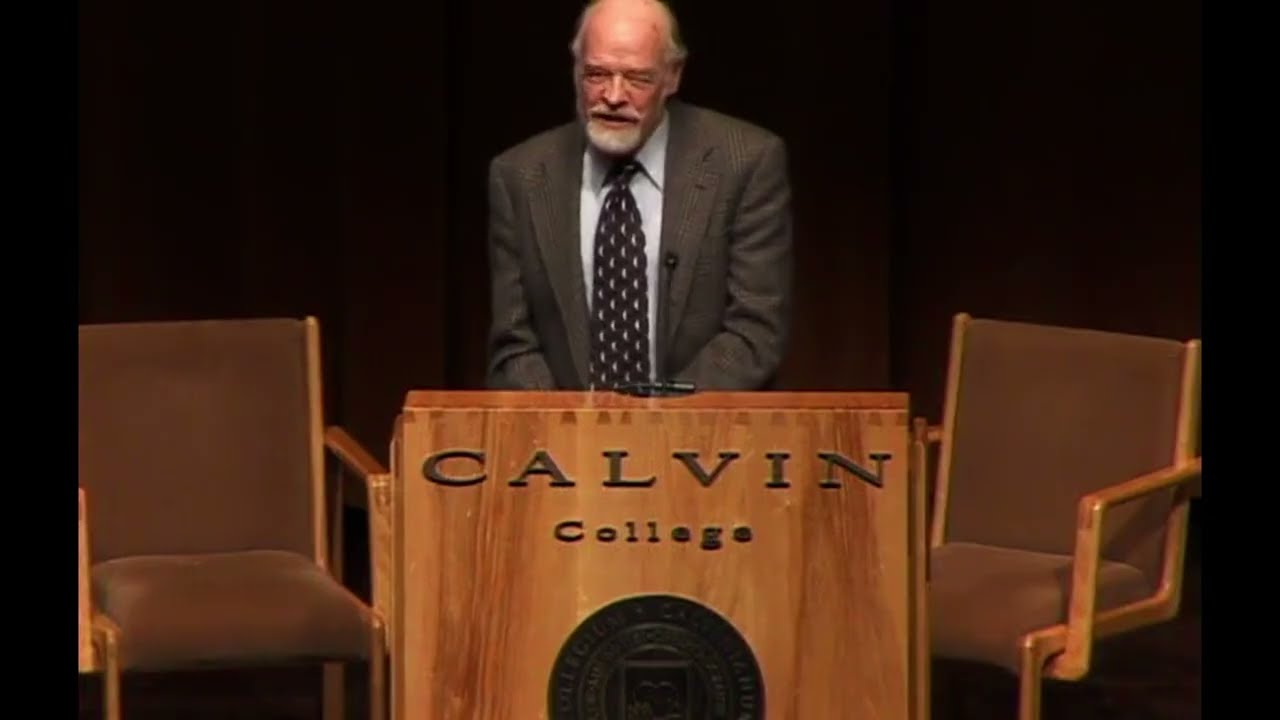
January Series in July - A Visit to the January Series Archives -Eugene Peterson
Keywords
Summary
193 words
Critical Evaluation
Value of the Information & Strength of the Argument
The lecture offers valuable insights into the practice of spiritual reading, a topic often neglected in modern discourse. Peterson’s argument is well-structured, using personal anecdotes, biblical exegesis, and historical examples to support his thesis. He effectively contrasts informational reading with formative reading, and his use of the Hebrew word ‘haga’ provides a fresh perspective on meditation. The argument is persuasive and grounded in his pastoral experience, though it is primarily theological rather than empirical. The lecture is not scientifically rigorous but is intellectually stimulating and spiritually enriching.
Scientific Rigor, Source Quality, Title Accuracy
Peterson demonstrates scholarly rigor by referencing biblical texts in Hebrew and Greek, and by citing historical figures like Karl Barth and John Updike. He draws on his own published work, ‘Eat This Book’, which adds credibility. The title accurately reflects the content, as it is a lecture from the January Series archives. The sources are primarily theological and literary, and while not scientific, they are appropriate for the topic. The lecture is well-organized and the arguments are coherent.
180 words
Title / Content Match
The title accurately reflects the content: a recorded lecture from the January Series archives, featuring Eugene Peterson.
Quality & Reliability
8/10
The lecture is delivered by a recognized theologian and pastor with decades of experience. It is based on his published work 'Eat This Book' and references historical figures like Karl Barth and biblical texts. The content is coherent and well-argued, though it is primarily a personal and theological perspective rather than a peer-reviewed scientific study.
Key Moments
Markers derived by PSI from the transcript: the creator did not define chapters.
- Introduction by Michael Wilskitt, director of the January Series, and opening prayer.
- John Whitfleet introduces Eugene Peterson, highlighting his pastoral and academic background.
- Peterson begins his lecture with the anecdote about his grandson Hans reading a Bible without knowing how to read.
- Peterson introduces the Hebrew word 'haga' and its meaning of meditation as growling over prey.
- Peterson discusses the importance of reading Scripture formatively, not just informationally.
- Peterson tells the story of Karl Barth discovering the Bible as a living book during World War I.
- Peterson uses the metaphor of eating the book from Revelation to illustrate spiritual reading.
- Peterson concludes with a call to read the Bible with the same delight as a dog with a bone.
Cited Sources
- Calvin University — The lecture is part of the January Series at Calvin University, and the university's website is provided in the video description.
Concurring Sources
- Eat This Book: A Conversation in the Art of Spiritual Reading — The lecture is based on Peterson's book of the same name, which expands on the themes discussed.
Contribution & Novelties
This lecture provides a unique perspective on spiritual reading, emphasizing the need for a formative, life-engaging approach to Scripture. Peterson’s use of the Hebrew word ‘haga’ and his comparison to a lion growling over prey offers a fresh metaphor for meditation. He also highlights the importance of reading the Bible as a means of transformation rather than mere information gathering.
Pour aller plus loin :
- Lectio Divina — A traditional Christian practice of spiritual reading that aligns with Peterson’s emphasis on meditative engagement.
- Karl Barth — A prominent theologian whose rediscovery of the Bible as a living book is central to Peterson’s argument.
- The Message (Bible paraphrase) — Peterson’s own paraphrase of the New Testament, which reflects his approach to making Scripture accessible and transformative.
125 words
Radar Profile
The radar profile shows high scores in quality of information and global reliability, reflecting the lecture's depth and Peterson's authority. The lower score in technical level indicates that the content is accessible to a general audience, while the moderate score in quantity of information suggests a focused but not exhaustive treatment of the topic.
💬 No comments were provided for analysis.