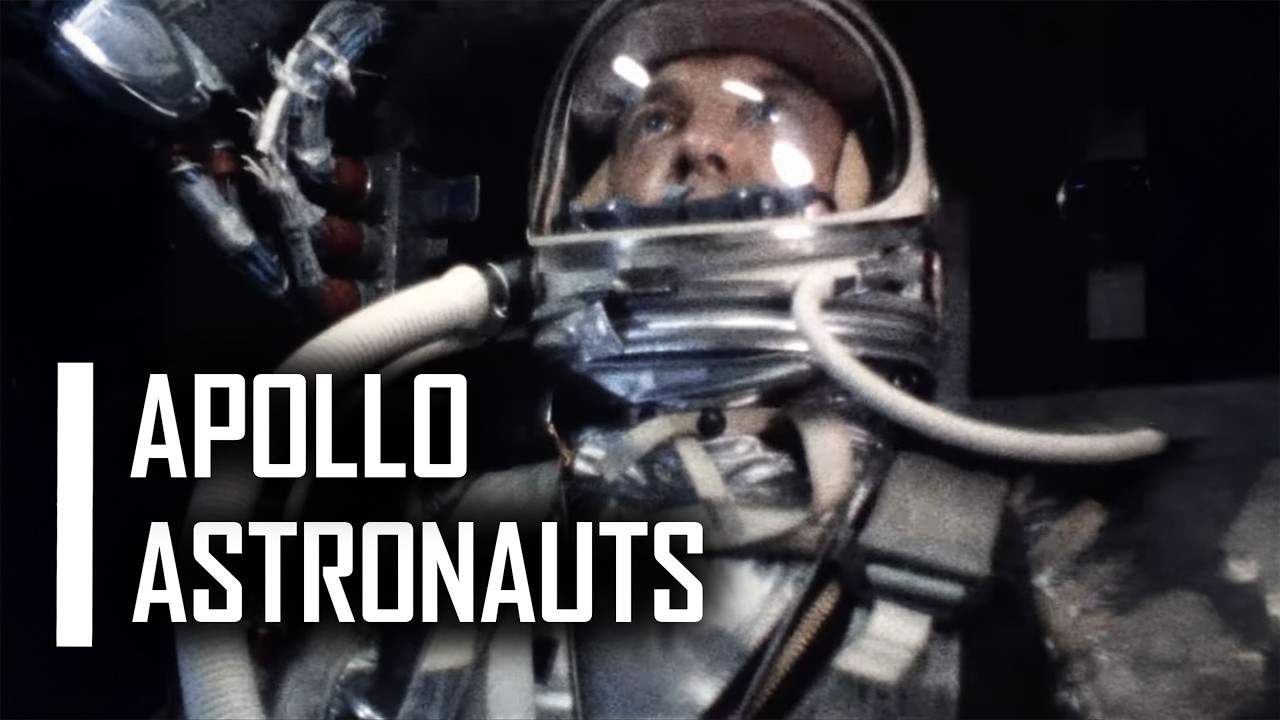
Apollo Astronauts - Training NASA's Moon Men | Free Documentary Space
Keywords
Summary
148 words
Critical Evaluation
The documentary provides a comprehensive overview of the training programs for Apollo astronauts, effectively using archival footage and expert commentary to illustrate the evolution from Mercury to Apollo. The historical context is well-presented, highlighting the geopolitical pressures of the Cold War and the ambitious goals set by President Kennedy. The film excels in showcasing the physical and psychological demands placed on astronauts, with detailed descriptions of medical tests and survival training. However, the documentary lacks depth in certain technical areas, such as the specifics of spacecraft systems and the engineering challenges of lunar landing. While expert interviews lend credibility, the absence of direct citations or references to primary sources limits its scholarly value. The narrative is engaging and well-paced, but it occasionally glosses over controversies or failures, such as the Apollo 1 fire, which could have provided a more balanced perspective. The adéquation between title and content is strong, as the film indeed focuses on astronaut training. Overall, the documentary serves as an excellent introduction for general audiences but may leave space enthusiasts desiring more technical detail and critical analysis.
180 words
Title / Content Match
The title accurately reflects the content, focusing on the training of Apollo astronauts.
Quality & Reliability
7/10
The documentary features expert interviews and NASA archival footage, providing a credible historical account. However, it lacks detailed citations and in-depth technical analysis, and some claims are presented without direct sourcing.
Key Moments
Markers derived by PSI from the transcript: the creator did not define chapters.
- Introduction to the Apollo program and the challenge of training astronauts.
- Selection process for the Mercury Seven, including medical tests and qualifications.
- Alan Shepard's first American spaceflight and John Glenn's orbital mission.
- President Kennedy's moon landing declaration and the birth of the Apollo program.
- Introduction to Project Gemini and its objectives for spacewalking and docking.
- Training for spacewalks using air-bearing floors and the 'vomit comet' for zero-G.
- Water survival training and emergency procedures for Gemini missions.
- Development of lunar landing training and simulation for Apollo.
- Geological training for moonwalks and sample collection.
- Reflections on the achievement of landing on the moon and the legacy of the training programs.
Cited Sources
- Free Documentary Channel — Official channel for the documentary.
- Free Documentary Instagram — Social media page for the channel.
- Free Documentary Facebook — Facebook page for the channel.
- Free Documentary Twitter — Twitter page for the channel.
Concurring Sources
- NASA History Office — Official NASA historical resources that corroborate the events and programs described.
Contribution & Novelties
The documentary provides a compelling narrative of the Apollo astronaut training program, synthesizing archival footage and expert interviews to highlight the human and technical challenges. It offers a unique perspective on the evolution from Mercury to Apollo, emphasizing the importance of simulation and practice. The film’s strength lies in its ability to convey the intensity and dedication required for lunar missions.
Pour aller plus loin :
- Project Apollo (NASA History) — Official NASA resource on the Apollo program.
- Project Mercury (NASA History) — Overview of the Mercury program.
- Project Gemini (NASA History) — Details on the Gemini program.
- Astronaut Selection and Training (NASA) — Information on current astronaut selection and training.
- The ‘Vomit Comet’ (NASA) — Explanation of parabolic flight training.
121 words
Radar Profile
The radar profile shows strong scores in quantity of information and reliability, reflecting the documentary's comprehensive coverage and use of credible sources. However, the technical level is moderate, indicating that the content is accessible to a general audience rather than deeply technical. The overall balance suggests a well-rounded but not highly specialized presentation.
💬 No comments were provided for analysis.