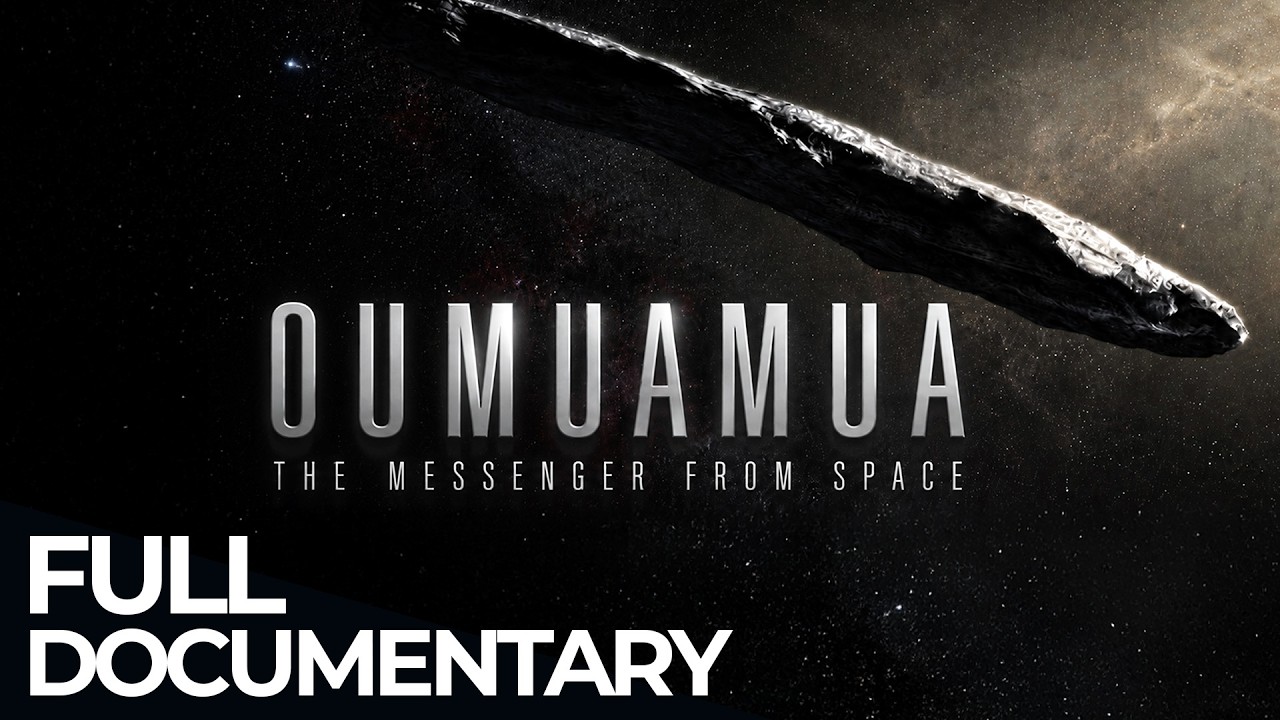
Oumuamua: Visitor from Interstellar Space | Free Documentary Space
Keywords
Summary
172 words
Critical Evaluation
The documentary provides a comprehensive overview of the discovery and scientific investigation of ‘Oumuamua, featuring interviews with several of the astronomers directly involved. This gives it a strong foundation of credibility, as the information comes from primary sources. The scientific explanations of how astronomers determined its shape, color, and trajectory are clear and accessible, making complex concepts understandable to a general audience. However, the documentary also includes speculative segments, particularly around the possibility of ‘Oumuamua being an alien spacecraft, which are presented with less scientific rigor. While it is important to discuss all hypotheses, the documentary sometimes gives undue weight to the alien theory, which is not supported by strong evidence. The inclusion of Avi Loeb’s perspective is valuable, but it should be balanced with a more critical examination of the counterarguments. The documentary also does not delve deeply into the broader implications of the discovery for our understanding of planetary systems and the prevalence of interstellar objects. Overall, the documentary is informative and engaging, but it could benefit from a more critical approach to the more speculative claims. The title accurately reflects the content, and the documentary is a good introduction to the topic for those unfamiliar with it.
200 words
Title / Content Match
The title accurately reflects the content, which focuses on the interstellar object 'Oumuamua and the scientific investigation surrounding it.
Quality & Reliability
7/10
The documentary features interviews with several astronomers directly involved in the discovery and analysis of 'Oumuamua, including Robert Weryk, Karen Meech, and Marco Micheli, which lends credibility. However, it also includes speculative segments about alien origins, which are presented without sufficient scientific rigor. The documentary is generally accurate but sometimes sensationalizes the topic.
Key Moments
Markers derived by PSI from the transcript: the creator did not define chapters.
- Introduction to the discovery of 'Oumuamua and its significance.
- Robert Weryk describes how he spotted the object in Pan-STARRS data.
- Astronomers confirm the object is interstellar and name it 'Oumuamua.
- Discussion of the object's unusual shape and rotation based on light curves.
- Spitzer observations and the debate over whether 'Oumuamua is a cigar or a pancake.
- The anomaly in its trajectory and the controversy over its nature.
- Interviews with Patrick Michel and Sean Raymond about the scientific process.
- Discussion of the possibility of an artificial origin and Avi Loeb's hypothesis.
- The challenges of observing 'Oumuamua in a short time and the ongoing research.
- Conclusion summarizing the mystery and future implications.
Cited Sources
- Pan-STARRS1 telescope — The telescope used to discover 'Oumuamua.
- Spitzer Space Telescope — Used to observe 'Oumuamua in infrared.
- International Astronomical Union — The organization that named 'Oumuamua.
Concurring Sources
- NASA's page on 'Oumuamua — NASA provides a detailed overview of 'Oumuamua's discovery and characteristics.
- ESO press release on 'Oumuamua — ESO's observations of 'Oumuamua and its unusual properties.
Dissenting Sources
- Avi Loeb's hypothesis — Loeb and Bialy suggested 'Oumuamua could be an artificial light sail, a claim that is not widely accepted by the scientific community.
Contribution & Novelties
The documentary provides a comprehensive overview of the discovery and investigation of ‘Oumuamua, synthesizing interviews with key astronomers and explaining the scientific process. It highlights the controversy and the various hypotheses proposed, from natural explanations to the speculative alien probe idea. The documentary is valuable for its educational content and for capturing the excitement of a groundbreaking astronomical discovery.
Pour aller plus loin :
- Oumuamua on Wikipedia — Comprehensive overview of the object’s discovery, characteristics, and scientific debate.
- Interstellar object — General article on interstellar objects, including ‘Oumuamua and 2I/Borisov.
- Avi Loeb’s paper on ‘Oumuamua — The paper by Loeb and Bialy suggesting a possible artificial origin, which sparked controversy.
110 words
Radar Profile
The radar profile shows high scores in quantity and quality of information, reflecting the documentary's comprehensive coverage and expert interviews. The technical level is moderate, making it accessible to a general audience. The reliability score is slightly lower due to the inclusion of speculative content, but overall the documentary is a solid educational resource.