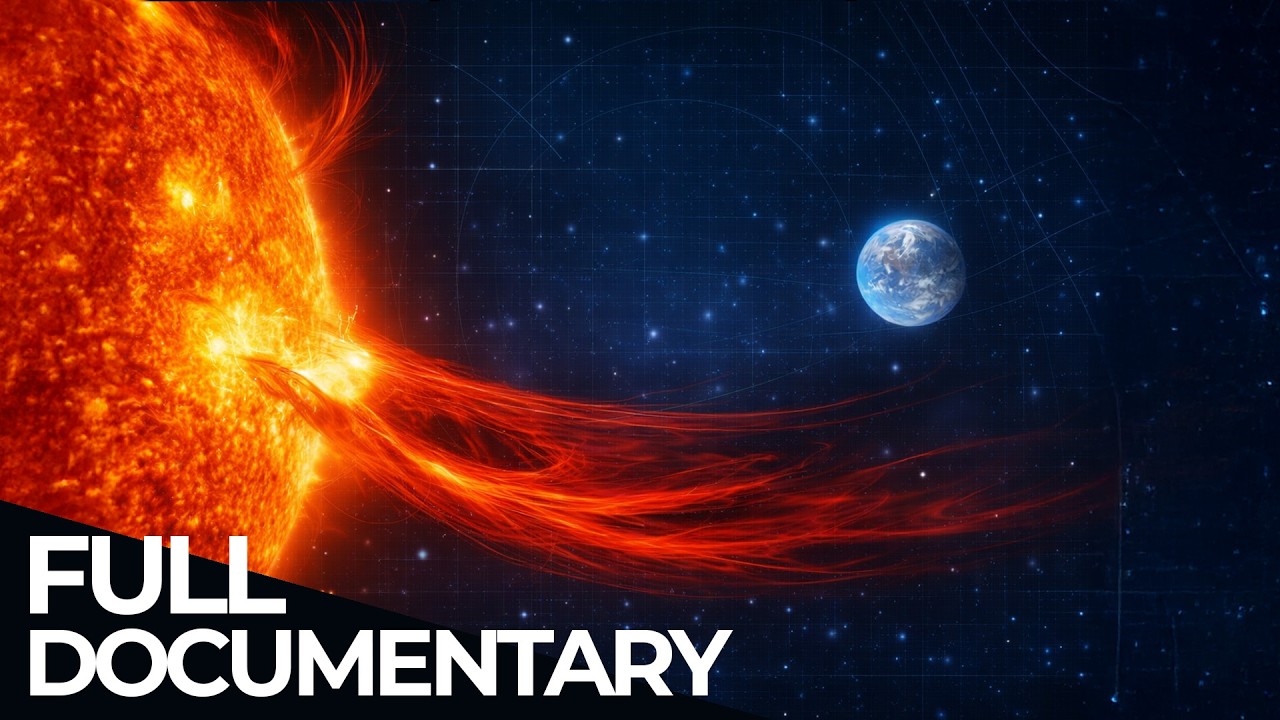
The Sun: How Solar Activity Shapes Our World | Free Documentary Space
Keywords
Summary
195 words
Critical Evaluation
The documentary offers a solid, scientifically accurate overview of solar physics and space weather, suitable for a general audience. It excels in presenting a historical narrative that connects early observations with modern discoveries, making complex concepts accessible. The inclusion of specific missions (SOHO, STEREO, MMS) and their contributions adds credibility, and the explanations of phenomena like magnetic reconnection and the solar wind are generally correct. However, the documentary simplifies some aspects, such as the mechanisms of solar flares and the exact nature of the corona’s heating, which are still active areas of research. The pacing is brisk, covering a lot of ground in 52 minutes, which may leave some topics underexplored. The visualizations and animations are engaging and help illustrate abstract concepts. The reliance on archival footage and interviews with scientists (though not explicitly shown) lends authenticity. The documentary does not delve into controversies or alternative theories, but it does acknowledge uncertainties, such as the difficulty in predicting space weather. The sources cited are primarily NASA and ESA missions, which are reputable, but no specific papers or studies are referenced. Overall, the documentary is a valuable educational resource, though it could benefit from more depth on certain topics. The title accurately reflects the content, and the production quality is high. The presence of a brief sponsorship segment (not specified) does not detract from the scientific content.
226 words
Title / Content Match
The title accurately reflects the content, which explores how solar activity affects Earth and our technology.
Quality & Reliability
8/10
The documentary presents a well-structured historical and scientific overview of solar physics, featuring contributions from reputable space agencies (NASA, ESA) and referencing key missions and discoveries. It includes accurate scientific concepts and avoids major errors, though it simplifies some complex phenomena for a general audience.
Key Moments
Markers derived by PSI from the transcript: the creator did not define chapters.
- Introduction to the Sun's role in the solar system and its composition.
- Galileo's first observations of sunspots and the discovery of the solar cycle.
- The Carrington Event of 1859 and its impact on telegraph systems.
- Kristian Birkeland's theory of auroras and early space-based observations.
- Eugene Parker's prediction of the solar wind and its confirmation by Mariner 2.
- Skylab's solar observations and discoveries of coronal holes and flares.
- The Ulysses mission and its findings on the solar wind and magnetic field.
- SOHO mission and its contributions to understanding the solar interior and corona.
- The MMS mission and the study of magnetic reconnection.
- STEREO mission and its role in monitoring solar activity from multiple angles.
Cited Sources
- Free Documentary Channel — Channel subscription link mentioned in the description.
- Free Documentary Instagram — Social media link provided in the description.
- Free Documentary Facebook — Social media link provided in the description.
- Free Documentary Twitter — Social media link provided in the description.
Concurring Sources
- NASA Solar Physics — NASA's official page on the Sun, providing accurate information on solar phenomena.
- ESA Space Weather — ESA's space weather portal, corroborating the documentary's content.
Contribution & Novelties
The documentary provides a comprehensive historical and scientific overview of solar activity, synthesizing knowledge from multiple missions and discoveries. It highlights the evolution of our understanding from early observations to modern space-based studies, emphasizing the importance of space weather for technology. The film’s strength lies in its clear explanations of complex phenomena and its coverage of key missions like SOHO, STEREO, and MMS.
Pour aller plus loin :
- Solar cycle - Wikipedia — Provides detailed information on the 11-year cycle and its effects.
- Coronal mass ejection - Wikipedia — Explains the phenomenon and its impact on Earth.
- Parker Solar Probe - NASA — Official mission page with updates and findings.
- Space weather - NOAA — Real-time space weather forecasts and data.
- Heliophysics - NASA — Overview of NASA’s heliophysics research.
130 words
Radar Profile
The radar profile shows high scores in information quantity, quality, and reliability, with a moderate technical level. This indicates a well-balanced documentary that is informative and trustworthy, but not overly technical, making it accessible to a broad audience.