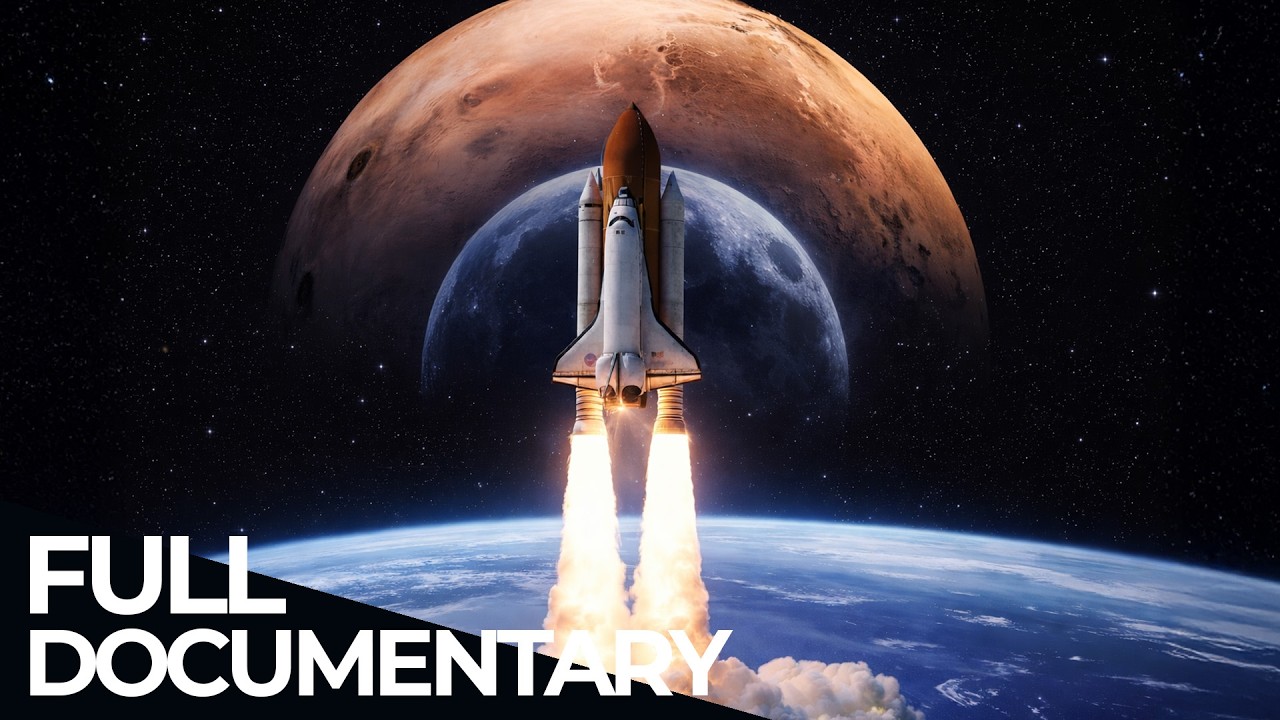
The Physics of Space Travel | Galaxy | Free Documentary Space
Keywords
Summary
138 words
Critical Evaluation
The documentary provides a comprehensive and engaging overview of the physics of space travel, with a strong historical narrative. It accurately describes the fundamental principles of orbital mechanics, such as elliptical orbits, launch windows, and gravity assists, and illustrates them with real mission examples. The use of archival footage and expert interviews adds credibility and visual interest. However, the film lacks explicit citations or references to primary sources, which limits its utility for viewers seeking to verify the information. Some technical explanations are simplified, which may leave advanced viewers wanting more depth. The pacing is generally good, but the middle section on spy satellites feels slightly tangential to the core topic. Overall, the documentary is a valuable educational resource for those new to spaceflight, but it does not break new ground for those already familiar with the subject.
138 words
Title / Content Match
The title accurately reflects the content, which focuses on the physics of space travel, particularly orbital mechanics and trajectories.
Quality & Reliability
7/10
The documentary provides a solid historical overview of orbital mechanics and spaceflight, with accurate descriptions of key missions and concepts. However, it lacks detailed citations or references to primary sources, and some technical explanations are simplified for a general audience.
Key Moments
Markers derived by PSI from the transcript: the creator did not define chapters.
- Introduction to orbital mechanics and the need for precise calculations.
- Historical context: Newton, Kepler, and the development of celestial mechanics.
- The V2 rocket and early American and Soviet rocket programs.
- Launch of Sputnik and the beginning of the Space Race.
- Explorer 1 and the discovery of the Van Allen belts.
- Development of spy satellites and the Corona program.
- Principles of launching to orbit: launch sites, trajectories, and staging.
- Gravity assists and interplanetary trajectories, including the Voyager missions.
- Orbital rendezvous and the International Space Station.
Cited Sources
- Free Documentary Channel — Official channel for the documentary series.
- Free Documentary Instagram — Social media page for the channel.
- Free Documentary Facebook — Social media page for the channel.
- Free Documentary Twitter — Social media page for the channel.
Concurring Sources
- NASA History — Official NASA historical resources that corroborate the events and missions described.
- Encyclopedia Britannica: Space exploration — General reference that aligns with the historical and technical content.
Contribution & Novelties
The documentary synthesizes historical and technical aspects of orbital mechanics, making it accessible to a broad audience. It highlights the iterative process of early space exploration and the role of physics in mission design. The film’s strength lies in its clear explanations of complex concepts like gravity assists and orbital insertion.
Pour aller plus loin :
- Orbital mechanics — Provides a comprehensive overview of the physics governing spacecraft trajectories.
- Gravity assist — Detailed explanation of how spacecraft use planetary gravity to change speed and direction.
- Van Allen radiation belt — Information on the discovery and significance of the radiation belts.
- Voyager program — Details on the missions that used gravity assists to explore the outer planets.
116 words
Radar Profile
The radar profile shows strong scores in quantity of information and technical level, indicating a content-rich documentary with substantial depth. Quality and reliability are slightly lower, reflecting the lack of explicit citations. Overall, the documentary is well-balanced, with a slight emphasis on providing a broad overview rather than deep technical detail.
💬 No comments were provided for analysis.