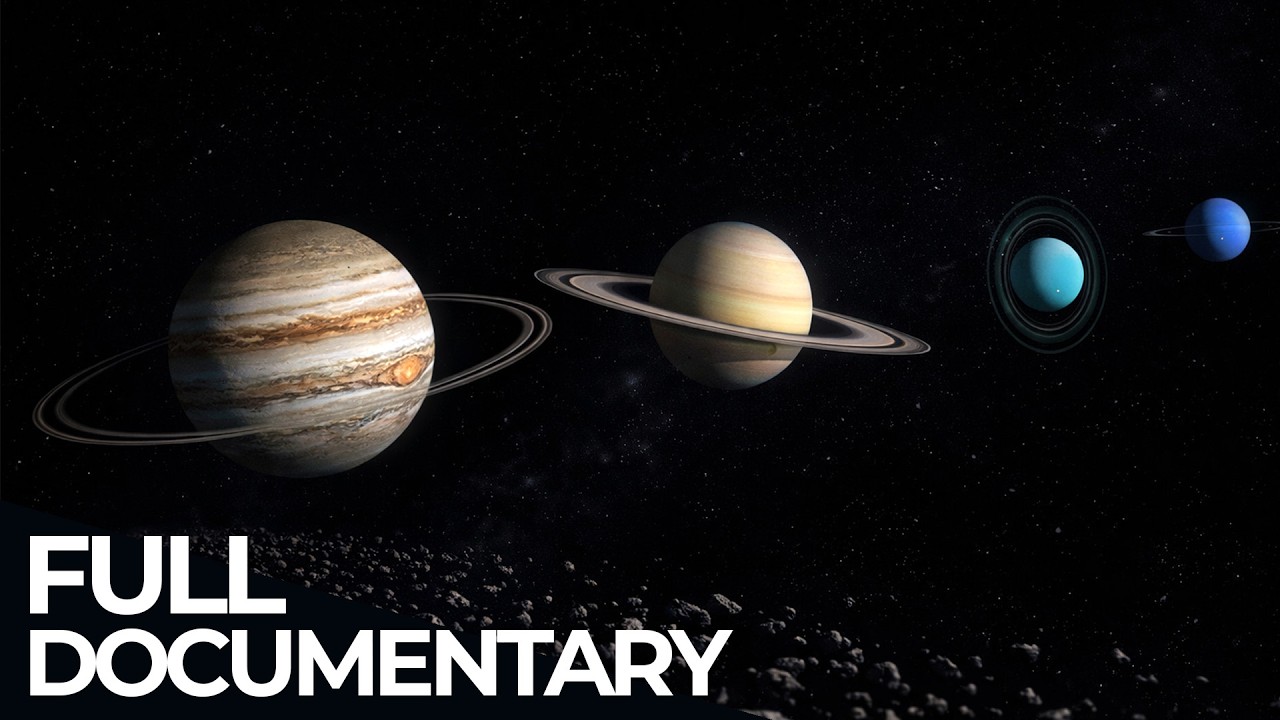
The Gas Giants | Free Documentary Space
Keywords
Summary
127 words
Critical Evaluation
The documentary provides a comprehensive and visually engaging overview of the gas giants, suitable for a general audience. It successfully conveys the scale and mystery of these planets, using expert interviews and mission footage to illustrate key points. The scientific content is generally accurate, but the presentation often simplifies complex topics, which may lead to oversimplification. For instance, the Grand Tack hypothesis is presented as the leading explanation, but the documentary does not acknowledge alternative models or the ongoing debate. Similarly, the discussion of the Great Red Spot’s shrinking is presented without mentioning the uncertainty in long-term observations. The reliance on expert commentary adds credibility, but the lack of specific citations or references to peer-reviewed studies weakens the scientific rigor. The documentary’s strength lies in its ability to inspire curiosity and provide a broad context, but it falls short of a detailed scientific analysis. The title accurately reflects the content, and the pacing is well-suited for a documentary format. Overall, it is a valuable educational resource, but viewers seeking in-depth scientific detail may need to consult additional sources.
178 words
Title / Content Match
The title accurately reflects the content, which focuses on the gas giants of our solar system.
Quality & Reliability
7/10
The documentary provides a broad overview of gas giants, featuring expert interviews and referencing major missions (Juno, Cassini). However, it lacks detailed citations and contains some speculative elements (e.g., future missions) without clear sourcing.
Key Moments
Markers derived by PSI from the transcript: the creator did not define chapters.
- Introduction to the gas giants and their significance.
- Formation of the solar system and the birth of the Sun.
- Explanation of the Grand Tack hypothesis and planetary migration.
- Comparison of gas giants and ice giants.
- Jupiter's structure and the Great Red Spot.
- Challenges of sending missions to Jupiter.
- Juno mission and its discoveries at Jupiter's poles.
- Saturn's rings and the Cassini mission.
- Uranus and Neptune: the ice giants.
- Future missions to the ice giants and conclusion.
Cited Sources
- Free Documentary Channel — Channel subscription link provided in the description.
- Free Documentary Instagram — Social media link in the description.
- Free Documentary Facebook — Social media link in the description.
- Free Documentary Twitter — Social media link in the description.
Concurring Sources
- NASA Solar System Exploration — General reference for planetary facts.
Dissenting Sources
- No discordant sources found — The documentary aligns with current scientific consensus.
Contribution & Novelties
The documentary synthesizes current knowledge about gas giants, highlighting recent discoveries from Juno and Cassini. It provides a clear explanation of the Grand Tack hypothesis and the distinction between gas and ice giants. The visual presentation of planetary features is compelling.
Pour aller plus loin :
- NASA Juno Mission — Official mission page with detailed findings.
- Cassini-Huygens Mission — NASA overview of the Cassini mission.
- Grand Tack Hypothesis — Wikipedia article explaining the hypothesis.
- Hot Jupiters — Wikipedia article on hot Jupiters.
- Ice Giants — Wikipedia article on ice giants.
90 words
Radar Profile
The radar profile shows high scores in quantity of information and reliability, with moderate scores in technical depth. This indicates a well-rounded documentary that is informative and trustworthy, though not highly technical.
💬 No comments provided.