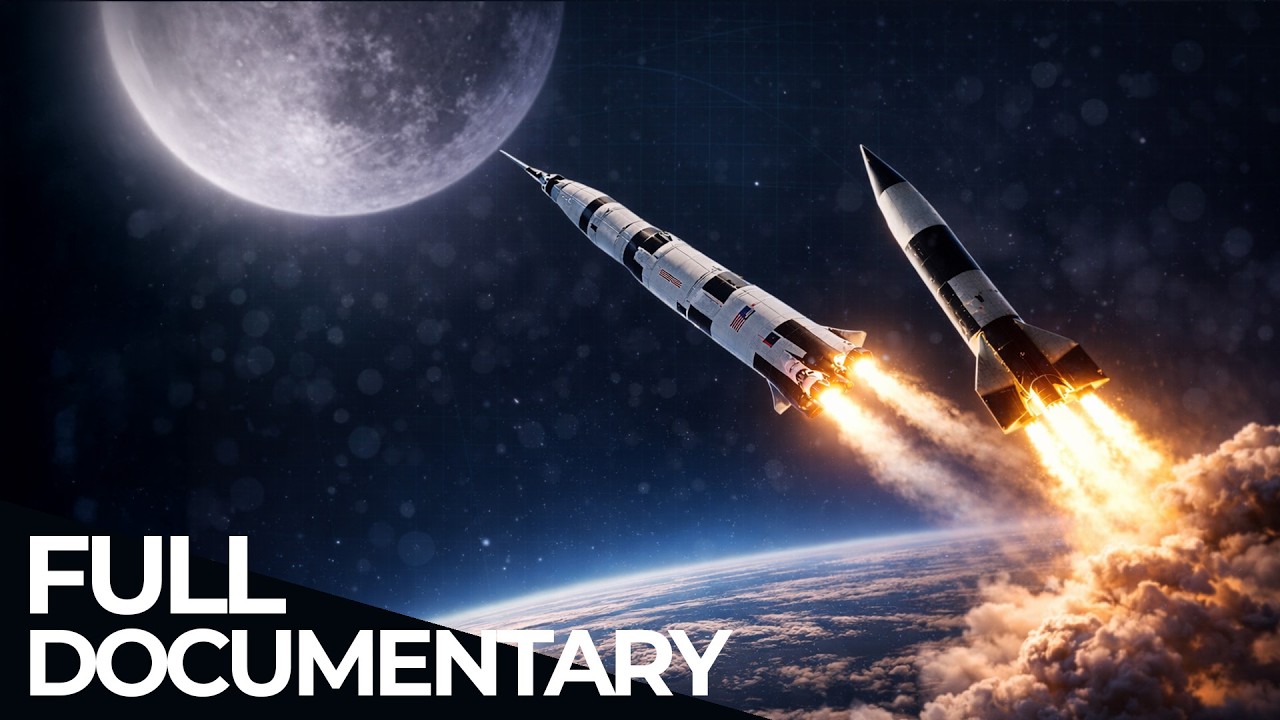
From V2 to the Moon: The Rockets That Built Spaceflight | Free Documentary Space
Keywords
Summary
193 words
Critical Evaluation
The documentary provides a comprehensive and engaging overview of the early history of rocketry, focusing on the transition from military weapons to space exploration. It is well-produced with archival footage and expert interviews, making it accessible to a general audience. The historical narrative is largely accurate, covering key events such as the Treaty of Versailles, the development of the V2, and the post-war brain drain of German scientists. However, the documentary lacks explicit citations or references to primary sources, which limits its scholarly value. It also tends to simplify complex political and ethical issues, such as von Braun’s involvement with the Nazi regime and the use of slave labor, which are mentioned but not deeply explored. The technical explanations are clear but not overly detailed, suitable for a non-specialist. The title accurately reflects the content, and the documentary successfully conveys the transformative impact of rocket technology on spaceflight. Overall, it is a valuable introduction to the topic, but viewers seeking rigorous academic analysis may need to consult additional sources.
169 words
Title / Content Match
The title accurately reflects the content, which traces the development of rockets from the V2 to lunar missions.
Quality & Reliability
7/10
The documentary is well-structured and historically accurate, relying on established facts and archival footage. However, it lacks explicit citations or references to primary sources, and the narrative is somewhat dramatized for entertainment purposes.
Key Moments
Markers derived by PSI from the transcript: the creator did not define chapters.
- Introduction to the importance of space in modern economy and the historical context of post-WWI Germany.
- Wernher von Braun's early life and involvement with the Spaceflight Society.
- Development of the A4/V2 rocket at Peenemünde and its technical innovations.
- Allied bombing of Peenemünde and the transfer of production to underground facilities with slave labor.
- Deployment of V2 rockets against London and Antwerp, and the naming of vengeance weapons.
- Von Braun's surrender to American forces and the recovery of V2 parts.
- Early American rocket tests at White Sands and the Bumper program.
- The Cold War context and the intensification of missile development in both superpowers.
Cited Sources
- Free Documentary Channel — The channel that published this documentary.
- Free Documentary Instagram — Social media presence of the channel.
- Free Documentary Facebook — Social media presence of the channel.
- Free Documentary Twitter — Social media presence of the channel.
Concurring Sources
- NASA History — Official NASA historical resources that corroborate the documentary's account of early rocketry.
Dissenting Sources
- Critique of von Braun's legacy — Some historians argue that von Braun's involvement with the Nazi regime was more active than portrayed, and that the documentary downplays his moral culpability.
Contribution & Novelties
The documentary provides a compelling narrative that connects the military origins of rocketry with the civilian space program, highlighting the ethical dilemmas of using Nazi technology. It offers a balanced view of von Braun’s role, acknowledging his contributions to spaceflight while not shying away from his Nazi affiliations. The film also emphasizes the role of political rivalry in accelerating technological development.
Pour aller plus loin :
- V-2 rocket — Detailed technical and historical information about the V2.
- Wernher von Braun — Biography of the key figure.
- Space Race — Overview of the Cold War competition.
- Operation Paperclip — The program that brought German scientists to the US.
107 words
Radar Profile
The radar profile shows high scores in quantity of information and fiabilité, reflecting the documentary's comprehensive coverage and generally reliable historical account. However, the lower score in niveau technique indicates that the technical details are presented at a popular level, not deeply technical.
💬 No comments were provided for analysis.