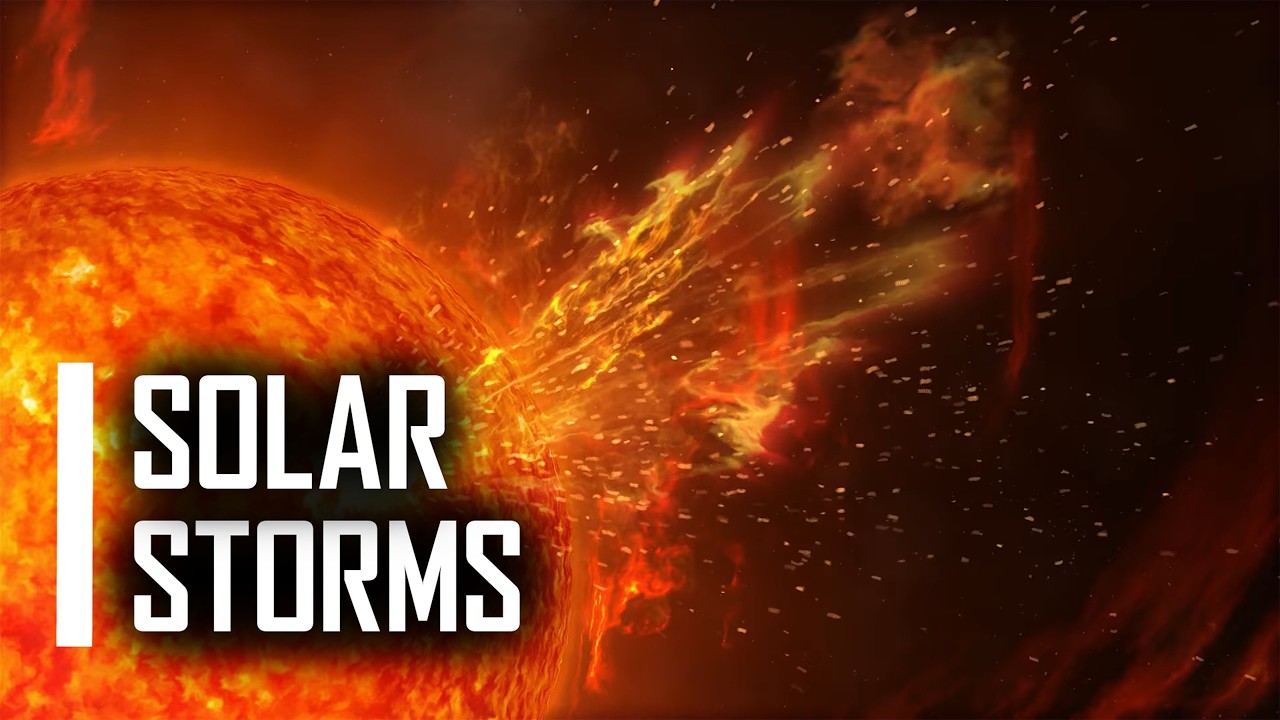
Solar Storms - The unpredictable Danger | Free Documentary Space
Keywords
Summary
145 words
Critical Evaluation
The documentary provides a comprehensive overview of solar storms and the Parker Solar Probe mission, making complex scientific concepts accessible to a general audience. It effectively uses interviews with experts, such as astrophysicist Folk Bortma and NASA’s Russell Howard, to lend credibility. The explanation of coronal heating and the challenges of building instruments that can withstand extreme temperatures is particularly well done. However, the documentary lacks depth in some areas, such as the specific mechanisms of solar storm generation and the detailed physics of geomagnetic induced currents. It also does not provide citations for the scientific claims made, which limits its utility for those seeking to verify the information. The production quality is high, with impressive visuals and clear narration. The inclusion of historical events like the 1989 blackout adds context, but the documentary could have benefited from more discussion of current research and future missions. Overall, it is a valuable educational resource, but it should be supplemented with more technical sources for a thorough understanding.
166 words
Title / Content Match
The title accurately reflects the content, focusing on solar storms and their potential dangers.
Quality & Reliability
7/10
The documentary presents scientific content with interviews of researchers and references to NASA and ESA missions. It explains solar storm phenomena and the Parker Solar Probe mission. While it is informative, it lacks detailed citations and may simplify some aspects for a general audience.
Key Moments
Markers derived by PSI from the transcript: the creator did not define chapters.
- Introduction to solar storms and their potential threat to Earth's infrastructure.
- Interview with astrophysicist Folk Bortma about the need for space-based observation of solar storms.
- Explanation of the Parker Solar Probe mission and its goal to fly close to the Sun.
- Discussion of how solar storms can damage power grids, referencing the 2003 South Africa incident.
- Visit to the Conrad Observatory in Austria to measure geomagnetic changes.
- Explanation of how solar storms cause auroras and their visibility at lower latitudes.
- Discussion of the coronal heating mystery and why the corona is hotter than the Sun's surface.
- Meeting between Folk Bortma and Russell Howard to discuss the camera design for the probe.
- Testing of camera lenses against dust impacts to ensure durability.
- Mention of the STEREO mission and the Gregorian solar telescope as complementary observations.
Cited Sources
- Parker Solar Probe - NASA — Official NASA mission page for the Parker Solar Probe, mentioned in the documentary as the key mission to study solar storms.
- ESA - Space Weather — ESA's page on space weather, referenced as the European agency involved in solar storm research.
Concurring Sources
- NASA - Parker Solar Probe — Official NASA page confirming the mission's goals and status, aligning with the documentary's content.
- ESA - Space Weather — ESA's page on space weather, corroborating the importance of monitoring solar activity.
Dissenting Sources
- No discordant sources found — The documentary's content is consistent with established scientific understanding; no conflicting sources were identified.
Contribution & Novelties
The documentary provides an engaging overview of solar storms and the Parker Solar Probe mission, highlighting the importance of space weather research. It offers insights into the challenges of building instruments for extreme environments and the need for early warning systems. The film’s strength lies in its ability to convey the urgency of understanding solar storms to protect modern infrastructure.
Pour aller plus loin :
- Solar storm - Wikipedia — Provides a comprehensive overview of solar storms, their causes, and effects.
- Parker Solar Probe - Wikipedia — Detailed information about the mission, its objectives, and findings.
- Space weather - NOAA — NOAA’s Space Weather Prediction Center offers real-time data and forecasts, relevant to the documentary’s theme of prediction and mitigation.
120 words
Radar Profile
The radar profile shows high scores in quantity of information and fiabilite, indicating a well-sourced documentary. The niveau technique is moderate, reflecting its accessibility to a general audience. The overall balance suggests a reliable educational resource.
💬 Sur les 0 commentaires analysés, aucune tendance n'a pu être dégagée.