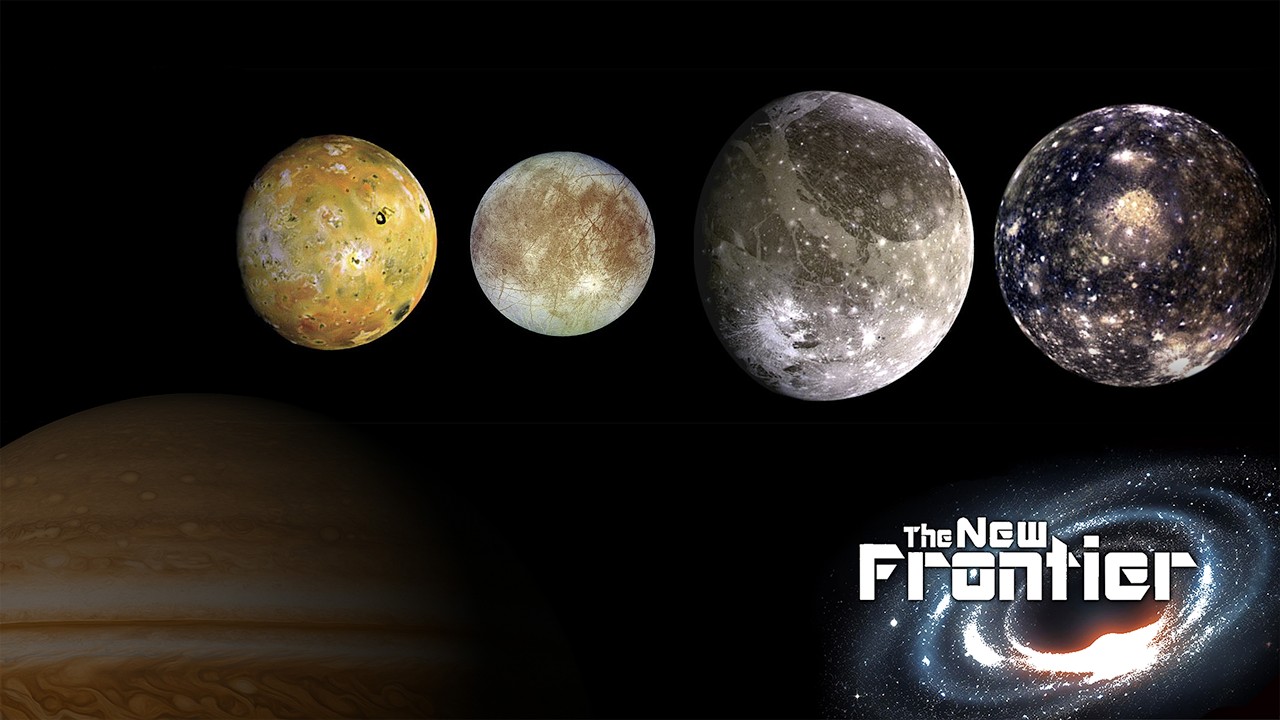
The Moons of Olympus | The New Frontier | Free Documentary Space
Keywords
Summary
120 words
Critical Evaluation
The documentary provides a comprehensive and engaging overview of the most scientifically intriguing moons in our solar system. It successfully conveys the excitement and importance of exploring these distant worlds, particularly in the search for habitable environments. The inclusion of expert interviews adds credibility, and the explanations of tidal heating and subsurface oceans are clear and accessible. However, the documentary has some weaknesses. It lacks specific citations for the claims made, and some mission details are outdated (e.g., the Europa Clipper launch date is given as 2025, but it was actually launched in 2024). The focus is more on narrative and inspiration than on rigorous scientific detail, which may leave some viewers wanting more depth. The title ‘The Moons of Olympus’ is somewhat misleading, as it does not directly relate to the content, though the subtitle ‘The New Frontier’ helps clarify the theme. Overall, the documentary is a valuable introduction to the topic, but it should be supplemented with more detailed and up-to-date sources for a thorough understanding.
168 words
Title / Content Match
The title 'The Moons of Olympus' is somewhat poetic and not immediately clear, but the subtitle 'The New Frontier' and the content align well with the exploration of outer planet moons.
Quality & Reliability
7/10
The documentary provides a broad overview of the outer planet moons, featuring interviews with scientists and references to ongoing missions. While it is informative and generally accurate, it lacks detailed citations and contains some outdated mission timelines (e.g., Europa Clipper launch year). The scientific content is sound but presented in a simplified manner.
Key Moments
Markers derived by PSI from the transcript: the creator did not define chapters.
- Introduction to the moons of the outer planets and their significance.
- Overview of Jupiter's Galilean moons and their characteristics.
- Detailed discussion on Io's volcanic activity and tidal heating.
- Europa's subsurface ocean and potential for life, with scientist interviews.
- Europa Clipper mission design and objectives.
- Ganymede's unique magnetic field and internal ocean.
- Callisto's potential as a base for future exploration.
- Saturn's moons, focusing on Enceladus and its geysers.
- Titan's atmosphere, lakes, and organic chemistry, with scientist commentary.
- Future missions to Titan and Enceladus, including the Titan Saturn System mission.
Cited Sources
- Free Documentary Channel — Channel subscription link mentioned in description.
- Free Documentary Instagram — Social media link in description.
- Free Documentary Facebook — Social media link in description.
- Free Documentary Twitter — Social media link in description.
Concurring Sources
- NASA Europa Clipper — Official NASA mission page confirming the existence and objectives of the Europa Clipper mission.
- NASA Solar System Exploration: Titan — NASA's overview of Titan, confirming its atmosphere and lakes.
- NASA Solar System Exploration: Enceladus — NASA's overview of Enceladus, confirming its geysers and subsurface ocean.
Dissenting Sources
Contribution & Novelties
The documentary synthesizes current knowledge about the moons of the outer planets, emphasizing the potential for life on Europa and Enceladus. It provides a compelling narrative that connects scientific findings with future exploration plans, making it a valuable resource for general audiences. The inclusion of expert interviews adds depth and credibility.
Pour aller plus loin :
- Europa Clipper mission overview — Official NASA mission page with detailed information.
- Titan Saturn System Mission concept — Wikipedia article on the proposed mission.
- Cassini-Huygens mission — Wikipedia article on the mission that explored Saturn and Titan.
- Subsurface ocean on Enceladus — Wikipedia section on Enceladus’s ocean.
- Galilean moons — Wikipedia article on the four largest moons of Jupiter.
115 words
Radar Profile
The radar profile shows balanced scores across information quantity, quality, technical level, and reliability, with a slight emphasis on quality and reliability. This indicates a well-rounded documentary that is informative and trustworthy, though not extremely technical.