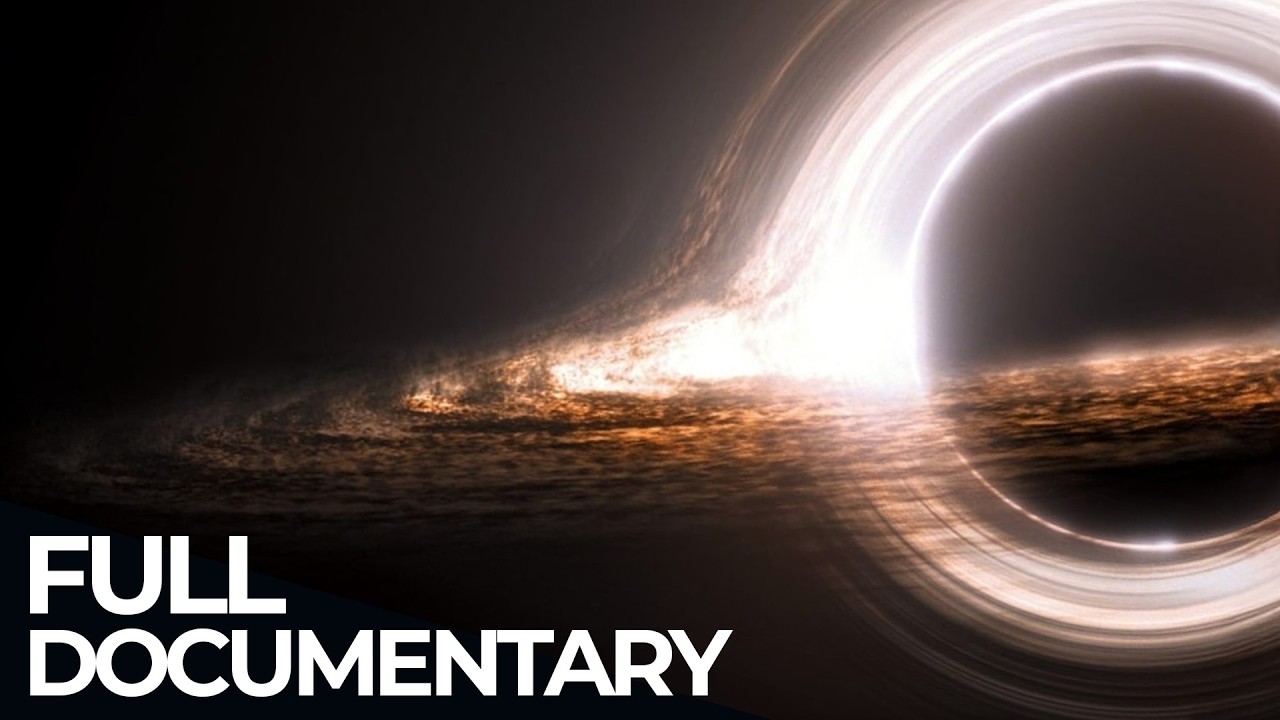
Black Holes: The First Image of the Unseen | Galaxy | Free Documentary Space
Keywords
Summary
179 words
Critical Evaluation
The documentary provides a compelling and largely accurate account of the scientific endeavor to image a black hole. Its strength lies in the clear explanation of complex concepts like gravitational lensing and interferometry, aided by high-quality animations and interviews with leading researchers. The inclusion of Reinhard Genzel’s Nobel Prize-winning work adds credibility. However, the documentary occasionally glosses over technical details, such as the exact nature of the data processing algorithms, which might leave some viewers with an incomplete understanding. The sources cited are primarily the scientists themselves, which is appropriate for a documentary, but the lack of explicit references to published papers or external resources limits its utility for those seeking further verification. The title accurately reflects the content, and the documentary does not overstate its claims, appropriately noting that the image is of the shadow, not the black hole itself. Overall, it is a valuable educational resource that balances accessibility with scientific rigor, though it could benefit from more explicit citations and a deeper dive into the technological hurdles overcome.
171 words
Title / Content Match
The title accurately reflects the content, which focuses on the history and technology behind capturing the first image of a black hole.
Quality & Reliability
8/10
The documentary is produced by a reputable channel (Free Documentary) and features interviews with leading scientists (e.g., Reinhard Genzel, Sheperd Doeleman). It accurately explains general relativity and the EHT project, with no major factual errors detected. However, it lacks detailed citations and simplifies some concepts for a general audience.
Key Moments
Markers derived by PSI from the transcript: the creator did not define chapters.
- Introduction to Einstein's general relativity and Schwarzschild's prediction of singularities.
- Explanation of quasars and accretion disks as evidence for black holes.
- Reinhard Genzel's team tracks stars orbiting Sagittarius A*, providing strong evidence for a supermassive black hole.
- Sheperd Doeleman introduces the Event Horizon Telescope project and the choice of M87 as target.
- Technical details of the EHT: hydrogen masers, data recording, and the role of ALMA.
- Data processing and the use of AI to reconstruct the first image of a black hole.
Cited Sources
- Event Horizon Telescope — Official website of the EHT collaboration, providing details on the project and its results.
- ESO - Very Large Telescope — European Southern Observatory's VLT, used for tracking stars at the Galactic center.
- ALMA Observatory — Atacama Large Millimeter/submillimeter Array, a key component of the EHT.
- Max Planck Institute for Extraterrestrial Physics — Institution where Reinhard Genzel's team conducted their research on the Galactic center.
Concurring Sources
- First M87 Event Horizon Telescope Results — The scientific paper presenting the first image of M87's black hole, confirming the documentary's claims.
Contribution & Novelties
The documentary synthesizes the historical and technical journey leading to the first black hole image, offering a comprehensive overview that is accessible to a broad audience. It highlights the collaborative nature of the EHT project and the innovative use of interferometry and AI in astronomy.
Pour aller plus loin :
- Event Horizon Telescope official site — Official project details and publications.
- General relativity on Wikipedia — Background on the theory that predicts black holes.
- Gravitational lensing on Wikipedia — Explanation of the effect that makes black hole imaging possible.
- Nobel Prize in Physics 2020 — Awarded for black hole discoveries, including Genzel’s work.
103 words
Radar Profile
The radar profile shows high scores in information quantity, quality, and reliability, with a slightly lower technical level, indicating that the documentary is well-researched and accurate but may not delve deeply into the most advanced technical aspects, making it suitable for a general audience.
💬 Sur les 0 commentaires analysés, aucune tendance n'est disponible.