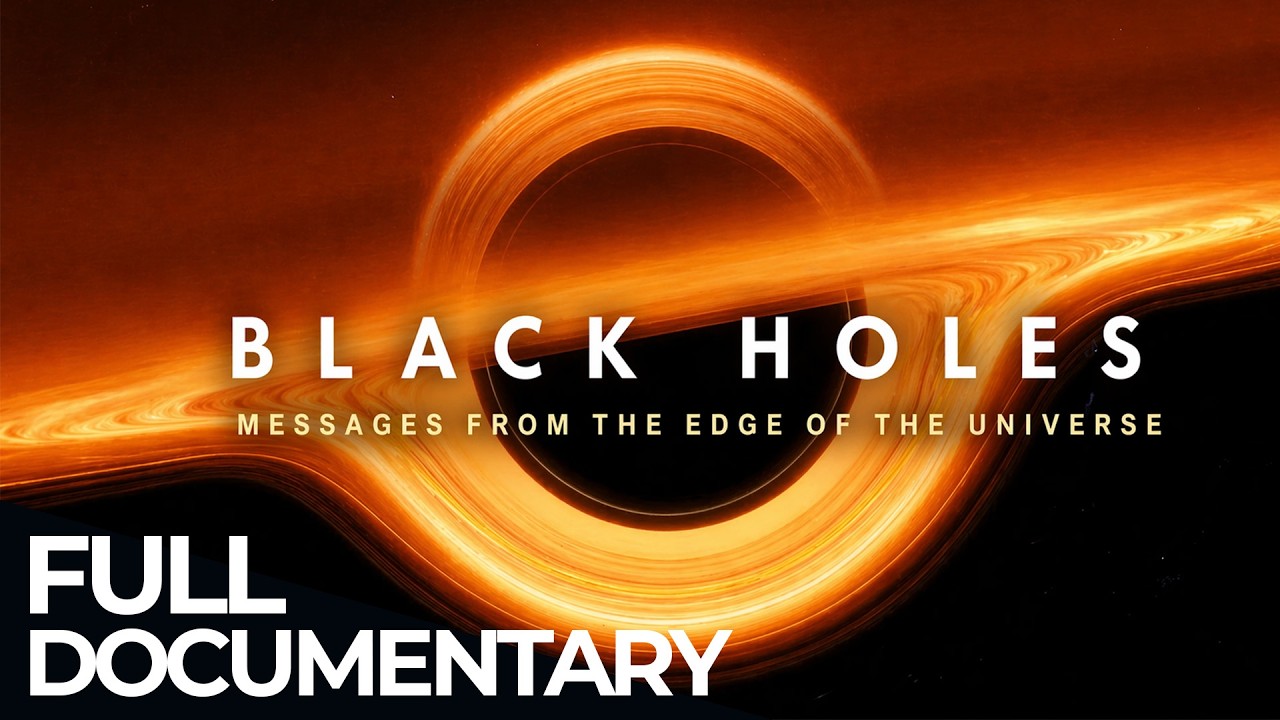
Black Holes: Messages From The Edge Of The Universe | Free Documentary Space
Keywords
Summary
140 words
Critical Evaluation
The documentary provides a valuable introduction to neutrino astronomy, a relatively recent and exciting field. It successfully conveys the significance of detecting neutrinos as a new way to observe the universe, complementing traditional electromagnetic observations. The interviews with scientists lend credibility, and the footage of the IceCube and ANTARES facilities offers a rare glimpse into these large-scale experiments. However, the documentary has some weaknesses. It tends to overstate the direct connection between neutrinos and black holes, as the title suggests, while the actual focus is on neutrinos in general. The explanation of the physics is simplified, which is appropriate for a general audience but may leave some viewers wanting more depth. The documentary also touches on dark matter without providing a balanced view of the uncertainties. The sources cited are not explicitly listed, but the presence of real scientists and facilities adds authenticity. Overall, the documentary is informative and engaging, but it could benefit from more explicit references to scientific publications and a clearer distinction between established facts and hypotheses. The pacing is good, and the visuals are compelling, making it a worthwhile watch for anyone interested in astrophysics.
189 words
Title / Content Match
The title is somewhat misleading as it focuses more on neutrinos than black holes, but it still relates to the theme of cosmic messengers.
Quality & Reliability
7/10
The documentary presents a scientifically accurate overview of neutrino astronomy, featuring interviews with researchers and footage of real facilities like IceCube and ANTARES. However, it lacks citations to specific studies and includes some speculative statements about dark matter. Overall, it is reliable for a general audience.
Key Moments
Markers derived by PSI from the transcript: the creator did not define chapters.
- Introduction to neutrino astronomy and the IceCube detector.
- Explanation of neutrinos and their properties.
- Construction of IceCube at the South Pole.
- First detection of high-energy neutrinos (Ernie and Bert).
- Introduction to the ANTARES and KM3NeT projects in the Mediterranean.
- Discussion of bioluminescence and its impact on detectors.
- Neutrinos from the sun and human body.
- Cosmic rays and the need for neutrinos as messengers.
- Construction and design of KM3NeT.
- Future prospects and the potential of neutrino astronomy.
Cited Sources
- IceCube Neutrino Observatory — Mentioned as the detector at the South Pole.
- ANTARES Telescope — Mentioned as a prototype in the Mediterranean.
- KM3NeT — Mentioned as the future large-scale detector.
Concurring Sources
- IceCube Neutrino Observatory — The documentary's description of IceCube aligns with the official information.
- KM3NeT — The documentary's description of KM3NeT matches the project's goals and status.
Dissenting Sources
- No discordant sources identified — The documentary does not contradict established scientific knowledge.
Contribution & Novelties
The documentary provides an accessible overview of neutrino astronomy, highlighting recent breakthroughs and ongoing projects. It emphasizes the unique role of neutrinos as cosmic messengers and the technological challenges of detection.
Pour aller plus loin :
- IceCube Neutrino Observatory — Official site with detailed information on the detector and its discoveries.
- KM3NeT — Official site for the Mediterranean neutrino telescope.
- Neutrino astronomy on Wikipedia — Overview of the field and its history.
72 words
Radar Profile
The radar profile shows high scores in quantity of information and technical level, indicating a content-rich documentary. The quality and reliability scores are moderate, reflecting the lack of explicit citations and some speculative elements.