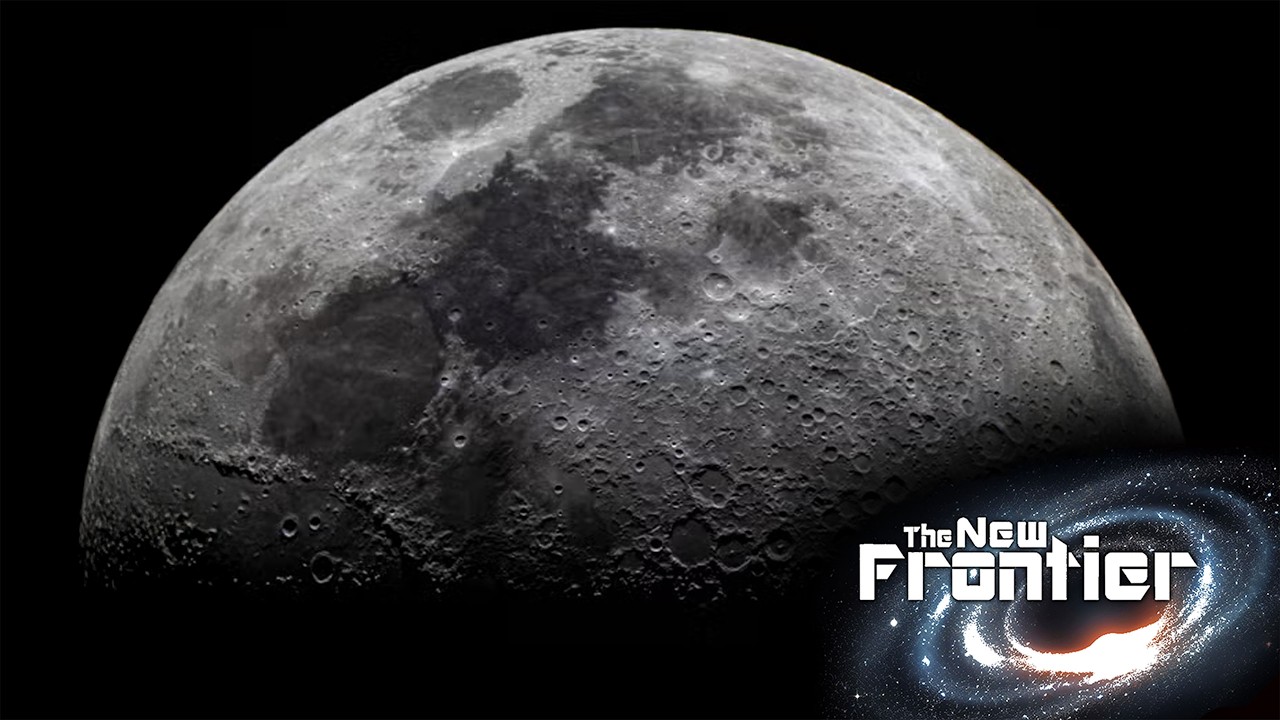
Return to the Moon | The New Frontier | Free Documentary Space
Keywords
Summary
204 words
Critical Evaluation
The documentary provides a comprehensive and engaging overview of the recent surge in lunar exploration, effectively combining historical context with current scientific findings. Its strength lies in the inclusion of interviews with NASA scientists and engineers, which lend credibility and a personal touch to the narrative. The coverage of key missions, such as LRO, LCROSS, and GRAIL, is accurate and well-illustrated, and the explanation of the importance of water ice for future lunar bases is clear and compelling. However, the documentary has some weaknesses. It lacks specific citations or references for the information presented, which reduces its scientific rigor. The production date is not clearly stated, and some information may be outdated, as it mentions the ESA lunar lander being shelved and does not cover more recent missions like Artemis. The pacing is somewhat uneven, with a rapid succession of missions that might overwhelm viewers unfamiliar with the topic. The technical level is moderate, making it accessible to a general audience but not delving deeply into the underlying physics or engineering. The adéquation between the title and content is good, as the film indeed focuses on the return to the Moon. Overall, the documentary is informative and visually appealing, but it would benefit from more rigorous sourcing and updated information.
210 words
Title / Content Match
The title accurately reflects the content, which focuses on the renewed interest in returning to the Moon through robotic missions and future plans.
Quality & Reliability
7/10
The documentary provides a broad overview of lunar exploration, featuring interviews with NASA scientists and engineers, and covers key missions and findings. However, it lacks detailed citations and some information is presented without rigorous sourcing, and the production date is unclear.
Key Moments
Markers derived by PSI from the transcript: the creator did not define chapters.
- Introduction to the Moon's significance and the renewed interest in returning.
- Discussion of the Apollo program and its legacy.
- Overview of early robotic missions: Hiten, Clementine, Lunar Prospector.
- Europe's SMART-1 mission and the giant impact theory.
- Japan's Kaguya and India's Chandrayaan-1, confirmation of water ice.
- NASA's Lunar Reconnaissance Orbiter (LRO) and its objectives.
- LCROSS impact experiment and discovery of water ice.
- GRAIL mission and insights into the moon's interior structure.
- LADEE mission and lunar dust environment.
- Future plans: China's lunar base and private ventures.
Cited Sources
- Free Documentary Channel — Channel subscription link
- Free Documentary Instagram — Social media link
- Free Documentary Facebook — Social media link
- Free Documentary Twitter — Social media link
Concurring Sources
- NASA Lunar Reconnaissance Orbiter — Confirms LRO mission objectives and findings.
- NASA LCROSS — Confirms LCROSS impact and water ice discovery.
Dissenting Sources
- ESA Lunar Lander — The documentary states the ESA lunar lander was shelved, but ESA has ongoing lunar exploration plans, such as the European Large Logistics Lander.
Contribution & Novelties
The documentary synthesizes recent lunar exploration missions and findings, highlighting the discovery of water ice and the potential for future human bases. It provides a valuable overview for a general audience, but does not present new scientific data.
Pour aller plus loin :
- Lunar Reconnaissance Orbiter — Official NASA page with detailed mission information and data.
- LCROSS — NASA’s LCROSS mission page, including impact results.
- GRAIL — NASA’s GRAIL mission page with gravity mapping results.
- Chandrayaan-1 — ISRO’s official page for India’s first lunar mission.
- Artemis program — NASA’s Artemis program for returning humans to the Moon.
97 words
Radar Profile
The radar profile shows a balanced documentary with moderate scores across all dimensions, indicating a solid but not exceptional production. The highest score is in quantity of information, reflecting the broad coverage of missions, while the lowest is in technical level, as it remains accessible to a general audience.