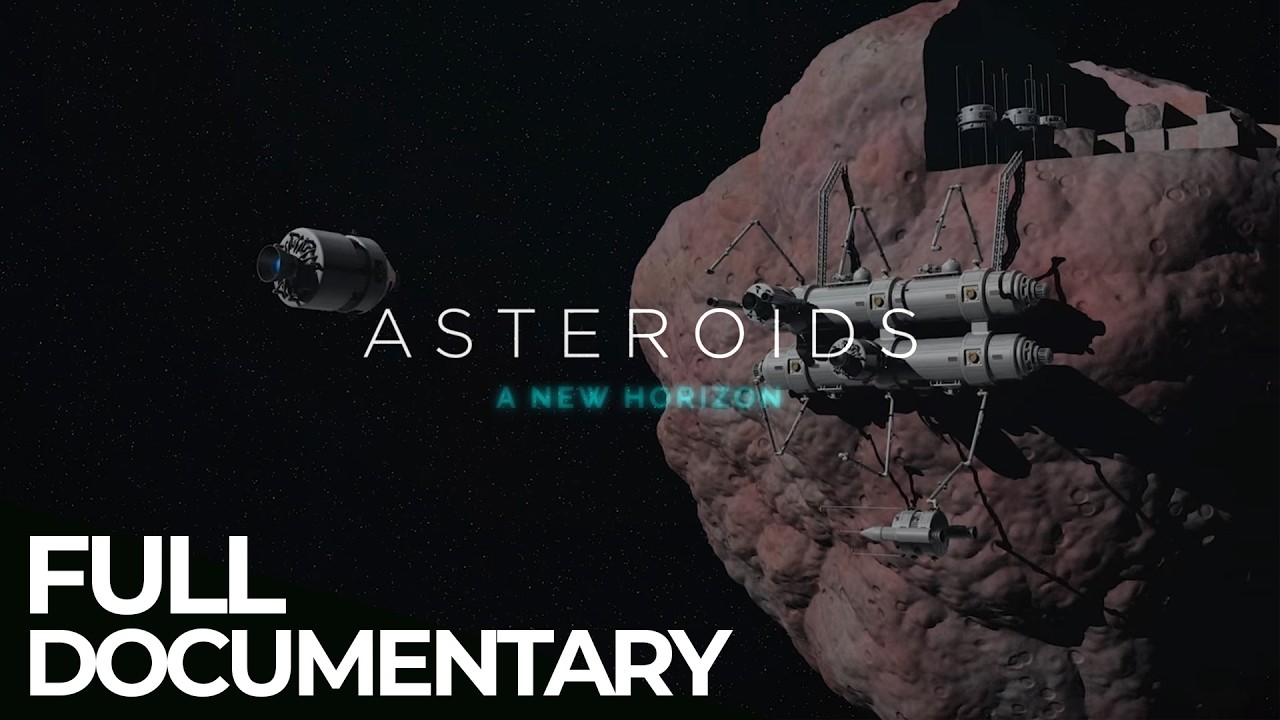
Mining Asteroids - How We Extract Resources in Space | Free Documentary Space
Keywords
Summary
136 words
Critical Evaluation
The documentary provides a comprehensive introduction to asteroid mining, covering the types of asteroids, their resources, and the key players in the field. It successfully conveys the potential of water as a crucial resource for space exploration, comparing it to ’the oil of space.’ The inclusion of interviews with experts and visits to institutions like the Colorado Center for Space Resources adds credibility. However, the documentary lacks critical analysis of the economic feasibility and technical challenges. It does not address the significant costs and risks involved, nor does it discuss potential legal and ethical issues. The information is somewhat dated, as evidenced by references to the Psyche mission planned for 2022, which has since been delayed. The documentary also tends to be promotional, highlighting the efforts of private companies without independent verification. The sources cited are not explicitly listed, and the reliance on expert opinions without counterpoints weakens the scientific rigor. The title accurately reflects the content, but the documentary could benefit from a more balanced perspective. Overall, it serves as a good overview for general audiences but lacks depth for those seeking a rigorous scientific analysis.
187 words
Title / Content Match
The title accurately reflects the content, which focuses on the methods and potential of extracting resources from asteroids.
Quality & Reliability
6/10
The documentary provides a broad overview of asteroid mining, featuring interviews with experts and references to real missions and companies. However, it lacks detailed citations, contains outdated information (e.g., Psyche mission planned for 2022), and does not critically examine technical or economic challenges in depth.
Key Moments
Markers derived by PSI from the transcript: the creator did not define chapters.
- Introduction to asteroid resources and the value of water.
- Discussion on the types of asteroids and their compositions.
- Overview of missions like Hayabusa and OSIRIS-REx.
- Explanation of the economic drivers and private companies.
- Focus on Luxembourg's role in space mining.
- Technical challenges of mining in low gravity.
- Potential methods for extraction and processing.
- Interviews with experts on future prospects.
- Discussion on using asteroids as pit stops for deep space missions.
- Conclusion on the potential of asteroid mining.
Cited Sources
- Free Documentary Channel — Main channel for the documentary.
- Free Documentary Instagram — Social media presence.
- Free Documentary Facebook — Social media presence.
- Free Documentary Twitter — Social media presence.
Concurring Sources
- NASA's OSIRIS-REx mission — Mission to study and return samples from asteroid Bennu, supporting the documentary's claims about asteroid composition.
- JAXA's Hayabusa2 mission — Mission that returned samples from asteroid Ryugu, confirming the presence of water and organic materials.
Dissenting Sources
- Scientific critique of asteroid mining feasibility
Contribution & Novelties
The documentary provides a broad overview of asteroid mining, highlighting the potential of water as a key resource and the role of private companies. It offers a glimpse into the emerging space economy and the technical challenges involved. While not deeply technical, it serves as an accessible introduction.
Pour aller plus loin :
- Asteroid mining - Wikipedia — Comprehensive overview of the concept, history, and challenges.
- Psyche mission - NASA — Official information about the mission to the metallic asteroid Psyche.
- Space Resources - ESA — ESA’s perspective on utilizing space resources.
92 words
Radar Profile
The radar profile shows moderate scores across all dimensions, indicating a balanced but not exceptional documentary. It provides a decent amount of information with reasonable quality, but lacks technical depth and high reliability due to outdated references.
💬 Positif. Sur les 30 commentaires analysés, le public exprime un intérêt enthousiaste pour le sujet, avec des discussions sur les méthodes d'extraction et le potentiel économique, bien que certains notent que la vidéo semble datée.