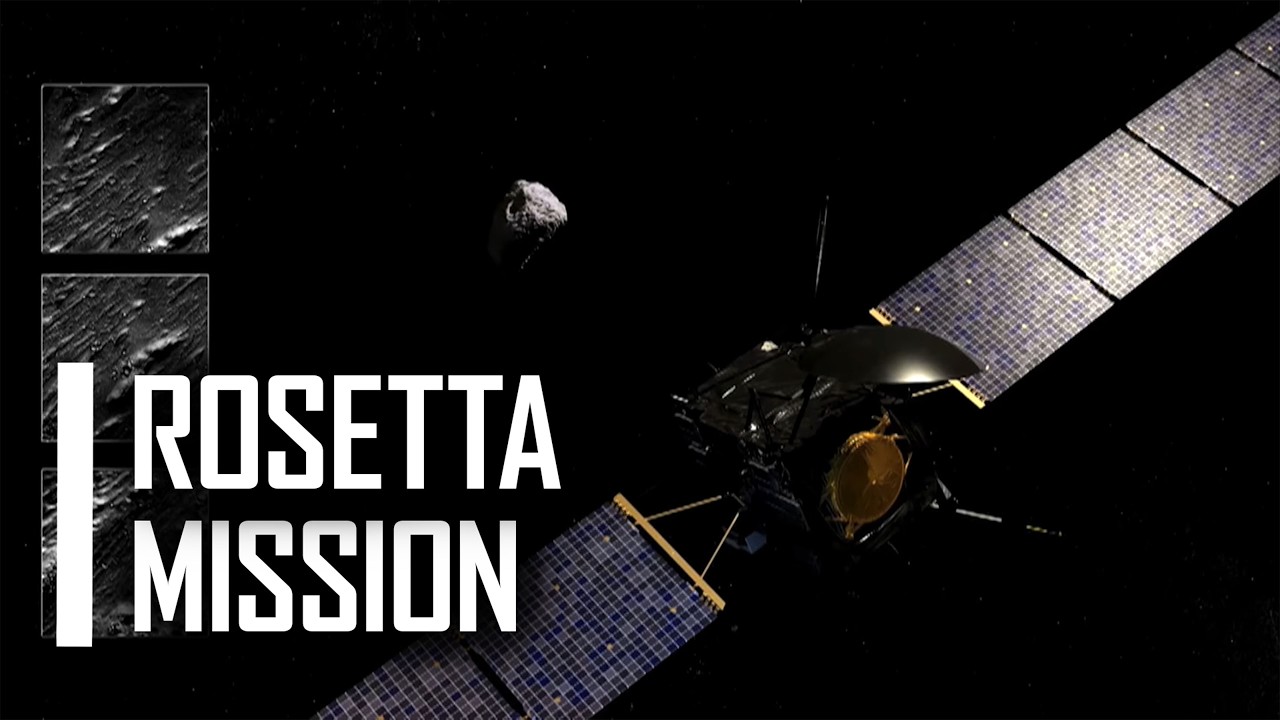
Rosetta Mission - The Comet That May Have Started Life on Earth | Free Documentary Space
Keywords
Summary
177 words
Critical Evaluation
The documentary excels in providing a comprehensive narrative of the Rosetta mission, blending technical details with human emotion. The interviews with scientists lend authenticity and depth, as they share personal insights and the challenges faced. The scientific content is accurate and well-presented, with clear explanations of complex concepts like gravity assists and the significance of isotopic ratios. The film effectively conveys the mission’s importance in the search for life’s origins, without overstating claims. However, it occasionally glosses over some technical aspects, such as the specifics of the instruments, which might leave viewers wanting more detail. The pacing is good, but the documentary could benefit from more explicit discussion of the scientific results and their implications. The sources cited are primarily the mission scientists themselves, which is appropriate for a documentary of this nature. The title is well-aligned with the content, as the film indeed explores the hypothesis that comets may have seeded life on Earth. Overall, it is a high-quality production that balances education and entertainment, though it may not delve deeply enough for experts in the field.
178 words
Title / Content Match
The title accurately reflects the content, focusing on the Rosetta mission and its potential implications for the origins of life on Earth.
Quality & Reliability
8/10
The documentary is produced by a reputable channel and features interviews with scientists directly involved in the Rosetta mission. It presents accurate scientific information about comets and the mission's objectives, though it simplifies some details for a general audience.
Key Moments
Markers derived by PSI from the transcript: the creator did not define chapters.
- Introduction to the Rosetta mission and its goal to study comet 67P.
- Explanation of comets and their significance in understanding the solar system's formation.
- Launch of Rosetta in 2004 and the start of its 10-year journey.
- Rosetta's reactivation after hibernation and the tense wait for its signal.
- Approach to the comet and the first images revealing its unusual shape.
- Selection of the landing site for Philae and the challenges involved.
- The landing of Philae and the scientific discoveries made.
Cited Sources
- Free Documentary Channel — The channel that published the documentary.
- Free Documentary Instagram — Social media page for the channel.
- Free Documentary Facebook — Social media page for the channel.
- Free Documentary Twitter — Social media page for the channel.
Concurring Sources
- ESA Rosetta mission page — Official information about the mission, corroborating the documentary's content.
Dissenting Sources
- No discordant sources found — The documentary aligns with established scientific knowledge about the Rosetta mission.
Contribution & Novelties
The documentary provides a comprehensive overview of the Rosetta mission, highlighting its significance in the search for life’s origins. It offers insights from scientists directly involved, making it a valuable resource for understanding the mission’s challenges and achievements.
Pour aller plus loin :
- Rosetta mission on ESA website — Official mission page with detailed information.
- Comet 67P/Churyumov-Gerasimenko on Wikipedia — Overview of the comet’s characteristics and exploration.
- Philae lander on Wikipedia — Details about the lander and its scientific instruments.
80 words
Radar Profile
The radar profile shows high scores in information quantity, quality, and reliability, with a slightly lower technical level, indicating that the documentary is informative and trustworthy but may not delve into the most advanced technical details.