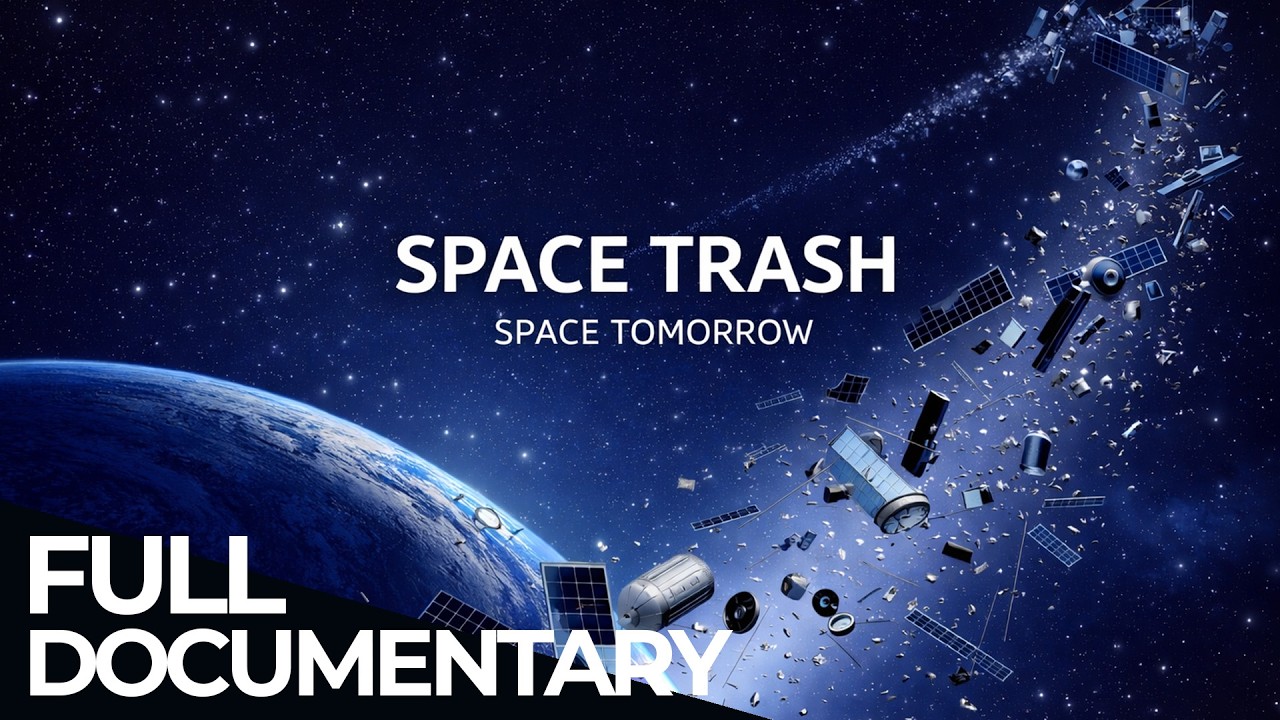
Space Trash: Who Cleans Up the Orbit?
Keywords
Summary
163 words
Critical Evaluation
The documentary provides a comprehensive overview of the space debris problem, effectively combining historical context, real-world incidents, and expert commentary. The narrative is engaging and accessible, making complex topics understandable for a general audience. The use of the 2014 ISS emergency maneuver as a case study is particularly effective in illustrating the immediate dangers. The film also does well to explain the various types of debris and their origins, from large defunct satellites to tiny fragments. However, the documentary lacks depth in certain areas. It does not delve into the technical details of debris tracking or the specifics of proposed cleanup technologies, instead offering only a high-level summary. The scientific rigor is moderate; while the information is generally accurate, the film does not cite specific studies or reports, and some statements are presented without supporting evidence. The interviews with experts add credibility, but they are relatively brief and do not provide in-depth analysis. The documentary also touches on the societal dependence on satellites, but this could have been explored further. Overall, it is a well-produced and informative piece that serves as a good introduction to the topic, but it may leave viewers wanting more detailed information. The title accurately reflects the content, and the documentary successfully raises awareness about the importance of addressing space debris.
215 words
Title / Content Match
The title accurately reflects the content, which focuses on the problem of space debris and the efforts to clean it up.
Quality & Reliability
7/10
The documentary provides a broad overview of space debris, including historical context, current risks, and mitigation efforts. It features interviews with experts and astronauts, but lacks detailed citations or references to specific studies. The information is generally accurate but presented in a simplified manner for a general audience.
Key Moments
Markers derived by PSI from the transcript: the creator did not define chapters.
- Introduction to the threat of space debris, with an example of a near-miss with the ISS.
- Explanation of the 2014 ISS emergency maneuver to avoid debris, using the ATV as a tug.
- Overview of the history of space debris, from Sputnik to the present, and the growth of the debris population.
- Discussion of the different types of debris, including dead satellites with leftover fuel and small fragments.
- Explanation of the risks of collisions and the concept of the Kessler syndrome.
- Exploration of potential solutions, including active debris removal and international regulations.
Cited Sources
- Free Documentary Channel — Channel subscription link mentioned in the description.
- Free Documentary Instagram — Social media link mentioned in the description.
- Free Documentary Facebook — Social media link mentioned in the description.
- Free Documentary Twitter — Social media link mentioned in the description.
Concurring Sources
- NASA Orbital Debris Program Office — Official NASA source on space debris, consistent with the documentary's information.
- ESA Space Debris Office — European Space Agency's page on space debris, supporting the documentary's claims.
Contribution & Novelties
The documentary provides a compelling narrative that raises awareness about space debris, emphasizing the urgency of the problem. It effectively uses real incidents and expert interviews to illustrate the risks. The film also highlights the societal dependence on satellites, which is often overlooked. However, it does not present new scientific findings or original research. Its main contribution is in making the topic accessible to a broad audience.
Pour aller plus loin :
- Kessler syndrome — A concept central to the documentary’s discussion of cascading collisions.
- Space debris — Provides a comprehensive overview of the topic, including statistics and mitigation efforts.
- Active debris removal — Discusses proposed technologies for cleaning up space debris, which the documentary touches on.
117 words
Radar Profile
The radar profile shows high scores in quantity of information and fiabilite, indicating a well-researched documentary. The niveau technique is moderate, reflecting its accessibility. The overall balance suggests a reliable introduction to the topic.