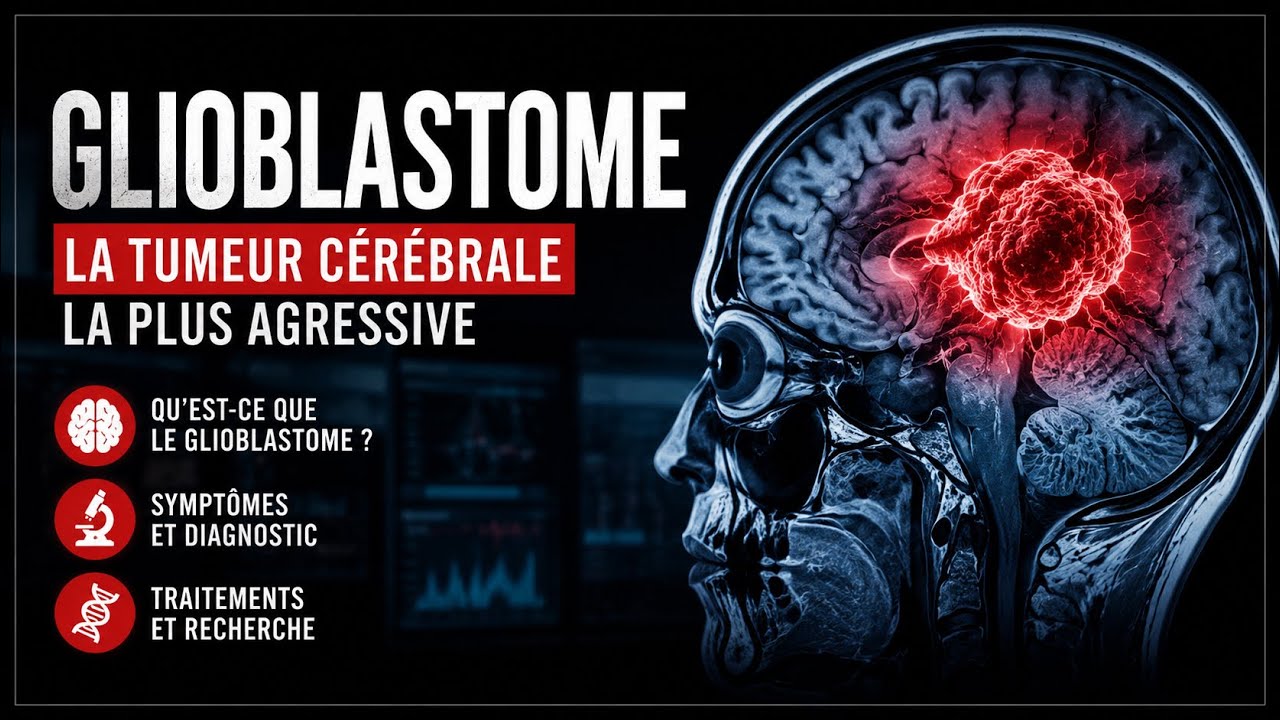
Glioblastome
Keywords
Summary
111 words
Critical Evaluation
Value of the Information & Strength of the Argument
The video provides valuable information on glioblastoma, covering both clinical and pathological aspects. The argumentation is logical and structured, explaining the molecular basis and histopathological features. However, the presentation is somewhat disorganized with frequent repetitions and lacks critical evaluation of the sources.
Scientific Rigor, Source Quality, Title Accuracy
The scientific rigor is moderate; the content is consistent with established medical knowledge, but no specific sources are cited. The title accurately reflects the content, and the video is suitable for medical students or professionals seeking an overview.
95 words
Title / Content Match
The title 'Glioblastome' accurately reflects the content, which is a comprehensive lecture on this brain tumor.
Quality & Reliability
7/10
The video provides a detailed and accurate overview of glioblastoma, covering definition, molecular markers, histopathology, and variants. The content aligns with current WHO classification, but lacks citations and depth in some areas.
Key Moments
Markers derived by PSI from the transcript: the creator did not define chapters.
- Introduction to glioblastoma, definition and epidemiology
- Explanation of the term 'glioblastoma' and origin from astrocytes
- Diagnostic criteria: IDH wild type, microvascular proliferation, necrosis
- Molecular features: EGFR amplification, TERT promoter mutation, chromosome 7/10 alterations
- Clinical presentation and imaging findings, including butterfly glioma
- Role of biopsy and histopathological diagnosis
- Histological features: atypia, mitoses, necrosis, microvascular proliferation
- Variants: epithelioid, giant cell, gemistocytic, gliosarcoma, small cell, granular cell
- Immunohistochemical markers: GFAP, Olig2, Ki67, ATRX, IDH1, p53, BRAF
- Summary and conclusion
Contribution & Novelties
The video offers a comprehensive and accessible overview of glioblastoma, integrating clinical, radiological, and pathological aspects. It emphasizes the importance of molecular markers in diagnosis and classification. For further exploration, consider the following:
- WHO Classification of Tumours of the Central Nervous System — Official classification guide.
- Glioblastoma - National Cancer Institute — Patient and professional information.
- IDH mutation in gliomas - PubMed — Key study on IDH mutations.
68 words
Radar Profile
The radar profile shows high scores in information quantity and technical level, indicating a detailed and specialized content. Lower scores in source quality and global reliability suggest a need for more rigorous citations and critical analysis.