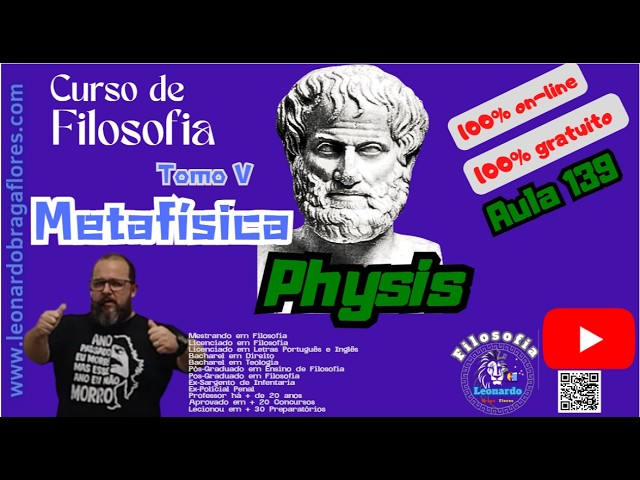
Aula 139 Physis
Keywords
Summary
165 words
Critical Evaluation
Value of the Information & Strength of the Argument
The video provides a clear and accessible introduction to the concept of physis, effectively distinguishing it from myth and logos. The argumentation is coherent and well-structured, using examples and analogies to illustrate the transition from mythological to rational explanations. The professor supports his points with references to established scholars (Vernant, Jaeger, Abrão & Coscodai), which adds credibility. However, the depth is limited, as it is designed for exam preparation, and the argumentation sometimes relies on informal language and digressions. The inclusion of practice questions helps reinforce the concepts, but the overall value is more pedagogical than novel.
Scientific Rigor, Source Quality, Title Accuracy
The scientific rigor is moderate: the video presents accurate historical information about pre-Socratic philosophy, but it does not provide direct citations or references to primary sources. The quality of sources is acceptable, as it mentions reputable scholars, but the lack of specific references weakens the scholarly depth. The title accurately reflects the content, which is a focused lesson on physis. The video includes promotional segments for the professor’s courses and materials, which are clearly separated from the educational content. No comments were provided for analysis.
197 words
Title / Content Match
The title 'Aula 139 Physis' accurately reflects the content, which is a lesson on the concept of physis in pre-Socratic philosophy.
Quality & Reliability
6/10
The video is a didactic philosophy lesson for exam preparation, presenting a clear and structured explanation of the concept of physis. It cites authoritative sources (Vernant, Jaeger, Abrão & Coscodai) but lacks direct references or citations to primary texts. The content is accurate but simplified, with some informal digressions and promotional segments.
Key Moments
Markers derived by PSI from the transcript: the creator did not define chapters.
- Introduction and course overview
- Definition of physis and its etymology
- Physis as natural explanation vs. myth
- Pre-Socratic philosophers and their goal
- Transition from cosmogonic to cosmological thought
- Terminologies for pre-Socratic philosophers
- Authorities cited: Vernant, Jaeger, Abrão & Coscodai
- Comparison between logos and physis
- Film recommendations and painting display
- Practice questions and answers
Cited Sources
- Cursos e Apostilas de Filosofia — Official website for course materials and study guides.
Concurring Sources
- Physis (Wikipedia) — Confirms the definition of physis as nature and its etymological roots.
- Pre-Socratic philosophy (Wikipedia) — Supports the characterization of pre-Socratic philosophers as naturalists.
Contribution & Novelties
The video offers a didactic and accessible explanation of the concept of physis, integrating it with the broader context of pre-Socratic philosophy. It provides a clear distinction between physis, logos, and myth, and highlights the shift from mythological to rational explanations. The inclusion of practice questions and film recommendations adds pedagogical value. However, the content is not novel for those familiar with philosophy, as it covers standard material.
Pour aller plus loin :
- Physis (Wikipedia) — Overview of the concept in ancient Greek philosophy.
- Pre-Socratic philosophy (Wikipedia) — Context and main thinkers.
- Logos (Wikipedia) — The concept of rational discourse.
100 words
Radar Profile
The radar profile shows moderate scores across all dimensions, with a slightly higher score in quality of information and lower in technical level, indicating a well-structured but introductory content. The balance suggests a reliable educational resource for beginners.