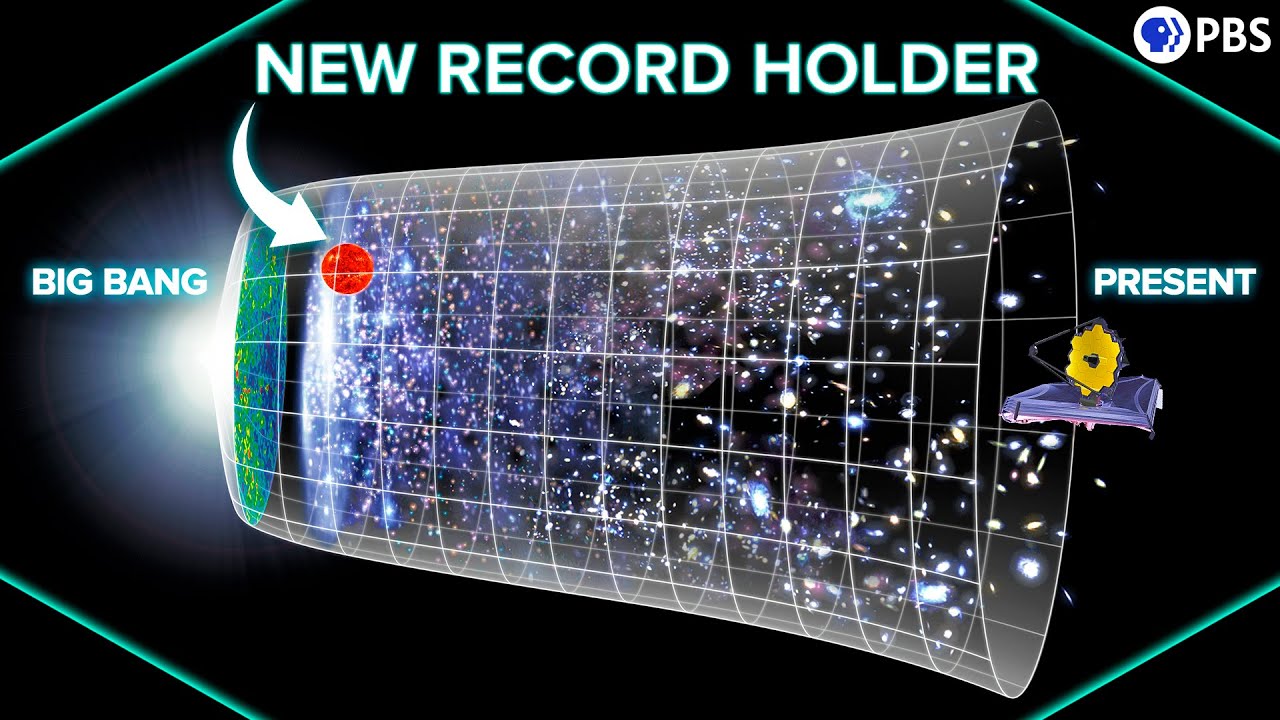
JWST Discovered The Farthest Star Ever Seen!
Keywords
Summary
171 words
Critical Evaluation
Value of the Information & Strength of the Argument
The video provides substantial value by explaining a complex astronomical discovery in an accessible yet rigorous manner. It clearly articulates the significance of Earendel as a direct probe of early star formation, a field previously reliant on indirect observations and simulations. The argumentation is solid, building from the basic concept of gravitational lensing to its application in this specific case, and then to the broader implications for cosmology. The host effectively uses analogies (e.g., wine glass stem) to illustrate abstract concepts, and the reasoning is logical and well-supported by the presented data. The discussion of uncertainties, such as the unknown magnification factor and the nature of the companion star, demonstrates scientific honesty and strengthens the overall credibility.
Scientific Rigor, Source Quality, Title Accuracy
The video maintains a high standard of scientific rigor, consistent with PBS Space Time’s reputation. It accurately describes the discovery process, the physics of gravitational lensing, and the properties of Earendel, citing the relevant survey (RELICS) and the roles of Hubble and JWST. The title accurately reflects the content, which focuses on the JWST’s observations of the farthest star. The presentation is well-researched and avoids overstatement, appropriately noting the uncertainties in the current data. The inclusion of the name’s etymology and Tolkien connection is a delightful addition that does not detract from the scientific content. The video’s production quality and clear explanations contribute to its reliability as an educational resource.
242 words
Title / Content Match
The title accurately reflects the content, which focuses on the JWST's role in observing Earendel, the farthest star ever seen.
Quality & Reliability
8/10
The video is a high-quality science communication piece from PBS Space Time, hosted by astrophysicist Matt O'Dowd. It accurately explains the discovery of Earendel, the most distant star observed, and the underlying physics of gravitational lensing and redshift. The content is well-structured, uses clear analogies, and is consistent with current scientific understanding. Minor simplifications are present but do not compromise accuracy.
Key Moments
Markers derived by PSI from the transcript: the creator did not define chapters.
- Introduction to the challenge of observing distant stars and the concept of gravitational lensing.
- Introduction of Earendel, the most distant star, and its discovery by Hubble in the RELICS survey.
- Explanation of the name 'Earendel' and its mythological and Tolkien connections.
- Discussion of Earendel's distance (28 billion light-years) and redshift (6.2).
- Explanation of gravitational lensing, including Einstein rings and caustics, and how they magnify distant objects.
- Details on how Earendel's position near a caustic curve leads to extreme magnification (factor of 1,000 to 40,000).
- Analysis of Earendel's spectrum, revealing it as a massive B-type star with a possible red companion.
- Discussion of the importance of Earendel for understanding early star formation and the potential for future discoveries.
Cited Sources
- PBS Space Time Patreon — Support page for the show, mentioned in the video description.
- PBS Space Time Merch Store — Merchandise store, mentioned in the video description.
- PBS Space Time Mailing List — Mailing list signup, mentioned in the video description.
- PBS Space Time Library Search — Search engine for past episodes, mentioned in the video description.
- End Credits Music by J.R.S. Schattenberg — Credit for the end credits music, mentioned in the video description.
Concurring Sources
- NASA's Webb Reveals the Farthest Star Ever Seen — NASA press release confirming the discovery of Earendel and its properties.
- Earendel: The Farthest Star Ever Observed — Space.com article providing additional details on the discovery and its significance.
External References
Contribution & Novelties
The video provides an accessible and up-to-date explanation of the discovery of Earendel, the most distant star observed, and its implications for our understanding of the early universe. It effectively communicates the role of gravitational lensing in enabling such observations and the significance of JWST’s infrared capabilities. The episode stands out for its clear explanations of complex concepts and its integration of cultural references (Tolkien) to engage viewers.
Pour aller plus loin :
- Gravitational lensing — Provides a comprehensive overview of the phenomenon central to the video.
- James Webb Space Telescope — Details the telescope’s capabilities and mission, relevant to the observations discussed.
- Earendel (star) — A dedicated article on the star, offering additional data and context.
- Redshift — Explains the concept used to measure cosmic distances, as discussed in the video.
- Population III stars — Discusses the first generation of stars, which Earendel might belong to.
147 words
Radar Profile
The radar profile shows high scores in information quantity and quality, reflecting the video's comprehensive and accurate coverage. The technical level is moderate, making it accessible to a general audience while still providing depth. The overall reliability is high, consistent with the channel's reputation for rigorous science communication.
💬 Très positif. Sur les 30 commentaires analysés, les spectateurs expriment un fort enthousiasme pour la découverte et la qualité de l'explication, avec de nombreuses références à Tolkien et à la beauté du nom de l'étoile.