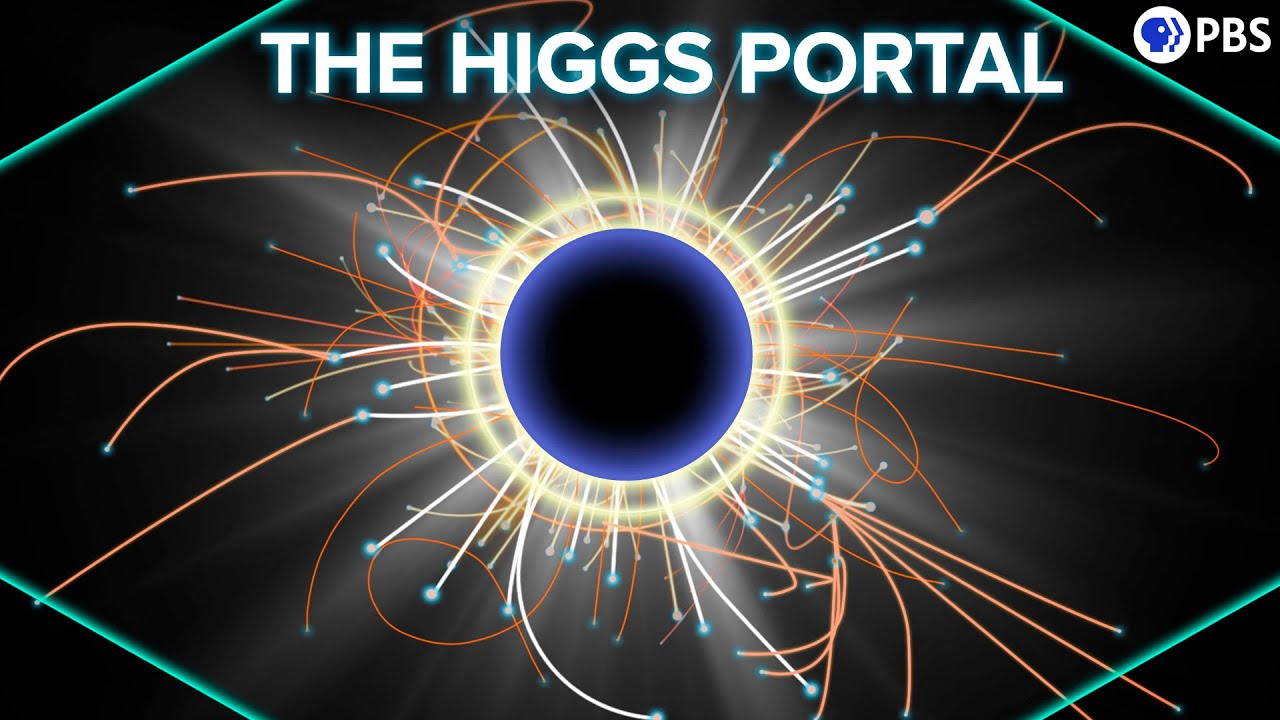
Could the Higgs Boson Lead Us to Dark Matter?
Keywords
Summary
229 words
Critical Evaluation
Value of the Information & Strength of the Argument
The video provides valuable information by clearly explaining complex concepts such as Feynman diagrams, direct and indirect detection, and the Higgs portal model. It effectively argues that the Higgs boson is a promising avenue for dark matter research, using logical reasoning based on particle properties and experimental techniques. The argumentation is solid, presenting both the theoretical motivations and the current experimental evidence, while appropriately noting uncertainties. The use of conservation of momentum as a detection method is well-explained and grounded in established physics.
Scientific Rigor, Source Quality, Title Accuracy
The scientific rigor is high, with accurate explanations of particle physics and references to real experiments like ATLAS. The video does not cite specific papers but mentions the ATLAS collaboration’s measurement, which is a legitimate source. The title accurately reflects the content, and the video maintains a balanced perspective, avoiding overhype. The production quality is excellent, with clear visuals and expert narration. The comments section shows a positive reception, with viewers appreciating the clarity and depth of the content.
177 words
Title / Content Match
The title accurately reflects the content, which explores the potential connection between the Higgs boson and dark matter, including current experimental evidence.
Quality & Reliability
9/10
The video is produced by PBS Space Time, a reputable science education channel, and hosted by astrophysicist Matt O'Dowd. It presents current scientific concepts and results (e.g., ATLAS branching fraction) with appropriate caveats and references to ongoing research. The content is well-researched and aligns with established physics, though it simplifies complex topics for a general audience.
Key Moments
Markers derived by PSI from the transcript: the creator did not define chapters.
- Introduction: Higgs boson discovery and the mystery of dark matter
- Explanation of dark matter and its properties
- Overview of detection methods: direct, indirect, and collider
- Why the Higgs boson is a promising candidate for dark matter production
- Explanation of conservation of momentum technique to detect invisible particles
- ATLAS results on Higgs invisible branching fraction
- Future prospects and conclusion
Cited Sources
- PBS Space Time Patreon — Support page for the show
- PBS Donation Page — Support PBS Member Stations
- Space Time Merch Store — Merchandise for the show
- Space Time Mailing List — Sign up for episode notifications
- Space Time Library Search — Search all episodes
- End Credits Music by J.R.S. Schattenberg — Music credit
Concurring Sources
- ATLAS Collaboration — Official website of the ATLAS experiment, which is the source of the branching fraction measurement mentioned in the video.
Contribution & Novelties
The video provides a clear and accessible explanation of the Higgs portal model and the current experimental status of searching for dark matter via Higgs decays. It highlights the ATLAS measurement of the invisible branching fraction, which is a recent and relevant result. The explanation of the transverse momentum technique is particularly insightful for understanding how invisible particles are inferred.
Pour aller plus loin :
- Higgs boson — Overview of the Higgs boson and its properties.
- Dark matter — Comprehensive introduction to dark matter and evidence for its existence.
- ATLAS experiment — Details on the ATLAS detector at the LHC.
- Feynman diagram — Explanation of Feynman diagrams used in particle physics.
- Large Hadron Collider — Information about the LHC and its upgrades.
122 words
Radar Profile
The radar profile shows high scores in quality and reliability, with slightly lower scores in quantity and technical level, indicating a well-produced, accurate, and accessible video that could delve deeper into technical details.
💬 Très positif. Sur les 30 commentaires analysés, les spectateurs expriment une grande admiration pour la clarté des explications et la qualité scientifique de la chaîne, certains mentionnant leur enthousiasme pour les perspectives de recherche sur le boson de Higgs.